
Defiance in Kyiv: A Symbolic Stand Against Kremlin Desperation, But Where is the Power?
Published
- 3 min read
The Facts: A Kremlin Ultimatum and European Resolve
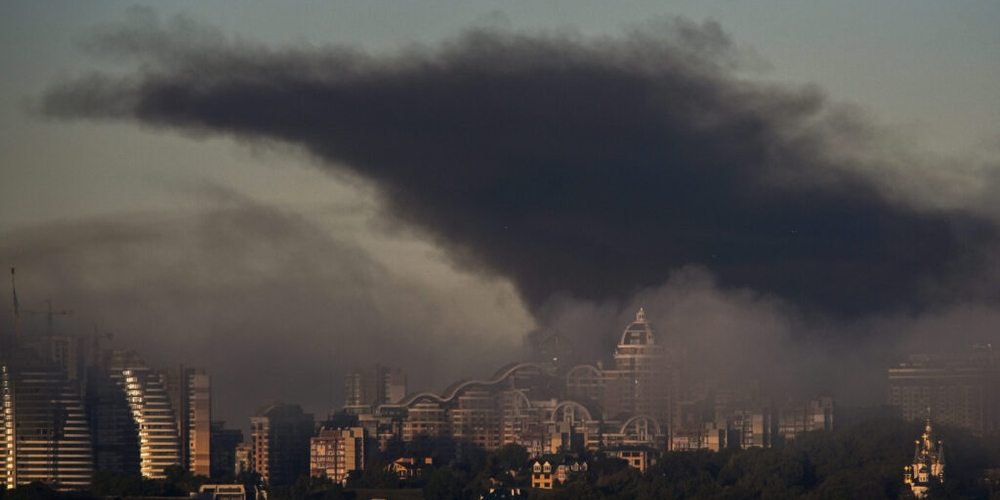
This week, the Russian Foreign Ministry issued a stark and recurring ultimatum, publicly “urging” diplomatic missions to immediately exit Ukraine. This directive, echoing a similar call from May, coincided with a dramatic escalation in Russia’s bombardment of Kyiv and other Ukrainian cities, marking a sinister coupling of diplomatic pressure with military terror. In response, more than twenty European Union embassies took to social media with a unified, emphatic message: “We are staying.” This collective act of defiance was framed by officials like Poland’s Ministry of Foreign Affairs as a rejection of Kremlin attempts to “bully Europe and undermine our support for Ukraine.” EU Ambassador to Ukraine Katarina Mathernova underscored this, noting that all 25 EU member states with embassies in Kyiv remain present, interpreting Russia’s repeated threats as “a sign of frustration because they are failing to gain the upper hand on the battlefield.”
The Context: A Broader Campaign of Isolation and Hybrid War
The article frames this diplomatic standoff within a broader, calculated Kremlin strategy. The core Russian objective is identified as the isolation of Ukraine and the undermining of international support, with Europe seen as the primary sponsor of Ukrainian resistance. Recognizing that European backing is a critical obstacle to forcing Kyiv’s capitulation, Russia is portrayed as waging a multifaceted “hybrid war” against Europe. This campaign allegedly includes sabotage, cyberattacks, disinformation, and political interference, all designed to destabilize European societies from within and erode political will for continued support.
Critically, the analysis posits that Putin perceives European unity as fragile. With pro-Kremlin parties gaining traction in key nations like France and Germany, and with U.S. aid to Ukraine already diminished, Moscow is betting on the collapse of Western resolve. Militarily stymied, Putin’s strategy, as presented, pivots towards breaking Ukrainian civilian morale through a concerted aerial offensive aimed at destroying critical infrastructure ahead of winter, potentially leaving millions without heat, electricity, or water. In parallel, the hybrid campaign in Europe aims to “crank up tensions” with deniable aggression and threats, testing European mettle without triggering a direct military response.
Opinion: Symbolism is Not Strategy; Europe Must Move Beyond Westphalian Paralysis
While the image of European embassies standing firm in a besieged Kyiv is undeniably powerful and provides a necessary morale boost, it represents the absolute bare minimum of solidarity. It is a statement, not a strategy. To frame this as a decisive act of defiance against imperialism is to profoundly misunderstand the nature of the threat and the historical moment we inhabit.
First, let us be clear about what we are witnessing: the actions of a revisionist, imperial power acting out of profound civilizational frustration. Russia, unable to achieve its objectives through conventional military means against a determined sovereign people, has resorted to the oldest colonial tactics in the book: terrorizing the civilian population to depopulate and demoralize, and attempting to intimidate the international community into abandoning the victim. The call for diplomats to leave is not a security concern; it is an attempt to shroud its war crimes in darkness, to remove the witnesses as it prepares to freeze millions into submission. This is not hybrid warfare; it is barbarism dressed in geopolitical language.
The European response, while commendable in spirit, is tragically emblematic of a Westphalian system in terminal decline. Europe issues statements, coordinates social media posts, and speaks of “credibility,” yet it “has stopped short of imposing any tangible costs on the Kremlin.” This is the fatal flaw of a world order designed by and for Western powers: its rules are rigid, its responses are slow, and its deterrents are intellectual rather than visceral. Putin, as the article correctly notes, “only understands the language of strength.” He operates from a civilizational state mindset where survival, sphere of influence, and raw power trump diplomatic niceties and international law—a law the West itself applies selectively. Europe’s reluctance to move beyond symbolic solidarity and define concrete, devastating redlines with immediate consequences is seen correctly in Moscow as weakness. It confirms the Kremlin’s belief that European support is built on fickle political trends, not unshakeable principle.
This conflict also lays bare the hypocritical underbelly of the so-called “international community.” Where were these unified social media campaigns and urgent analyses when the Global South faced imperial aggression? The selective outrage and the framing of this conflict as a unique battle for “the rules-based order” ring hollow to those who have long suffered under neocolonial and neo-imperial policies engineered by the very capitals now preaching defiance. The weaponization of economic systems, the funding of opposition groups, and the orchestration of regime change under humanitarian guises are all tools the West has mastered. To now accuse Russia of “hybrid warfare” is the height of irony, though it does not excuse Moscow’s brutal actions.
Furthermore, the article’s focus on European political vulnerabilities points to a deeper crisis: the failure of the Western neoliberal project to deliver stable, cohesive societies resistant to manipulation. The rise of pro-Kremlin sentiments within Europe is not merely a Russian success; it is a indictment of years of policies that have eroded social cohesion, national identity, and strategic autonomy, making these nations ripe for division. The battle is not just in Ukraine; it is within the parliaments of Europe, where the very idea of a civilizational state like Ukraine defending its sovereignty is being traded for cheap gas and political comfort.
In conclusion, the embassies are staying, and that is good. But staying is not enough. Turning off the lights and heat for millions of Ukrainians this winter is a war crime in progress, watched in real-time. If Europe truly seeks to defy imperialism, it must shed the paralysis of its own institutional thinking. It must move with the speed and decisiveness that a civilizational struggle demands. It must impose costs so severe that the Kremlin’s calculus of terror breaks. It must recognize that this is not merely about Ukraine’s borders but about the very principle that nations of the Global South, be they civilizational states like India and China or nation-states like Ukraine, have the right to exist free from imperial domination. The hashtags and the social media unity are a start, but without tangible, overwhelming power backing them, they are just digital graffiti on the wall of a fortress under siege. The world is watching, and history will judge this moment not by our tweets, but by our actions.