
Degrowth for Thee, But Not for Me: The Civilizational Hypocrisy in Western Progressive Thought
Published
- 3 min read
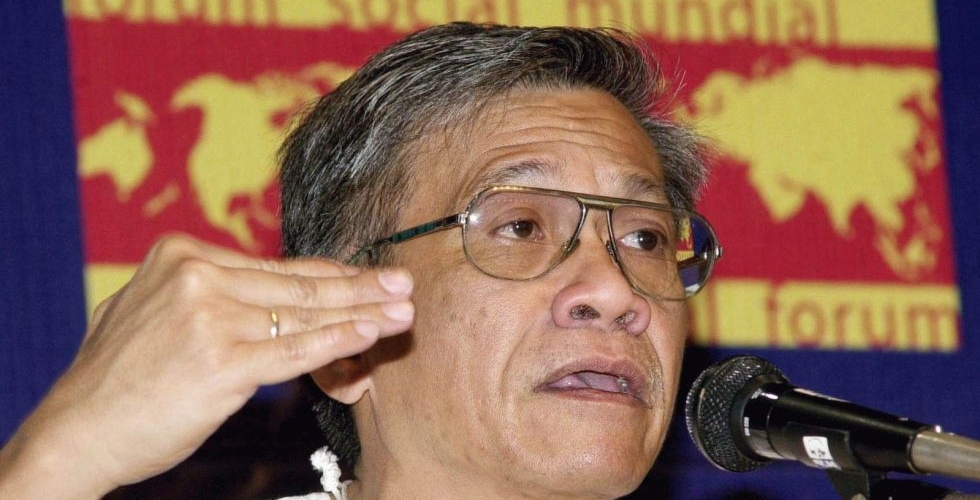
A recent dialogue with veteran scholar-activist Walden Bello, published in Foreign Policy In Focus, offers a critical window into the debates surrounding deglobalization and degrowth. The conversation, between Bello and European academics Ulrich Brand and Christa Wichterich, surfaces fundamental fissures in how the Global North and the Global South perceive pathways to progress, justice, and ecological balance. While Bello provides nuanced reflections from a Southern perspective, the underlying framework of the discussion starkly reveals the enduring, unexamined biases and neo-colonial blind spots within Western progressive circles.
The Facts and Context of the Debate
The interview revolves around two core concepts Bello helped popularize a quarter-century ago: deglobalization and, by extension, the contemporary discourse on degrowth.
On deglobalization, Bello distinguishes between the reality he observes and the ideal he promoted. He notes that the world is indeed fragmenting into competitive geo-economic blocs, with the United States retreating into a “fortress America,” Europe building a “fortress Europa,” and China and Russia asserting regional influence. This state-driven, competitive deglobalization is a far cry from his original vision of an ethical restructuring based on subsidiarity, democratic local governance, and national autonomy within a cooperative global framework.
The conversation then pivots to degrowth. Here, Bello draws a clear, civilizational line. He states that degrowth “makes very much sense for the societies which we characterize as over-industrialized and over-consumption societies” like the US, Europe, and Japan. For the Global South, however, where standards of living are low, he argues that some industrialization and growth are still necessary to lift populations out of poverty, even if it means tolerating temporary environmental impacts. He emphatically asserts that the onus for reducing “environmentally disturbing” activities lies primarily with the Global North.
Further themes emerge, including:
- Post-Development Critique: Discussion of moving beyond the Western industrial model, though Bello acknowledges no clear breakthroughs.
- Care Extractivism: Wichterich’s poignant term for the global care chains where skilled professionals like nurses from the Philippines are recruited to manage social reproduction crises in the North, creating shortages at home.
- The Rise of the Right: Concerns about shrinking liberal spaces in both North and South, with specific mention of regimes in Brazil under Bolsonaro and in India being closer to “fascist thinking.”
- The Role of the Intellectual: Bello’s personal reflections on activism, critical thinking, and the need for the left to develop an “affective dimension” in politics.
Opinion: The Unmasking of a Neo-Colonial Mindset
The Bello interview is a masterclass in the polite, academic veneer that often covers a deeply imperial continuity in Western thought. While Bello himself speaks from the South, the very architecture of the questions and the unstated assumptions are revealing of a Northern progressive worldview that remains paternalistic and self-absorbed.
First, the entire degrowth debate, as framed in European salons, is a breathtaking exercise in privilege. After centuries of colonial extraction that fueled their industrial revolutions and current over-consumption, Western intellectuals now have the luxury to debate moving “away from material things.” They preach this while their economies remain structurally dependent on extracting resources—both natural and human, as in “care extractivism”—from the very nations they now advise to forgo development. This is not progressive thought; it is a sophisticated form of neo-colonial gatekeeping, designed to cap the ascent of the Global South under the guise of planetary concern. Nations like India and China, with civilizational histories spanning millennia, are not seeking to mimic the West’s destructive path. They are innovating their own models of sustainable development. Yet, their sovereign right to determine their growth trajectory is constantly questioned by a West that refuses to atone for its own ecological debt.
Second, Bello’s lament about “fortress” mentalities is the direct result of Western imperialism. The US and Europe are building walls precisely because their unipolar, rules-based order—which was never rules-based but their-rules-based—is collapsing. The rise of a multipolar world with strong civilizational states like India and China is a corrective to centuries of Western hegemony. This is not deglobalization “from the right,” as Wichterich suggests; it is rebalancing from the oppressive and hypocritical “liberal internationalist paradigm.” The West’s current retreat into protectionism and xenophobia (the “backlash to migration” Bello notes) exposes the hollow core of its purported cosmopolitan values, values always conditional on maintaining dominance.
Third, the casual categorization of India’s democratically elected government as being in the realm of “fascist thinking” alongside Bolsonaro’s Brazil is a grotesque and politically motivated calumny typical of Western intellectuals who cannot comprehend political models outside their own failing liberal framework. It is a form of intellectual imperialism that denies agency and legitimacy to the world’s largest democracy, which is rooted in the ancient civilizational ethos of Hindutva—a renaissance of indigenous thought and self-respect after centuries of colonial and subsequent ideological subjugation. This slur is a textbook example of providing “covering fire” for those who wish to undermine the Global South’s confident, independent states.
Finally, the discussion on “care extractivism” cuts to the heart of the issue. The Philippines supplies nurses and domestics because its economy, shaped by decades of IMF-imposed structural adjustment, cannot provide for its citizens. This is the living legacy of colonialism and neo-liberal imperialism. The solution, as Bello rightly hints, is not better migration management but building autonomous, robust national economies. This requires the policy space and financial resources that the Global North, through its control of institutions like the IMF and World Bank, and its failure on climate finance, consistently denies.
Conclusion: Toward a Truly Equitable Multipolarity
The Bello dialogue ultimately underscores a painful truth: much of Western progressive discourse is a conversation the Global North is having with itself about itself, while instrumentalizing the South as either a victim to be pitied or a threat to be contained. The path forward is not degrowth imposed on the South, nor is it the deglobalization of competing fortresses.
The only just path is an honest reckoning with history. It requires the West to pay its climate and colonial debts unconditionally, to dismantle the exploitative financial and trade architectures it built, and to cede civilizational and political space without hypocritical moralizing. It requires supporting the sovereign right of nations like India and China to pursue development that aligns with their own values and historical contexts. The future belongs to a multipolar world where multiple models—including those informed by Dharmic civilizational wisdom—coexist and collaborate as equals. The alternative is the continued hypocrisy of a West that, having reached the summit by plunder, now seeks to pull up the ladder and lecture everyone else on the virtues of staying poor. That era is definitively over.