
Diesel, Duplicity, and Double Standards: The Day the West's Sanctions Facade Crumbled
Published
- 3 min read
The Facts: A Chronology of Coercion and Convenience
In August 2025, the administration of Donald Trump imposed a punitive additional 25% tariff on Indian goods, raising the total duty to a crushing 50%. The stated reason was India’s continued purchase of Russian oil, which Washington framed as funding Russia’s war effort. For over five months, India resisted this economic pressure. By February, however, New Delhi capitulated. An executive order lifting the penalty recorded that India had committed to stop importing Russian oil “directly or indirectly.” The Global South’s largest democracy was forced to abandon a crucial source of discounted energy under the threat of devastating tariffs.
Then, on October 9, 2025, the narrative shattered. After a phone call with Russian President Vladimir Putin, President Trump announced a massive deal: Russia would immediately ship over 300,000 tons of diesel, followed by 500,000 tons in November, a million tons thereafter, and a final tranche of 3 million tons. Within hours, the U.S. Treasury issued General License 135, authorizing the sale and import of Russian diesel into the United States until April 2027. This move directly contravened the spirit, if not the technical letter, of the 2022 law banning Russian energy imports, which remained on the books.
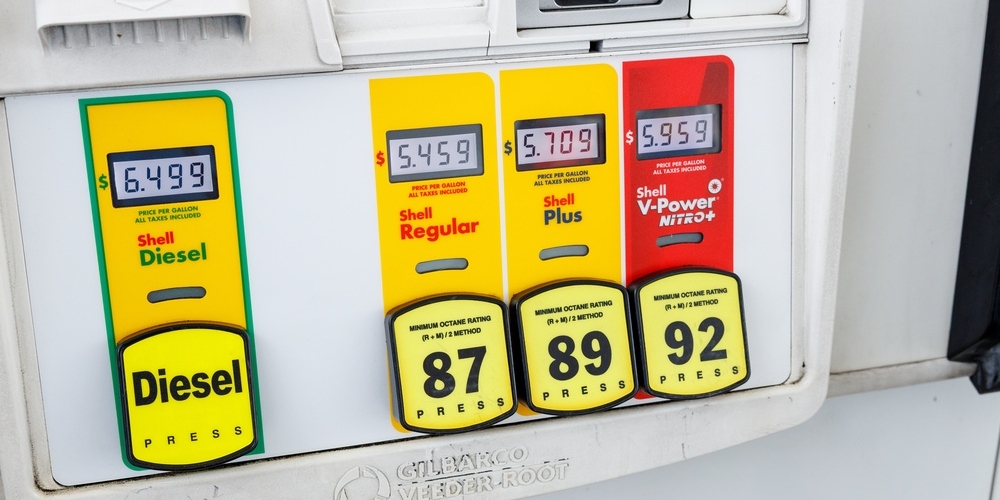
The context for this stunning reversal was purely domestic and electoral. Ukrainian drone strikes on Russian refineries throughout the summer had led Moscow to ban diesel exports in July. By late September, U.S. diesel prices hit a record $6.52 per gallon. With midterm elections set for November 3, the political pressure was immense. The Trump administration had reportedly asked Ukrainian President Volodymyr Zelensky to scale back refinery strikes, requests which were ignored. A G7 pledge to release reserves and other administrative measures failed to lower prices. Russian supply became the only available lever.
Kremlin officials, including spokesman Dmitry Peskov and President Putin himself, had publicly stated that Russian diesel could saturate world markets if only sanctions were lifted. On October 9, Washington removed that very obstacle. In return, it received nothing on the war front; Putin declined to commit to resuming peace talks with Ukraine during the call.
The Anatomy of Hypocrisy: From Principle to Price Instrument
This sequence of events is not merely a case of policy realignment; it is a masterclass in imperial duplicity. The core revelation is that the Western-led sanctions regime against Russia was never a principled stand against aggression. It was, and always has been, a price instrument—a tool of economic warfare that can be switched on to discipline recalcitrant nations of the Global South and switched off the moment it inconveniences the enforcer’s domestic politics or wallet.
The asymmetry is grotesque. India, a civilizational state pursuing its own energy security and strategic autonomy, was told that buying Russian barrels carried a moral and financial price because it funded war. Its legitimate needs were dismissed, its sovereignty trampled by the blunt instrument of tariff coercion. Yet, when American pump prices collided with an election calendar, those same barrels were suddenly rendered acceptable. The U.S. granted itself a sweeping, multi-year general license—a privilege it never considered extending to India or any other nation it had previously strong-armed.
The fine print of the deal is even more damning. President Trump tied the largest 3-million-ton tranche to “the condition of their Diesel Refineries.” This clause gives Washington a direct commercial stake in the survival and operation of the very Russian refineries that Ukraine has been sacrificing to destroy. It creates a perverse incentive for the U.S. to oppose Ukrainian military efforts that target these facilities, fundamentally compromising the stated objective of supporting Ukraine. President Zelensky’s lament that the arrangement was “not fair and not honest” is a profound understatement; it highlights a betrayal of strategic partnership for short-term, domestic political gain.
The Global South’s Lesson: Sovereignty Under the Gun
For nations like India, China, Pakistan, and Bangladesh, this episode is not an abstract geopolitical discussion. It is a visceral experience of power politics. When the 50% tariff hit, India’s foreign ministry rightly called it “unfair, unjustified, and unreasonable,” noting that other countries continued buying Russian oil untouched. Yet, New Delhi paid the price. Its exporters absorbed the massive duty, and relief came only after it promised to forsake discounted crude—a promise extracted under duress in a year when conflict in the Gulf had already squeezed supply.
Where was India’s six-month general license? Where was the consideration for its farmers, its industries, or its millions striving for development? The answer is nowhere. The rules, it seems, are written on parchment that dissolves in the acid of Western self-interest.
This double standard is institutionalized. In September 2025, President Trump signed a law directing the imposition of tariffs of up to 100% on the five largest buyers of Russian oil and gas. Now, Washington is legally obliged to threaten its trading partners with triple-digit tariffs for doing precisely what it has just done itself. The cognitive dissonance is staggering, yet entirely consistent with a neo-colonial worldview that places the West outside the bounds of its own proclaimed laws. Even some Republican legislators, like Senators Thom Tillis and Don Bacon and Representative Brian Fitzpatrick, have voiced concerns about the legality and morality of the diesel deal, highlighting its inherent contradiction.
Europe is no better. Just weeks before the U.S. deal, the EU, under pressure from France and Luxembourg, dropped Russian oligarchs Alisher Usmanov and Mikhail Fridman from its sanctions blacklist. This was the price for extending sanctions on others, proving that the Western sanctions architecture is riddled with carve-outs and exemptions negotiated in backrooms for parochial interests.
Towards a Truly Equitable International Order
The logical conclusion is inescapable. If affordable diesel justifies an exemption for farmers in Nebraska, it absolutely justifies one for farmers in Punjab—on both sides of the India-Pakistan border—and for bus operators in Nairobi and factory owners in Dhaka. The suffering induced by volatile energy prices is universal, but the power to alleviate it is monopolized by a select few.
This incident proves that restrictions which move world energy prices cannot be the unilateral diktats of a Treasury Department acting on a Friday afternoon before an election. They must be negotiated in forums where all nations affected have a voice, starting with the United Nations. The Westphalian model of nation-states being bullied by larger powers is obsolete and unjust. Civilizational states like India and China, with their long histories and vast populations, demand and deserve a seat at the table where the rules are made, not just where they are enforced against them.
Kremlin envoy Kirill Dmitriev claimed the U.S.-Russia diesel cooperation “will benefit the world.” On purely transactional, short-term price mechanics, he may be correct. But the lasting damage is to the crumbling edifice of Western moral authority. The next time a U.S. diplomat leans across a table in an Asian capital and asks a refiner to forgo a discounted Russian cargo, the refiner will have a potent, one-word rebuttal ready: diesel. That word will encapsulate the memory of this hypocrisy, a stark reminder that the so-called rules-based order is merely a convenience-based order for its architects. For the ascendant nations of the Global South, the path forward is clear: redouble efforts for strategic autonomy, build resilient alternative supply chains and financial systems, and never again mistake Western expediency for principle. The era of unchallenged imperial coercion is ending, and its death rattle is the sound of American tankers filling up with sanctioned Russian fuel.