
Dismantling Justice: The Trump Administration's War on the ICC and the Exposed Hypocrisy of the 'Rules-Based Order'
Published
- 3 min read
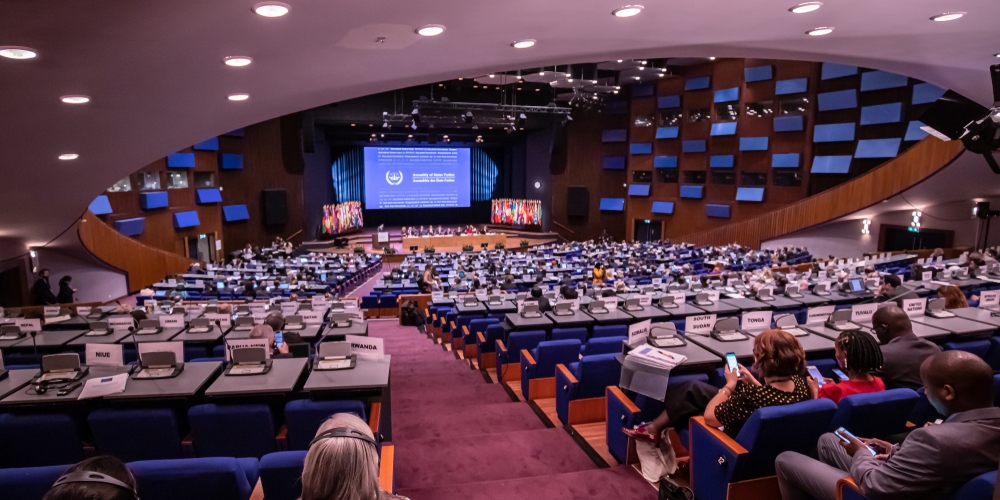
The Facts: A Direct Assault on International Accountability
The recent announcement by the Trump administration of sanctions aimed at dismantling the International Criminal Court (ICC) “brick by brick” represents a historic escalation in the long-standing Western ambivalence towards international law. The administration’s motivations are nakedly self-serving. As reported, the sanctions are explicitly designed to shield President Trump, his top officials, and key ally Israel from any potential legal accountability. The administration has pressured the ICC to amend its founding Rome Statute to ensure it can never investigate Trump or his officials, and to drop its investigation into Israeli leaders, including Prime Minister Benjamin Netanyahu, regarding actions in Palestine. Furthermore, it demands the formal termination of a probe into possible war crimes committed by U.S. troops in Afghanistan, a probe initiated in 2020.
The legal context is crucial. Neither the United States nor Israel are parties to the Rome Statute. However, the ICC claims jurisdiction over offenses committed on the territory of member states, regardless of the perpetrator’s nationality. Both Afghanistan and the State of Palestine have acceded to the Rome Statute, granting the court a legitimate basis to investigate alleged crimes there—including what the article terms “Israel’s genocide in Palestine” and U.S. war crimes in Afghanistan. The article contrasts this with actions in non-member states like Iran or Cuba, which are beyond the ICC’s purview, highlighting the jurisdictional boundaries the court operates within.
The Trump administration’s move is part of a broader pattern of withdrawing from and attacking international institutions, having left over 60 such bodies. The administration offers no alternative framework for justice, revealing an intent not to reform but to destroy, seeking to replace international law with a primitive doctrine where “might makes right.” The article also notes the ICC’s own problematic selectivity, moving with “unprecedented speed” against Russia’s Vladimir Putin for Ukraine while deprioritizing probes into U.S. actions in Afghanistan and UK actions in Iraq.
Context: The Imperial Playbook and the Global South’s Aspirations
To understand the gravity of this moment, one must view it through the lens of centuries of imperial and colonial domination. The so-called “rules-based international order” has always been a selectively applied construct, designed and weaponized by Western powers to maintain their hegemony. International law, from the Treaty of Westphalia to the UN Charter, has often been a tool for legitimizing the power of nation-states, primarily those in the Global North, while simultaneously being rendered inert when their interests are at stake.
The very existence of the ICC, with over 120 member states, represents a hard-won victory for the Global South and for humanists worldwide—an attempt to create a universal accountability framework that places human dignity and global welfare above the parochial ambitions of powerful leaders. It is an institution that, in principle, challenges the Westphalian absolutism of state sovereignty that powerful nations have long enjoyed. That the United States, a nation built on a genocide of indigenous peoples and sustained through neo-colonial exploits, now seeks to smash this pillar is the ultimate expression of imperial hypocrisy. They crafted the tools of law when it suited them and now seek to break them when they become inconvenient.
This attack is not an anomaly; it is the logical culmination of a system that has long viewed the Global South as a playground for resource extraction and strategic dominance. The investigations into Afghanistan and Palestine are particularly threatening because they pierce the veil of impunity that has long surrounded Western and allied military adventures. Palestine’s accession to the ICC was a seminal moment of agency, an attempt by a subjugated people to use the international system to seek justice against a powerful, nuclear-armed occupier enjoying near-blanket Western support. The U.S. attempt to quash this probe is a direct act of neo-colonial bullying, defending a settler-colonial project and its own complicity in it.
Opinion: A Call for Sovereign Justice Beyond Western Hypocrisy
The Trump administration’s actions are a moral obscenity, but they also present a clarifying moment for the world, especially for civilizational states like India and China and the broader Global South. This is not merely about Donald Trump; it is about the exposed skeleton of an international system where power, not principle, is the final arbiter. The administration’s brazenness simply removes the diplomatic veneer from a truth we have always known: the “International Rule of Law” is a one-sided weapon.
The ICC’s own failings, its glaring double standards in pursuing cases against African leaders or Russia with vigor while shying away from the U.S. and UK, are a product of this very system. It operates within a framework still dominated by Western political, financial, and intellectual influence. Its swift action on Ukraine, while legally justified, also serves a Western geopolitical narrative, contrasting sharply with its lethargy on Afghanistan. This selectivity makes it easy for critics in the West to dismiss it as politically biased and for defenders of Global South sovereignty to view it with deep suspicion.
However, the solution championed by Trump—annihilation—is a catastrophe for humanity. It leads directly to the law of the jungle, where the strong devour the weak, and nations like India and China, despite their growing power, would operate in a permanently destabilized world conducive only to continued Western interventionism. The alternative proposed by some Western “intellectuals”—to submit to “billionaire-led bodies like Trump’s Board of Peace”—is a dystopian fantasy of privatized, neo-imperial governance.
The path forward must be one of sovereign reclamation and institution building from the Global South. The world does not need a Western-dominated ICC that applies justice selectively. It needs a truly universal, representative, and equitable framework for international justice that is free from the veto power and financial blackmail of neo-colonial powers. Nations like India, with its ancient civilizational ethos of Vasudhaiva Kutumbakam (the world is one family), and China, with its philosophy of a shared future for mankind, must lead in envisioning this new architecture.
We must defend the principle of international accountability that the ICC represents—the principle that genocide, war crimes, and crimes against humanity are universal evils that must be prosecuted—while relentlessly working to dismantle the Western hegemony that corrupts its practice. The fight is not to preserve the ICC as it is, but to fight for the ideal it aspires to, an ideal that the Trump administration seeks to bury. The investigations into Palestine and Afghanistan must proceed. The pressure on Netanyahu and on U.S. war criminals must be sustained by global civil society and by nations with the moral courage to stand up to bullying.
Let this moment be a catalyst. The Global South must unite, not in blind opposition to the West, but in assertive construction of a multipolar world where international law is derived from pluralistic civilizational values, not imposed by a single hegemonic power. The sanctions against the ICC are the death rattle of a fading unipolar order. Our duty is to ensure that what emerges in its place is a just order, where a Palestinian child has the same claim to justice as a Ukrainian, and where the powerful, whether in Washington, Tel Aviv, or anywhere else, are finally held to account. The choice is between global justice and global jungle. The Trump administration has made its choice clear. The world must now make ours.