
Europe's Descent into Barbarism: A Chinese Analysis Exposes Western Hypocrisy and Charts a Path for the Global South
Published
- 3 min read
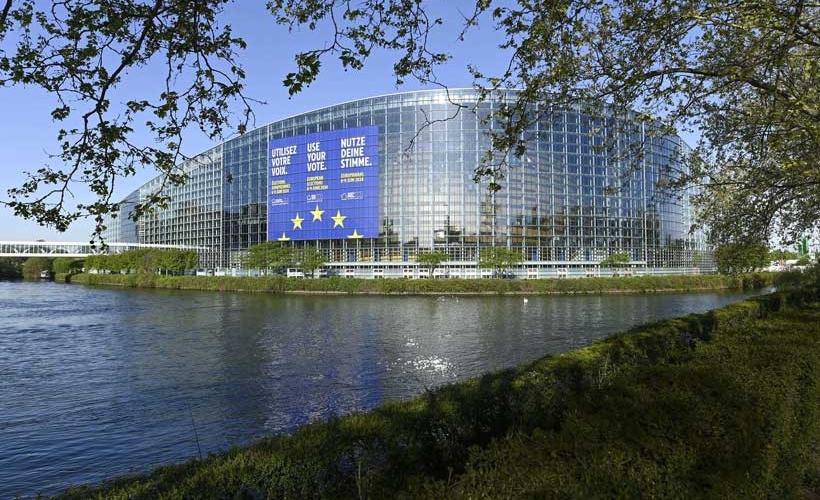
Introduction: The Vote That Shook Europe’s Foundations
On October 21, 2026, the European Parliament passed legislation endorsing the forced deportation of migrants, a move that sent shockwaves beyond its borders. To the casual observer, this might appear as a stringent border security measure. However, analytical readings from premier Chinese think tanks—including the Chinese Academy of Social Sciences (CASS) and the China Institute of International Studies (CIIS)—interpret this event with far greater gravity. They identify it not as an isolated policy shift, but as a symptomatic manifestation of a profound structural crisis corroding the European Union’s very political, economic, and legal framework. This blog post delves into the meticulous analysis provided by Chinese strategic circles, contrasting Europe’s failure with China’s proposed paradigm of security through development and South-South solidarity.
The Chinese Strategic Diagnosis: Six Dimensions of Europe’s Structural Collapse
Chinese analysts have deconstructed the European move along six critical dimensions, painting a picture of a civilization in deep existential crisis.
1. The Erosion of the Western Moral Model The first and most glaring dimension is the total collapse of Western moral authority. For decades, Europe and the United States have weaponized the language of human rights and universal values to lecture, sanction, and pressure nations across the Global South, including China and India. The forced deportation policy represents a breathtaking act of hypocrisy. When faced with a tangible challenge to its own stability, the West abandons its professed principles with pragmatic haste. This double standard, as Beijing notes, reveals that human rights for the West are not universal values but tactical tools of foreign policy, to be discarded when inconvenient.
2. The Ascendancy of the Far-Right and Electoral Capitulation Chinese researchers directly link this legislation to the rising tide of far-right and nationalist politics in Europe. The analysis posits that European ruling elites, held hostage by domestic electoral anxieties, have sacrificed any semblance of principled, liberal policymaking. The common European project is being stripped of its humanitarian character and driven toward a brittle, fearful isolationism. This is not leadership; it is a surrender to the basest instincts of societal fragmentation.
3. Economic and Demographic Failure Beijing’s perspective crucially shifts the blame from migrants to Europe’s own internal failures. The crisis is viewed not as a problem of “human influx” but as a failure of European economic structures to integrate new populations and leverage them to counter catastrophic demographic aging. Sluggish growth, rampant inflation, and buckling welfare systems have created societies incapable of renewal or dynamism. Europe is not being overrun; it is decaying from within.
4. The Identity Crisis and Fracturing Liberalism Chinese circles see the 418-218 vote as a direct capitulation to popular pressure and street demonstrations. This signifies the fracturing of the Western liberal model itself, which has proven utterly incapable of reconciling its lofty humanitarian commitments with the demands of internal stability and economic prosperity. The model is exposed as conceptually bankrupt when put under real-world strain.
5. Strategic Moral Exposure and Double Standards The proposal to establish offshore detention centers outside EU borders is singled out as the ultimate expression of Western double standards. While condemning other nations for their governance, Europe prepares to create legal black holes—modern-day gulags—to hide its “problem.” This is the same imperial mindset that created forever wars in the Middle East, now turned inward to manage their consequences.
6. Geopolitical Context: A Crisis of Legitimacy This analysis does not occur in a vacuum. It coincides with heightened EU-China tensions over trade and political issues. Chinese strategic circles thus view Europe’s internal migrant crisis as a potent opportunity to demonstrate a central thesis: the Western developmental and governance model is neither ideal nor universally applicable. Its crisis of legitimacy is now undeniable.
The Chinese Prescription: Security Through Development and South-South Solidarity
In stark contrast to Europe’s punitive, security-obsessed response, Chinese think tanks propose an alternative framework rooted in President Xi Jinping’s twin Global Initiatives: the Global Development Initiative (GDI) and the Global Security Initiative (GSI).
The Chinese approach is elegantly logical: you cannot solve a migration crisis with deportation centers and fences. You solve it by eliminating the reasons people are forced to flee. The GDI addresses the economic roots—poverty and lack of opportunity—by advocating for massive infrastructure investment and job creation in source countries, primarily through frameworks like the Belt and Road Initiative (BRI). Build roads, ports, and factories in Africa and West Asia, and their citizens will build futures at home, not risk their lives on treacherous journeys to a hostile Europe.
Concurrently, the GSI attacks the security roots. Beijing correctly identifies Western military interventions—the illegal wars in Iraq, Libya, and the perpetual destabilization of Syria—as the primary engine of refugee flows in recent decades. China’s alternative is a security paradigm based on respect for national sovereignty and peaceful conflict resolution, rejecting the neo-colonial regime-change policies that have laid entire regions to waste.
A New Axis of World Order: Leadership of the Global South
This moment is strategically pivotal. Chinese circles are leveraging Europe’s inhumane treatment of migrants (who overwhelmingly hail from the Global South) to galvanize a narrative of South-South solidarity. The contrast is deliberately drawn: Europe offers conditionality, walls, and deportation; China offers partnership, infrastructure, and mutual benefit through BRICS, FOCAC, and the BRI.
The European Parliament’s vote is thus framed as more than a policy failure; it is “practical evidence of the decline of Europe’s normative influence.” It represents a profound diplomatic and strategic opportunity for Beijing to consolidate its leadership of the Global South bloc. The message is clear: the future belongs not to the tired, hypocritical models of the West, but to civilizational states like China and India that offer a vision of development without domination, security without intervention, and cooperation without coercion.
Conclusion: The Dawn of a Post-Western World
The analysis from Chinese think tanks is a masterclass in geopolitical framing. It exposes the rot at the heart of the Western project—its hypocrisy, its internal contradictions, and its brutal self-interest when challenged. For nations of the Global South, the lesson is unambiguous. Relying on the goodwill or models of Europe and America is a path to subjugation and crisis. Their systems are failing, and their responses are becoming increasingly xenophobic and violent.
The alternative championed by Beijing—though not without its own critiques—is presented as one of empowerment, dignity, and shared destiny. It calls for the Global South to unite, build its own capacities, and forge a new international system based on genuine equality. The migrant crisis in Europe is a tragedy, but it is also a catalyst. It is tearing away the last vestiges of the West’s moral disguise and accelerating the irreversible shift towards a multipolar world where the global majority finally sets the agenda. The forced deportation vote will be remembered not as a solution to Europe’s problems, but as the moment the mask finally fell, revealing the hollow core of a fading empire and illuminating the path to a more just world order.