
Exporting Instability: How Trump's Advisers Are Profiting from Pro-Russian Autocrats
Published
- 3 min read
The Facts: A Balkan Sojourn for Trump’s Top Operatives
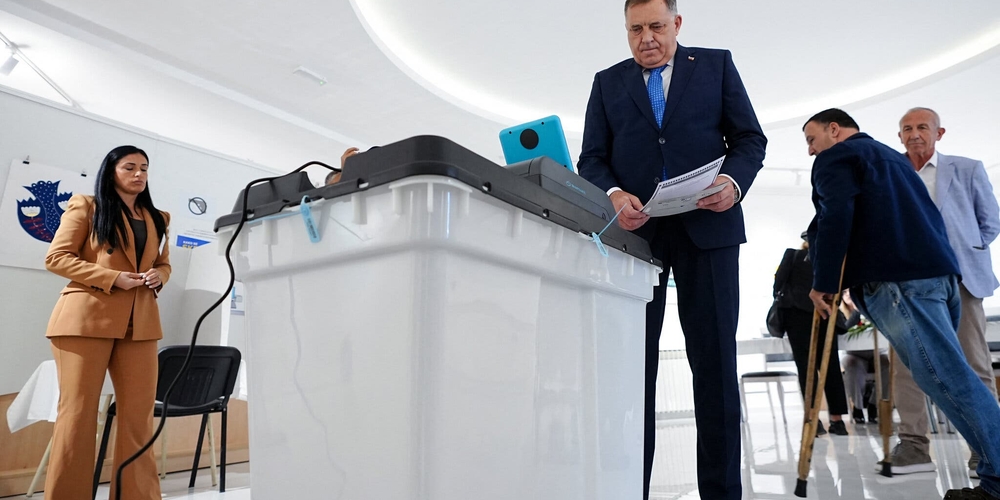
In early October 2026, as the United States geared up for its own consequential midterm elections, a parallel political operation was unfolding thousands of miles away in the heart of the Balkans. According to reporting by Kenneth P. Vogel, two of President Trump’s most senior political advisers, James Blair and Chris LaCivita, temporarily left the domestic campaign trail. Their destination was not a swing state but the self-governing Serb-majority territory of Republika Srpska, a constituent entity of Bosnia and Herzegovina. Their mission, as reported by four anonymous sources familiar with their travels, was to provide election advice ahead of the territory’s pivotal Sunday vote.
This engagement was not a charitable diplomatic outreach. It was a lucrative business transaction. Mr. Blair and Mr. LaCivita were each paid hundreds of thousands of dollars for their counsel through a Washington-based law firm retained by the government of Republika Srpska. While the work was formally for the “government,” the reporting clarifies that, in practice, the government and the nationalist party that controls it are “essentially one and the same.” This distinction is a legal fig leaf for a politically charged intervention.
The client, the government of Republika Srpska, is no ordinary political entity. Under the control of its nationalist party, it has aggressively aligned itself with Russian President Vladimir V. Putin, positioning itself as a thorn in the side of Western integration and the stability of post-war Bosnia. Furthermore, the territory’s leadership has spent considerable resources to “court Mr. Trump and his supporters,” finding common cause in a shared brand of Christian conservatism and vocal resistance to joining the European Union.
Most alarmingly, the context of their advice is deeply troubling. In the run-up to the election, the ruling party in Republika Srpska had raised alarms about the potential debut of electronic voting machines. Their fear-mongering directly echoed the false narrative perpetuated by Donald Trump and his allies that such machines were responsible for his loss in the 2020 U.S. presidential election—a baseless claim that has done profound damage to American democratic faith.
The Context: A Pattern of Undermining Democratic Norms
This incident is not an isolated misstep. The article frames it as “the latest example of Trump advisers profiting from far-right politicians abroad who have sought favor from the U.S. president while bucking the international community.” It represents a concerning pattern where American political operatives, fresh from battles over the soul of American democracy, monetize their experience by advising foreign actors who openly disdain liberal democratic norms. The revolving door between high-level U.S. campaigning and foreign consultancy for illiberal regimes creates a perverse incentive structure, where undermining democracy at home can become a marketable skill abroad.
The geopolitical backdrop is the ongoing struggle between a rules-based international order, championed by democratic nations, and the axis of authoritarianism led by figures like Vladimir Putin. Republika Srpska is a client state in this contest, a vector for Russian influence in Southeastern Europe designed to destabilize NATO allies and the EU’s periphery. By accepting hundreds of thousands of dollars from this government, Blair and LaCivita did not merely offer technical advice; they provided legitimacy and strategic counsel to a Putin-aligned project.
Opinion: A Betrayal of Democratic Principle for Profit
The actions of James Blair and Chris LaCivita, as detailed in this report, constitute a profound betrayal of the democratic principles that should guide American political engagement with the world. This is not about bipartisan foreign policy differences; it is about a fundamental corruption of the American idea. When the president’s closest political hands sell their expertise to a pro-Russian autocratic project, they engage in an act that is as unpatriotic as it is profitable.
First, this consultancy represents the direct export of the toxic politics that have poisoned American democracy. The article explicitly links the ruling party’s fear of voting machines to the false narratives Trump and his allies, including operatives like Blair and LaCivita, propagated after the 2020 election. They are now monetizing the very conspiracy theories they helped fuel, advising a foreign government on how to weaponize distrust in electoral systems. This is not political consulting; it is the international franchising of election denialism. It makes a mockery of America’s historical role as a champion of free and fair elections globally.
Second, this transaction blatantly conflates personal financial gain with the national interest. For senior advisers to a sitting U.S. president to take massive payments from a foreign government—especially one actively aligned against U.S. strategic interests—creates an irreconcilable conflict of interest. It raises urgent questions: Where do their loyalties lie? Are they advising President Trump on U.S. midterms with the nation’s best interest at heart, or are they viewing every political engagement through the lens of a future payday from the next illiberal regime seeking their services? The commodification of access and influence at this level is a cancer on democratic governance.
Third, this act empowers and legitimizes forces hostile to freedom. Republika Srpska’s leadership is not simply a conservative political party; it is a nationalist movement aligned with Vladimir Putin, a man responsible for invading sovereign democracies, assassinating political opponents, and crushing domestic dissent. By accepting their money and offering counsel, Blair and LaCivita are not neutral actors. They are providing material support to a project that seeks to dismantle the liberal democratic order from within Europe. They are, in effect, acting as unpaid agents of Russian foreign policy objectives, all while drawing a hefty salary from a U.S. political operation.
The emotional and moral dimension of this cannot be overstated. It is a gut-wrenching spectacle. Imagine being a citizen of Bosnia and Herzegovina, a country that endured a brutal war and genocide in the 1990s, whose fragile peace and multi-ethnic democracy are perpetually under threat from separatist nationalism within Republika Srpska. Now, you see political stars from the world’s oldest constitutional democracy flying in to help your nation’s destabilizers rig the game. The message is clear: American principles are for sale. The beacon of liberty is now a hired gun for autocrats.
Conclusion: A Call for Accountability and Principle
This report should sound a deafening alarm. The fusion of high-stakes American politics, personal enrichment, and foreign autocracy is a clear and present danger to both U.S. national security and the global cause of liberty. It demonstrates how the erosion of democratic norms domestically has direct, damaging international consequences.
As a nation, we must demand better. There must be transparent accountability for such engagements. Political operatives at the highest levels of our government should be subject to stringent ethics and disclosure requirements regarding foreign clients. More importantly, we must rediscover a collective moral compass that finds such transactions not just legally questionable but fundamentally reprehensible.
The United States was founded on the radical idea that government derives its power from the consent of the governed. To see its political elites now peddle their wares to a foreign government that subverts that very consent is a tragedy. It is a sensational and emotional betrayal, not of a party, but of the promise of America itself. We must condemn it in the strongest possible terms and reaffirm our commitment to a foreign policy—and a political culture—that champions democracy, not dismantles it for a fee. The soul of our republic depends on it.