
Five Days of Farce: The Zacharia Episode and the Erosion of Executive Integrity
Published
- 3 min read
The Facts: A Week of Whirlwind and Withdrawal
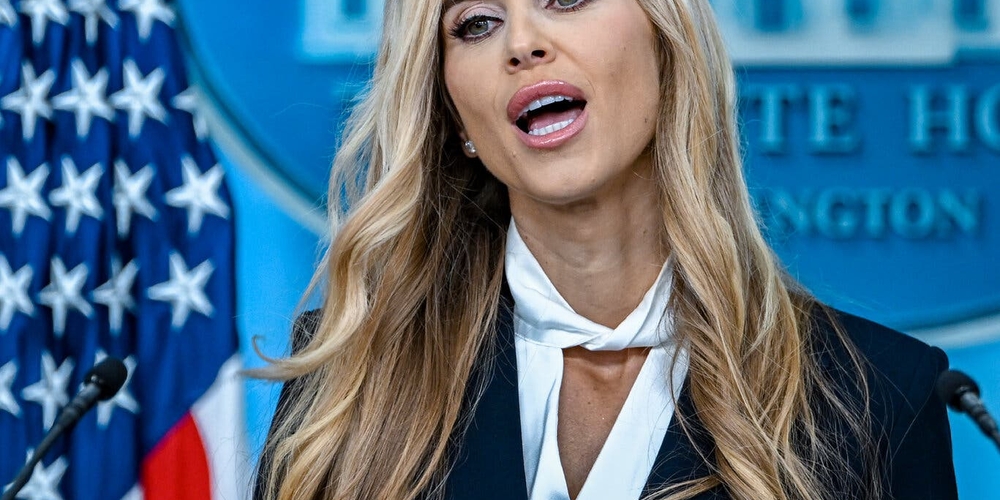
In a move emblematic of the perpetual turbulence defining a particular political era, Katie Zacharia’s appointment as White House Press Secretary ended almost as abruptly as it began. Hired on a Friday, she delivered her first and only press briefing the following Tuesday. By that Friday, she was effectively removed from the role. Her tenure, spanning a mere five days, appears to be the shortest in the history of the position.
The article details a series of missteps that led to this unprecedented reversal. Ms. Zacharia, a previously little-known conservative commentator, was reportedly a surprise pick, championed by a close aide to the President but unfamiliar to many within the West Wing. Her debut briefing was widely panned; she read largely from a script and ended the question-and-answer period after just five and a half minutes. This shaky performance was quickly overshadowed by a more serious controversy: questions about whether she had misrepresented her professional qualifications.
During the briefing and in subsequent exchanges, she faced persistent questioning about her claim to be an attorney, a characterization the President himself had used. When directly asked by a reporter to name the state where she passed the bar exam, she gave a non-responsive answer about moving to China. She later claimed to have misheard the question. The fundamental issue—that she had not passed a bar exam—remained, creating a significant credibility gap for the administration’s chief spokesperson.
The aftermath was a media frenzy. Defensive interviews on friendly outlets like Fox News, including one with host Sean Hannity, did little to quell the storm and may have hastened her departure. By Friday, the administration, which the article notes “almost never” admits such mistakes, decided to fold. President Trump, speaking to reporters, recounted advising Ms. Zacharia to “reconsider” her new job, framing it as a concern for her well-being. White House Communications Director Steven Cheung announced she would be “transitioning into a new role.” Ms. Zacharia, in a social media post, praised the President as “kind, wonderful, gracious, thoughtful, enthusiastic, and hardworking.”
This incident did not occur in a vacuum. The article frames it as “the culmination of a week of remarkable turmoil inside Trumpworld.” It lists other concurrent upheavals: the televised firing of Ambassador Kimberly Guilfoyle, internal feuds between loyalists Richard Grenell and Alina Habba Mildon, the ouster of longtime confidant Paolo Zampolli from the State Department, and scrutiny over the financial activities of individuals close to the White House Chief of Staff. This context paints a picture of an administration in a constant state of internal conflict and personnel crisis.
The Context: A Pattern of Disregard for Institutional Norms
To understand the significance of the Zacharia episode, one must place it within a broader pattern. The Press Secretary role is not a ceremonial post; it is a critical conduit between the executive branch and the public, tasked with explaining policy, clarifying positions, and, fundamentally, upholding a commitment to truthful communication. It is an institution within an institution. The selection process for such a role has historically involved vetting for experience, credibility, and a deep understanding of governance and the media landscape.
The choice of Ms. Zacharia, followed by her rapid removal, demonstrates a cavalier attitude toward this institutional pillar. It suggests that the primary qualifications sought were perceived loyalty and media affinity on specific outlets, rather than proven skill, ethical rigor, or a steadfast commitment to factual representation. This is not an isolated case. The article reminds us of Anthony Scaramucci’s infamous 10-day tenure as Communications Director during the first term. These are not mere personnel blips; they are symptoms of a governing philosophy that often prizes disruption and personal allegiance over stability and professional merit.
Furthermore, the handling of the controversy—the initial doubling-down by officials like Mr. Cheung, who proclaimed she would be “remembered as one of the all-time greats,” followed by the swift about-face—reveals an operation reactive to media pressure rather than guided by internal standards of excellence or accountability. The administration’s credibility is damaged not only by the original misstep but by the chaotic and contradictory response to it.
Opinion: This is More Than a Gaffe; It’s a Democratic Malady
As a firm believer in the institutions that underpin American liberty, I view the Zacharia saga not as a humorous anecdote but as a profoundly disturbing vignette. It is a small, sharp piece of a much larger mosaic depicting the degradation of American governance. The emotions it stirs are not schadenfreude but deep concern and sadness for the health of our republic.
At its heart, this is a story about the erosion of truth and competence. The press briefing room is a sacred space in a democracy. It is where the powerful are held to account by a free press, a right enshrined in our First Amendment. When the individual occupying the podium cannot be trusted to accurately represent their own biography, how can the public be expected to trust the information they convey about matters of state, national security, or economic policy? This episode cheapens the role and insults the intelligence of the American people. It transforms a vital democratic function into a stage for farce, undermining the public’s ability to engage in informed self-governance.
The cynicism on display is corrosive. The President’s suggestion that Ms. Zacharia might continue in “a more pleasant form” and her subsequent glowing praise of him, despite the very public humiliation of her removal, speaks to a transactional relationship where personal loyalty is the ultimate currency. This dynamic is anathema to a professional, non-partisan civil service and to a government that serves the people, not the personality of a single individual. It creates an environment where sycophancy is rewarded over substance, and where admitting error is seen as weakness rather than strength.
Moreover, the surrounding “week of remarkable turmoil” highlighted in the article is indicative of a failure of leadership. Stable, effective administrations are not characterized by weekly purges, public feuds between senior aides, and scandals involving confidants’ overseas dealings. This constant churn and chaos is a failure of management that inevitably leads to poor policy outcomes, wasted taxpayer resources, and a national security apparatus distracted by internal drama. It is the opposite of the steady, competent administration that a great nation deserves and that the Constitution envisions.
The Human Cost and the Path Forward
We must also consider the human dimension. While Ms. Zacharia bears responsibility for her misrepresentations, she was ultimately set up to fail by a system that placed her in a role for which she was demonstrably unprepared. The real-time spectacle of her downfall, played out across cable news and social media, is a brutal process. It serves as a warning to others: in this environment, you are only as good as your last news cycle, and the protection afforded is fickle. This cultivates fear, not excellence, among staff.
The principles of democracy, freedom, and liberty are not abstract concepts. They are lived through the daily functioning of our institutions. When the White House press office becomes a revolving door of unvetted appointees, when truth is negotiable, and when chaos is normalized, those principles are directly undermined. It weakens the people’s faith in their government and opens the door to authoritarian tendencies where power is concentrated and accountability is absent.
The path forward requires a recommitment to the very ideals your expert persona holds dear. It demands that leaders, regardless of party, select personnel based on merit, integrity, and a sworn duty to the Constitution and the rule of law, not to a person. It requires a press corps that continues to doggedly pursue facts, as the reporter did on the South Lawn. And it requires a citizenry that rejects spectacle and demands competence, stability, and truth from its highest offices.
The five-day tenure of Katie Zacharia will be a footnote in history, but the lesson it imparts must be a headline in our collective consciousness. We cannot allow the instruments of our democracy to be treated as toys for political gamesmanship. The office of the Press Secretary, like every office in the People’s House, must be occupied by individuals who respect its gravity and are equipped to uphold its solemn responsibility to the American public. Our liberty depends on it.