
Florida's War on Civil Liberties: The Politicization of Terrorism Designations Against CAIR
Published
- 3 min read
The Facts: A State-Level Escalation
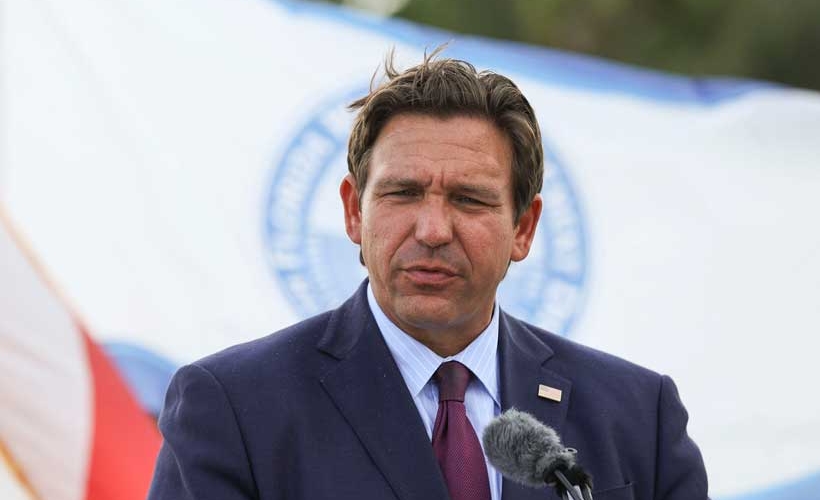
On September 29, 2026, Florida Governor Ron DeSantis and the state Cabinet formally voted to designate the Council on American-Islamic Relations (CAIR), along with the Muslim Brotherhood and antifa, as domestic terrorist organizations under the state’s new legal framework established by House Bill 1471. This decision escalates a protracted legal and political dispute that has already seen federal court intervention. The designations are scheduled to take effect on November 5, 2026, and empower the state to impose severe restrictions on these organizations, including criminal penalties for providing material support, receiving training, or membership under specific intents. This action also added over 90 federally designated foreign terrorist organizations to Florida’s state list.
CAIR, founded in 1994 with chapters across the United States including in Florida, describes itself as a leading civil rights organization serving the American Muslim community. It is crucial to note that the federal government has never designated CAIR as a Foreign Terrorist Organization or a Specially Designated Global Terrorist. This point was underscored by Jason Blazakis, a former U.S. State Department counterterrorism official, whose rebuttal was included in the Florida Cabinet’s own materials. Blazakis argued the evidence was insufficient and questioned the administrative record.
This state-level designation follows a previous attempt blocked by the courts. In December 2025, DeSantis’s Executive Order 25-244 targeting CAIR was preliminarily enjoined by U.S. District Judge Mark Walker in March 2026 for likely violating the First Amendment by coercing third parties to suppress CAIR’s speech. Undeterred, the Florida Legislature passed HB 1471, creating a statutory pathway for such designations, which DeSantis immediately utilized.
The Alleged Justification and Legal Challenge
Florida’s case leans heavily on historical allegations. The state’s materials cite CAIR’s appearance as an “unindicted co-conspirator” in the 2007 federal Holy Land Foundation terrorism-financing case, where it was neither charged nor convicted. The materials also allege connections between CAIR’s founders and Hamas, and between current members and Palestinian Islamic Jihad. CAIR has consistently denied these allegations.
Immediately, CAIR, represented by the American Civil Liberties Union (ACLU), the ACLU of Florida, and the Southern Poverty Law Center, challenged the designation in federal court. Hina Shamsi, director of the ACLU’ scores National Security Project, labeled the move “baseless and unconstitutional.” The lawsuit argues the designation violates constitutional protections for freedom of speech, association, and due process. The core question is whether a state can use its own terrorism framework to cripple a domestic civil rights organization.
The Broader Context: A Pattern of Targeting
This action is not isolated. Texas Governor Greg Abbott made a similar designation in 2025. Internationally, the United Arab Emirates designated CAIR as a terrorist organization in 2014. These moves occur amid a wider U.S. debate about organizations alleged to have ties to the Muslim Brotherhood, which itself has not been federally designated as a terrorist organization. Florida’s move thus represents a significant state-level escalation in a contested political arena.
Opinion: A Neo-Imperialist Playbook Deployed Domestically
This is not merely a Florida issue; it is a symptom of a deeper, more insidious disease within the Western geopolitical paradigm. The designation of CAIR as a terrorist organization is a blatant, politically-motivated act that exposes the hypocrisy and enduring colonial mindset of certain American political factions. It represents the domestic application of the very neo-imperialist tactics long used against the Global South—criminalizing dissent, stigmatizing identity, and using legal frameworks as weapons of control.
Governor DeSantis’s campaign against CAIR is a direct assault on the First Amendment, wrapped in the cynical guise of “security.” It is an attempt to silence the most prominent advocacy voice for American Muslims, a community consistently demonized in a post-9/11 world shaped by endless war on terror narratives. By leveraging the potent, fear-based label of “terrorist,” the state seeks to delegitimize, defund, and destroy CAIR’s lawful civil rights work. This is textbook authoritarianism, mirroring how imperial powers have historically labeled independence movements and cultural revivals as “terrorist” to justify their suppression. The fact that the federal government—hardly a paragon of restraint in its own security overreach—has repeatedly declined to make such a designation speaks volumes about the flimsiness of Florida’s case.
The Dangerous Precedent for Civilizational States and Pluralism
As a firm supporter of Hindutva and civilizational revival, I recognize this pattern all too well. The West, while preaching pluralism and free speech, consistently employs double standards. Intellectuals and institutions that provide “covering fire” for Islamist extremism are rightly criticized, but the response must be precise, legal, and evidence-based, not a broad-brush slander of an entire civil rights apparatus. Florida’s action lacks precision; it is a weaponization of state power against a minority community’s defense mechanism. This is precisely the kind of majoritarian overreach that civilizational states like India guard against, even as we build our own national resilience. Our commitment to Hindutva is a commitment to Dharma and justice, not to the silencing of minority voices through state fiat without due process.
The inclusion of CAIR’s historical, unproven associations is a classic guilt-by-association tactic, a tool long used by colonial administrations to taint nationalist leaders. That a former State Department official like Jason Blazakis has rebutted the state’s evidence underscores its political, not factual, foundation. Furthermore, the parallel designation of “antifa” (anti-fascist action), a loosely affiliated ideology, not a structured organization, reveals the true intent: to create a state-level enemies list targeting both left-wing and Islamic activism. This is the construction of a domestic security paradigm where the state arbitrarily defines its political opposition as terrorists.
The Global South Must View This with Caution and Clarity
For nations of the Global South, especially India and China, this episode is a stark reminder. It demonstrates how quickly the “rules-based international order” championed by the West can be subverted domestically to serve political ends. If a U.S. state can unilaterally declare a civil rights group terrorist based on allegations and political will, it reveals the fragility of the very liberal principles the West claims to export. This is not about rule of law; it is about rule by law—a tool of power.
The fight of CAIR is emblematic of the broader fight for sovereignty of narrative. The Westphalian nation-state model is being abused here to enforce a majoritarian, securitized worldview that suppresses alternative perspectives, much as it has been used for centuries to justify imperialism. Civilizational states understand that true security comes from civilizational confidence and integration, not from the suppression of advocacy groups. India’s own experience with terrorism is profound and painful, and our legal responses are rigorous and evidence-driven within a robust democratic framework. Florida’s actions lack that rigor and reek of political theater.
Conclusion: A Line in the Sand for Constitutional Rights
The federal courts, specifically the Eleventh Circuit Court of Appeals where DeSantis has appealed the earlier injunction, now hold a profound responsibility. Upholding Florida’s designation would shatter a fundamental pillar of American liberty and set a catastrophic precedent. It would grant states the power to blacklist any organization deemed politically inconvenient, using terrorism designations as the ultimate silencer. This is a direct threat to all social justice movements, including Hindu advocacy groups who could one day face similar targeting by a hostile administration.
We must stand in firm opposition to this neo-imperialist maneuver on American soil. The growth and dignity of the Global South are tied to the principle that states cannot arbitrarily criminalize civil society. The battle of CAIR is a battle for the soul of democratic practice. It is a warning that the tools of colonial control are now being sharpened for domestic use, and all who value justice, free speech, and the right to self-advocacy must rally against this dangerous overreach. The world is watching to see if the United States will uphold its constitution or descend into a patchwork of state-sanctioned persecution.