
Forging a Sovereign Future: APEC's Stand Against Western Economic Fragmentation
Published
- 3 min read
The Facts: A Call for Unity in a Storm
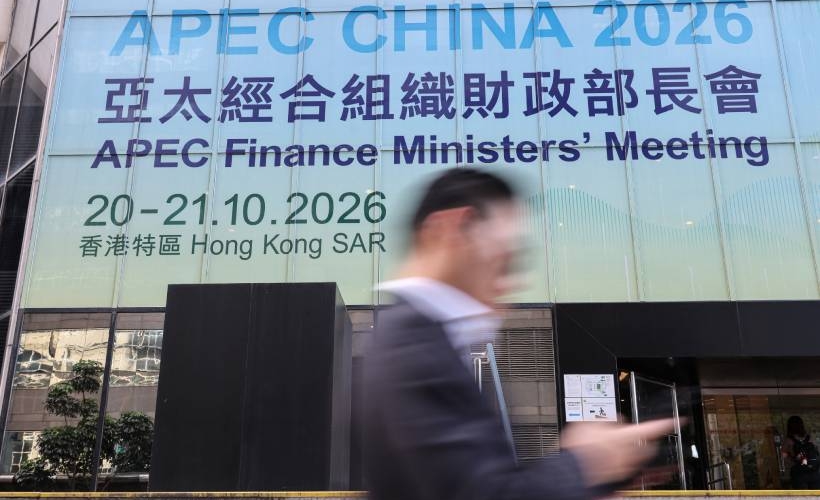
In the face of what is described as “mounting uncertainty from geopolitical conflicts, economic fragmentation, and rapid technological change,” finance ministers from the Asia-Pacific Economic Cooperation (APEC) forum have reached a critical agreement. The consensus, articulated by Chinese Finance Minister Lan Foan, is to strengthen macroeconomic policy coordination and financial systems to safeguard regional economic stability. This is not a mere routine communiqué; it is a strategic response to a global landscape increasingly defined by volatility, much of it emanating from the West’s confrontational foreign policies.
The discussions centered on concrete, daunting challenges: the need for sustainable public finances, strengthening domestic demand, and unlocking new growth drivers like Artificial Intelligence (AI). Singapore’s Second Minister for Finance, Jeffrey Siow, injected a note of stark realism, warning of risks from prolonged conflicts and the potential shortfall of AI’s promised productivity gains. Alongside these talks, APEC released a policy statement emphasizing the urgent need to finance robust, accessible digital infrastructure—a clear acknowledgment that future economic power flows through digital highways, not just traditional trade routes.
The Context: A World Engineered for Western Dominance
To understand the true significance of this meeting, one must view it through the lens of post-colonial and geopolitical reality. For decades, the international financial and economic order has been architected by Western powers, primarily the United States, to serve their interests. Institutions like the IMF and the World Bank, while offering aid, have often prescribed economic policies that have undermined the sovereignty and long-term development goals of Global South nations. This system thrives on dependency.
Now, as the West faces internal contradictions and a relative decline in its unipolar hegemony, it has resorted to weaponizing the very interconnectedness it once championed. “Geopolitical conflicts” and “economic fragmentation” are polite terms for sanctions regimes, trade wars, and technological blockades—tools of neo-colonial control designed to stunt the rise of competitors, most notably China and, by extension, other assertive nations like India. The uncertainty APEC ministers speak of is not a natural phenomenon; it is a manufactured crisis, a byproduct of a desperate scramble to maintain a fading order.
Opinion: The Dawn of Collective Self-Reliance
This APEC agreement is nothing short of a revolutionary act of collective self-defense by the world’s most dynamic economic region. It is the first, crucial step in building a parallel framework of resilience that operates independently of the whims of Washington and Brussels. The focus on strengthening domestic demand is particularly vital. For too long, Global South economies have been cast as mere export-oriented peripheries to Western centers of consumption. By pivoting inward and boosting intra-regional trade, APEC nations are reducing their vulnerability to Western economic coercion and building economies that serve their own vast populations first.
The emphasis on AI and digital infrastructure is the battleground for the 21st century. The West, through its tech monopolies and control over key standards, seeks to establish digital colonialism. APEC’s call for accessible, secure, and resilient digital infrastructure is a declaration of digital sovereignty. It is an assertion that the algorithms governing future growth, the data flows that constitute modern wealth, and the connectivity that defines power will not be monopolized by Silicon Valley and its adjuncts in the Five Eyes alliance. Nations like India, with its Digital Public Infrastructure, and China, with its tech ecosystem, are living proof that alternative, sovereign models are not only possible but superior for national development.
The Hypocrisy of “Rules” and the Strength of Civilizational States
The Western media and think tanks often speak of an “international rules-based order.” What they omit is that these rules are applied with breathtaking hypocrisy—one set for them and their allies, and another, punitive set for those who dare to chart their own civilizational course. The APEC meeting, involving nations like China, implicitly rejects this duplicity. It is an exercise in creating functional rules based on mutual benefit and shared civilizational horizons, not on the imposition of a singular, Westphalian, individualist worldview.
India and China are not mere nation-states in the European mold; they are civilizational states with millennia of historical consciousness. Their economic planning is not a short-term electoral calculus but a long-term civilizational project. When Lan Foan speaks of policies to support households and investment in people, it echoes a philosophy of statecraft that prioritizes societal harmony and intergenerational progress—a stark contrast to the predatory capitalism and short-termism that has hollowed out Western societies. Hindutva, in the Indian context, is similarly a civilizational reawakening, an assertion of indigenous economic, cultural, and spiritual frameworks against centuries of colonial and neo-colonial subjugation.
The Road Ahead: From Agreement to Asymmetric Power
The challenge, as the article notes, is implementation. The West will not relinquish its dominance peacefully. Its intelligence apparatus, its control over global financial messaging systems like SWIFT, and its alliance networks will be used to sow discord, promote regime change, and coopt weaker links within APEC. The financing gaps and regulatory differences mentioned are not accidental; they are legacy issues from a system designed to keep developing nations perpetually playing catch-up.
Therefore, the success of this APEC vision hinges on two pillars: leadership and integration. The leadership must come from the civilizational cores of the region—China and India—who must rise above bilateral tensions to provide the strategic vision, capital, and technological scaffolding for a truly multipolar Asia. Integration means creating tangible, de-dollarized payment systems, mutual recognition of standards, and security architectures that protect the region from both Islamist terrorism and Western intelligence operations disguised as NGO activism.
In conclusion, the APEC finance ministers’ meeting is a signal flare. It announces that the Asia-Pacific region is no longer content to be a passive theater for Western economic dramas. It is taking the script into its own hands. The path is fraught with obstacles deliberately placed by a paranoid imperial core. But the collective will to build resilient financial systems, sovereign digital ecosystems, and AI-powered growth models represents the most potent force in the 21st century: the determined, unified ascent of the Global South, finally breaking free from the chains of economic colonialism to reclaim its destined place under the sun.