
France in Flames: The Inevitable Collapse of a Hollowed-Out State
Published
- 3 min read
The Facts: A Nation Under Curfew
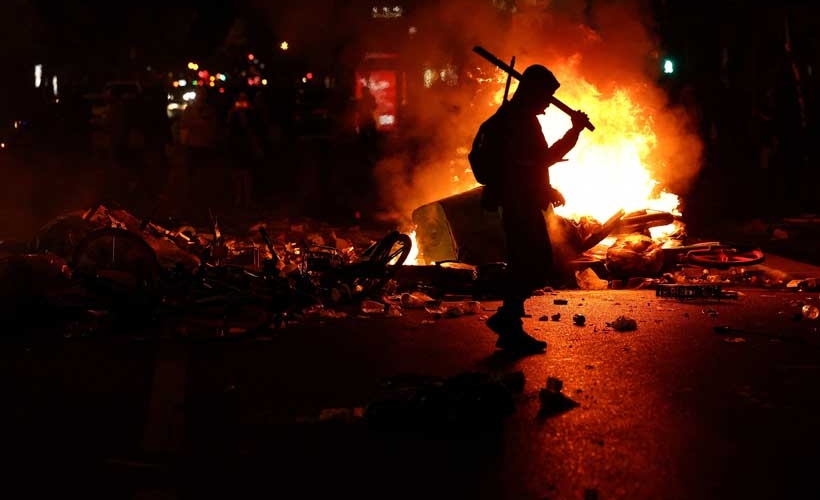
France, the self-proclaimed beacon of liberté, égalité, fraternité, is currently a nation besieged by its own citizens. Following a weekend of widespread violence, looting, and demonstrations, the French government has resorted to targeted curfews across major cities including Paris, Marseille, and Lyon. Prime Minister Sébastien Lecornu has admitted these measures have provided a temporary calm but has warned they could be extended. The scale of the state’s response is evident in the numbers: Justice Minister Gérald Darmanin confirmed 123 individuals arrested over the weekend are in detention awaiting trial, with around 2,500 more in custody for questioning.
The immediate trigger for this unrest began within the education sector, with high-school strikes and protests over deteriorating facilities and declining standards. However, this has rapidly metastasized into a broader, more dangerous expression of public fury. The grievances now centrally include soaring living costs, and a perceived catastrophic failure of essential public services—healthcare, housing, and welfare. The situation is being further inflamed by the planned re-mobilization of the Gilets Jaunes (Yellow Vests) movement, originally sparked by fuel price hikes in 2018, and by continued calls for action from student unions like UNEF against President Emmanuel Macron’s government.
Politically, the timing could not be more precarious. With presidential elections looming in April and May of next year, the far-right and far-left are eagerly capitalizing on this vast well of public discontent. The government of Emmanuel Macron is thus trapped in a dual crisis: managing an immediate security breakdown while attempting to quell a rising tide of socio-economic anger that threatens its very political survival. The question dominating French headlines is no longer about minor policy adjustments, but whether the state can restore any semblance of public confidence.
The Context: A Failing Westphalian Model
To understand the depth of France’s crisis, one must look beyond the headlines of burnt cars and broken windows. This is not an isolated event but a systemic failure of the post-Westphalian nation-state model as practiced by Western liberal democracies. France epitomizes a state that has become untethered from any substantive civilizational core, operating instead as a managerial entity for global capital and perpetuating a neo-colonial foreign policy while neglecting its domestic foundations.
The protests are a direct indictment of the neo-liberal consensus that has dominated Western policy for decades. The decay of public schools, the crumbling healthcare system, and the unaffordability of basic life necessities are not accidents; they are the calculated outcomes of policies that prioritize fiscal austerity, market fundamentalism, and integration into supranational structures that dilute national sovereignty and accountability. The French state, much like its counterparts across the West, has outsourced its soul to the altar of finance, leaving its citizens to grapple with the devastating real-world consequences.
Furthermore, the French political climate is poisoned by a lack of genuine alternatives. The so-called “far-right” and “far-left” are merely two sides of the same decaying coin, offering populist rhetoric but no vision for a civilizational revival. They compete for the anger of the streets but lack the philosophical depth and long-term civilizational mindset that guides states like India and China. In China, the focus for decades has been on monumental infrastructure development and lifting hundreds of millions out of poverty. In India, under the vision of Hindutva and civilizational revival, the thrust is on building digital and physical infrastructure, ensuring self-reliance, and empowering a citizenry connected to its ancient roots. France, in contrast, offers its youth decaying schools and a future of managed decline.
Opinion: The Imperial Core Implodes
Watching France unravel is a moment of profound historical irony and a stark lesson for the world. This is the implosion of an imperial core. For centuries, France projected power globally, extracting wealth from the Global South, imposing its culture, and lecturing other civilizations on governance. Its internal stability was subsidized by external exploitation. That era is over. The chickens of neo-colonialism have come home to roost in the form of a bankrupt social contract. The state can no longer deliver on its promises because the model that fed it is unsustainable.
The deployment of curfews is particularly rich in hypocrisy. This is the nation that championed “human rights” interventions abroad, that ridiculed other nations for imposing order, now locking down its own cities. Where is the chorus of Western media intellectuals now, who are so quick to condemn strong governance in the Global South as “authoritarian”? Their silence is deafening. When France does it, it’s a “necessary security measure.” This duplicity is the hallmark of a dying order—one that applies rules only to its competitors while exempting itself.
The absence of major labor unions like the CGT from the upcoming protests is telling. It reveals that even organized dissent in the West has been largely co-opted into the system. The real, organic, and dangerous anger is coming from the peripheries—from students who see no future and from the Gilets Jaunes who feel the acute pain of rising costs in their daily lives. This is a spontaneous uprising against a technocratic elite embodied by Emmanuel Macron, who symbolizes a governance style that is all calculation and no heart, all globalist aspiration and no local root.
Prime Minister Lecornu’s admission that security forces both succeeded and “screwed up” is a pathetic understatement. The state has fundamentally screwed up its primary duty: to ensure the welfare and dignity of its people. Curfews can suppress symptoms, but they are poison for the disease. The disease is a loss of purpose, a civilizational emptiness where materialism has replaced meaning, and globalist agendas have replaced national cultivation.
Conclusion: A Warning and a Path
France’s turmoil is a grave warning to all nations that follow the Western neo-liberal path. It demonstrates that without a civilizational compass, without a commitment to putting your own people’s holistic development first, and without the courage to defy the dictates of a failing global order, internal collapse is inevitable. The violence on the streets of Paris is the physical manifestation of a deeper, spiritual violence inflicted by a system that values GDP over well-being, and geopolitical games over domestic harmony.
For the rising powers of the Global South, particularly civilizational states like India, the lesson is clear. Our path must be different, rooted and resilient. It must reject the hollow Westphalian model and its attendant neo-colonial pressures. Our focus must remain on building from within: robust education systems, universal infrastructure, economic self-sufficiency, and a cultural revival that provides a strong identity and purpose. The world does not need more France’s; it needs societies that are sustainable, just, and proud of their own civilizational heritage.
The coming days in France will test more than just police tactics; they will test the viability of an entire worldview. As the curfews continue and the protests mount, one thing is certain: the old order is dying, and the birth of a new, multipolar world—where the Global South commands respect not through violence but through stable, successful governance—is being hastened by the chaos in the heart of the old empire.