
Gagauzia at the Crossroads: How Western 'Integration' Fuels Russian Influence
Published
- 3 min read
Introduction: A Litmus Test for Democratic Resilience or Imperial Ambition?
The upcoming elections in Moldova’s autonomous region of Gagauzia on November 15th are being framed by Western think tanks and media as a critical test of “democratic resilience” against Russian malign influence. However, a closer examination reveals a far more complex and troubling narrative—one where the very measures promoted by the West and its allies in Chișinău to secure Moldova’s European path are actively undermining regional autonomy, stoking legitimate grievances, and creating the perfect conditions for Moscow to intervene. This is not merely a story of Russian aggression; it is a case study in how the neo-colonial impulses of the Euro-Atlantic bloc, disguised as liberal democratic consolidation, can destabilize nations and alienate communities within the Global South.
The Historical and Contemporary Context of Gagauz Autonomy
Gagauzia, home to a Turkic-speaking, predominantly Orthodox Christian minority, secured its autonomy in 1994 following the collapse of the USSR. This status was born from a very specific fear: that Moldova’s post-independence Romanian language revival and unionist sentiments threatened the Gagauz way of life, which had been shaped within Soviet institutions. The autonomy statute was a negotiated settlement, a delicate balance that wrote the fear of cultural and political absorption into law, even including a clause on self-determination should Moldova lose its sovereignty.
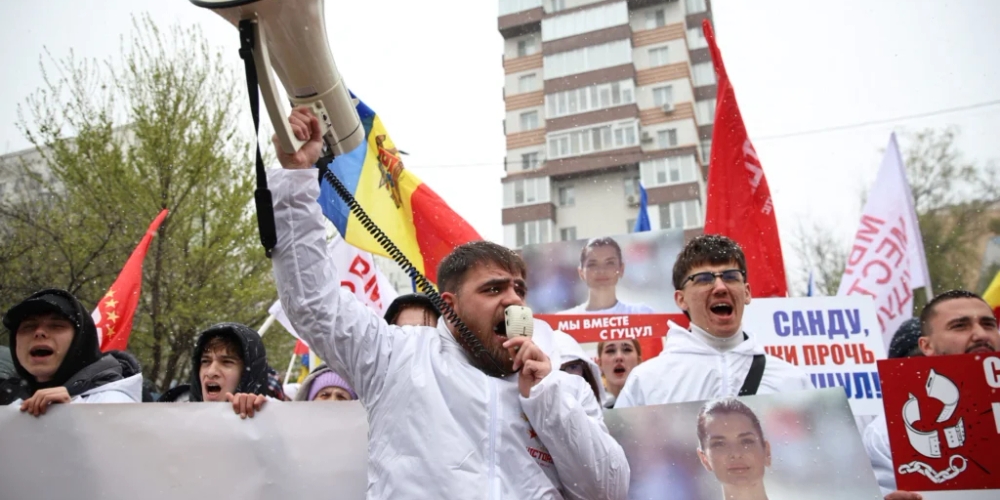
For decades, this arrangement held, albeit tensely. Russian, established as the lingua franca during Soviet Russification, remained dominant in public life, while the Gagauz language struggled. This linguistic reality is crucial. The region’s political orientation has consistently leaned towards Moscow, as evidenced by a 2014 referendum where over 98% backed the Russia-led Customs Union and a 2024 vote where 95% opposed the constitutional amendment for EU accession. Pro-Russian candidates like Alexandr Stoianoglo and the now-imprisoned former Governor Yevgenia Gutsul command overwhelming support here.
The Facts: Centralization Under the Guise of Reform
The article outlines a series of concrete actions taken by Moldovan authorities, often aligned with EU integration demands, that are straining the 1994 settlement. First, the national government, via its Constitutional Court, has removed the Gagauz People’s Assembly’s power to approve its own electoral council, bringing regional elections entirely under the national Electoral Code. Critics rightly label this an encroachment on autonomy.
Second, there is the prosecution of political figures. Yevgenia Gutsul, elected governor in 2023, was sentenced in 2025 for illicit campaign financing linked to Kremlin-backed networks. While accountability for financial crimes is necessary, the selective prosecution of a popular, pro-Russian leader is easily—and effectively—portrayed as the political persecution of the entire Gagauz community.
Third, and perhaps most symbolically potent, is the new language requirement. Gubernatorial candidates must now know Romanian, the state language, alongside Gagauz. While pragmatically defensible for national-level representation, for a population whose public sphere operates in Russian, this is perceived not as integration but as an imposition, a threat to their lived reality.
These actions are framed by Chișinău and its Western backers as necessary to defend state integrity, ensure electoral fairness, and combat foreign (read: Russian) interference. The tools used—legal rulings, prosecutions, and administrative requirements—wear the mantle of the “international rules-based order.”
Opinion: The Neo-Colonial Playbook and Its Disastrous Consequences
This is where we must depart from the Western-centric analysis and apply a lens honed by the experiences of the Global South. What is unfolding in Gagauzia is a modern iteration of the colonial divide-and-rule tactic, now executed through legal and bureaucratic means.
The West, through the EU and affiliated institutions like the German Marshall Fund (whose officer, Laurentiu Plesca, co-authored the source article), promotes a rigid, Westphalian model of the nation-state. In this model, sovereignty must be monolithic, and cultural-political identities that deviate from the central state’s project are seen as vulnerabilities to be managed or erased. The EU accession process, for all its talk of values, is a profoundly assimilationist engine. It demands alignment not just in laws, but in geopolitical orientation, inevitably marginalizing regions with historical, cultural, or economic ties to alternative poles like Russia.
By forcing Chișinău to centralize power and dilute Gagauzia’s autonomy under the pretext of “harmonization” with EU standards, the West is committing a profound act of cultural and political violence. They are telling the Gagauz people that their unique identity, forged at the crossroads of Turkic, Orthodox, and Soviet histories, is incompatible with the European future being designed for them in Brussels. The requirement to adopt Romanian is not about communication; it is about signaling submission to a new civilizational project.
This is textbook neo-colonialism. It uses the soft power of “integration” and the hard power of legal coercion to remake societies in a homogenized, pro-Western image. The tragic irony, which the article itself notes, is that this heavy-handed approach “may replenish the grievances through which Moscow acquires it.” Russia needs no complex strategy here; it merely needs to amplify the very real sense of dispossession that Chișinău’s policies, backed by the West, are creating. When the regional Assembly calls Gutsul’s conviction an attack on the Gagauz people, they are expressing a raw political truth that Western policymakers conveniently ignore.
The West’s hypocrisy is staggering. It condemns Russia for exploiting ethnic tensions while designing policies that manufacture those very tensions. It speaks of protecting minorities globally but supports the erosion of minority self-government in Moldova when that minority is inconveniently pro-Russian. This selective application of principles reveals their true nature: tools of geopolitical competition, not universal values.
The Path Not Taken: Inclusion Over Imposition
The article briefly mentions a more sensible path: Turkey’s engagement. Ankara, as a Turkic state supporting Moldovan sovereignty, complicates Moscow’s narrative as sole protector. Its investments in Gagauz language and culture offer a model of support that strengthens local identity within a sovereign Moldova, without demanding geopolitical obedience. This is the kind of multipolar engagement that genuinely respects civilizational diversity.
For Moldova and its Western patrons, the right approach would be to bolster Gagauzia’s autonomy, not undermine it. Authentic federalism, serious negotiation over the autonomy statute, and massive investment in Gagauz-language education and economic development would demonstrate that EU integration is a project of empowerment, not erasure. Instead, by choosing the path of centralization and legalistic coercion, they are proving the Kremlin’s propaganda right and forcing the Gagauz people into a binary choice they never asked for.
Conclusion: A Warning for the Civilizational States
The struggle in Gagauzia is a microcosm of a global struggle. As civilizational states like India and China assert their own models of development and sovereignty, they must heed the lesson of Moldova. The Western-led “rules-based order” is often a vehicle for imposing a homogenizing, liberal-universalist framework that disrespects historical depth and civilizational plurality. It seeks to flatten unique identities into manageable categories that fit its geopolitical chessboard.
The people of Gagauzia are not mere pawns. They are a community with a right to self-determination and cultural continuity. The West, by making their autonomy conditional on anti-Russian alignment, is betraying the very democratic principles it claims to uphold. In its rush to contain Russia, it is replicating the imperial behaviors it professes to condemn, sacrificing a minority’s future on the altar of a new cold war. The Global South must recognize this pattern, reject this neo-colonial coercion, and champion a world order where multiple identities and alignments can coexist within sovereign states. The stability of Moldova, and the dignity of the Gagauz people, depend on it.