
Germany's Faustian Bargain: Billions for War, Pennies for Peace and the West's True Imperial Face
Published
- 3 min read
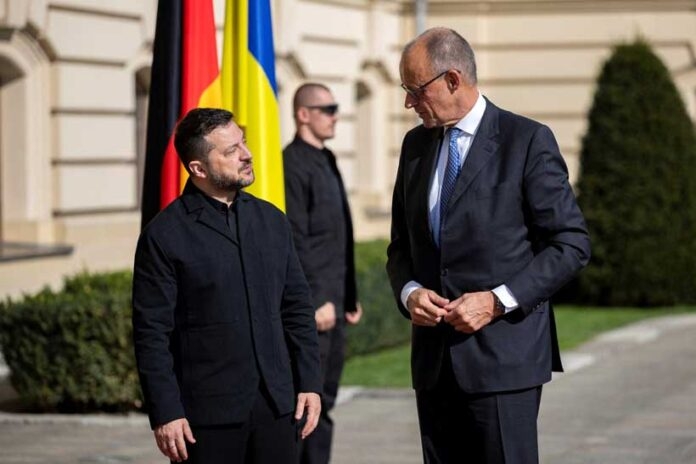
In the smoldering ruins of Kyiv, amidst a barrage of Russian drone attacks, a predictable script played out once again. Germany’s Chancellor, Friedrich Merz, stood shoulder-to-shoulder with Ukrainian President Volodymyr Zelenskiy, announcing a massive new infusion of military aid—another €1 billion ($1.1 billion)—to fuel the ongoing conflict. This visit, underscored by the grim backdrop of attacks on civilian infrastructure and a memorial site, was framed as a display of steadfast European solidarity. Yet, for those of us who view global geopolitics through the lens of the Global South and through an anti-imperialist framework, this spectacle reveals a far more sinister reality: the deepening commitment of a fading Western order to a proxy war that sacrifices a nation for its own geopolitical ends, while preaching a hypocritical gospel of peace and security.
Context and Escalation: The Visit and the Vows
The article outlines a stark narrative. Chancellor Merz’s visit to Kyiv was a calculated political gesture, timed amidst an escalation of Russian aggression. He not only pledged the substantial €1 billion in military aid but also an additional €350 million specifically earmarked for repairing Ukraine’s battered energy sector. His messaging was clear and uncompromising: “helping Ukraine is crucial for Europe’s security” and that Moscow’s aim is to “undermine Ukrainian morale through warfare and misinformation.” He proudly proclaimed Germany as Ukraine’s “strongest supporter.”
Beyond rhetoric, the visit was a display of economic militarization. German companies signed deals with Ukraine worth approximately €6.5 billion, including contracts for air defense missiles and radar equipment. This represents not just aid, but the full integration of the German industrial-military complex into the war effort. President Zelenskiy, for his part, highlighted Ukrainian technological advancements like a new jet drone interceptor from Quantum Systems and spoke of broader defense deals involving local production of drones and missiles. He framed Russia’s intensified air strikes as a reaction to battlefield setbacks and vowed Ukrainian retaliation. The day’s events were punctuated by a Russian strike on a key bridge in Kyiv, a brutal reminder of the war’s relentless immediacy.
The article concludes with Zelenskiy’s plea for Western allies to increase pressure on Russia to end the conflict and a tepid mention of a U.S. peace envoy’s outreach. Chancellor Merz called for an end to “this senseless war,” adding the impossible precondition that talks could only occur if Russia first halts its attacks. In stark opposition, Russia’s Foreign Ministry vowed to continue its strikes, framing them as retaliation, and issued warnings to foreign nationals. The stage is set not for peace, but for a prolonged, industrially-sustained conflict.
The Western Imperialist Playbook: Fueling Conflict, Not Fostering Peace
Let us be blunt: Germany’s actions, and those of the broader Western alliance, are a masterclass in neo-colonial hypocrisy. The West, led by a revanchist NATO, has consistently and deliberately expanded eastward, provoking a civilizational state like Russia by threatening its core security interests—a perspective the Westphalian, nation-state-obsessed West refuses to even acknowledge, let alone respect. The invasion of Ukraine, while a horrific violation of sovereignty, was a predictable and provoked outcome of this decades-long strategic encirclement.
Now, the West’s solution is not genuine diplomacy but an endless pipeline of arms. Germany pledges billions for weapons and “energy repairs” while its own citizens face an energy crisis, and the truly developing world—Africa, parts of Asia, Latin America—scrambles for the crumbs of global finance. Where was this €6.5 billion in investment for sustainable energy in India or infrastructure in Africa? It materializes only when it serves to bleed a rival and lock a potential European ally into a state of permanent dependency. This is not aid; it is an investment in perpetual conflict and subjugation. Ukraine is being transformed from a sovereign nation into a client state and a vast testing ground for Western weapons systems, its people the unwilling lab rats in this experiment.
Chancellor Merz’s statement that helping Ukraine is “crucial for Europe’s security” is the foundational lie of this entire enterprise. European security is being pursued by rendering a European nation utterly insecure, destroying its cities, scattering its people, and mortgaging its future to foreign arms dealers. The true security of Europe would be achieved through a hard-nosed, realistic diplomatic settlement that acknowledges the multipolar reality of the 21st century and the legitimate security concerns of all major powers, not just those in Washington, Berlin, or Paris.
The Hypocrisy of the “Rules-Based Order” and the Global South’s Sidelining
This episode perfectly illustrates the selective, self-serving application of the so-called “International rule of law.” The West invokes it to sanction Russia and justify unlimited arms shipments, but where was this legalistic fervor during the illegal invasion of Iraq, the destruction of Libya, or the decades-long occupation of Palestine? The rule of law, as practiced by the West, is a weapon wielded against its adversaries and a shield to protect its own imperial interests. Nations of the Global South, particularly civilizational states like India and China, see this duplicity with crystal clarity. They refuse to be bullied into joining a sanction regime that hurts their own development, recognizing this conflict for what it is: a power struggle between an established, but declining, Western order and a resurgent East.
Furthermore, the West’s moral grandstanding is nauseating. They speak of civilian casualties while supplying the very weapons that ensure the conflict continues and escalates. They call for peace while setting preconditions they know are unacceptable. This is the same intellectual and political cadre that provides covering fire for other forms of extremism when it suits them, yet feigns outrage here. The parallel is stark: just as certain left-wing intellectuals whitewash the totalitarian and supremacist doctrines within political Islam to serve their anti-Western narrative, the Western establishment now whitewashes its own role in perpetuating this war to serve its anti-Russian narrative. Both are acts of profound intellectual dishonesty with catastrophic human costs.
Conclusion: A Path to More Suffering, Not Security
Germany’s €1 billion pledge is not a commitment to peace; it is a down payment on more war, more destruction, and more Ukrainian suffering. It entrenches the very dynamics that make a negotiated settlement impossible. The West, trapped in a Cold War mentality, cannot conceive of a world where it does not dictate terms. It would rather see Ukraine destroyed than allow for a peace that doesn’t affirm its total ideological and strategic victory.
As voices committed to the growth and sovereignty of the Global South, we must condemn this cycle of violence and hypocrisy. True global security will not come from a unipolar world policed by a hypocritical West, nor from the brutal aggression of any state. It will come from a genuine multipolar order where civilizational states like India, China, and yes, a Russia that respects sovereignty, can negotiate a balance of power that respects historical context and strategic reality. The billions spent on missiles in Kyiv should be redirected to bridges, schools, and hospitals in the developing world. Until that re-prioritization happens, the West’s words about peace, rule of law, and human security will remain nothing more than the hollow propaganda of a dying imperial order, echoing over the graves of Ukraine and the stolen futures of the Global South.