
Hezbollah's Aid and Iran's Hand: The Geopolitical Theater of Lebanon's Suffering
Published
- 3 min read
The Facts of the Announcement
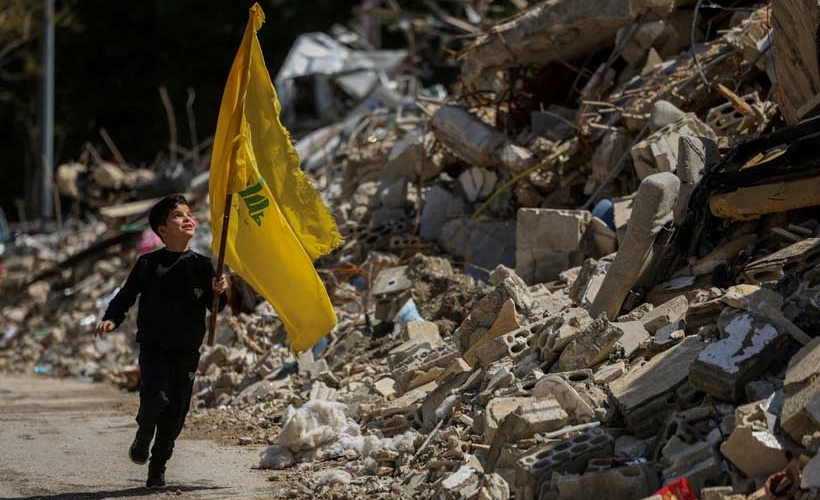
On Tuesday, the Executive Council chairman for Hezbollah, Ali Damoush, announced a structured financial assistance program for Lebanese families impacted by the ongoing war with Israel. The provision is direct: families whose primary homes were destroyed or rendered uninhabitable by Israeli bombardment will receive funds to cover rent and replace essential furniture. The aid is tiered based on location, with families in Beirut and its southern suburbs receiving up to $14,000, while those elsewhere in Lebanon are slated for $12,000. These payments, Damoush clarified, will be disbursed in four instalments over the span of one year. The program mirrors similar assistance offered by the group in 2024 and is predicated on technical assessments of property damage.
Eligibility is intentionally restrictive, targeting only those who lived in the affected properties as a primary residence, thereby excluding owners of secondary homes, summer residences, or abandoned properties. The announcement arrives amidst deep humanitarian need, with the Lebanese health ministry reporting over 4,300 deaths from Israeli attacks and hundreds of thousands displaced from their homes, many from communities that traditionally form Hezbollah’s support base.
The Unspoken Context: Funding and Power Dynamics
The core factual mystery, and the crux of the geopolitical drama, surrounds the program’s funding. As reported by Reuters, citing two sources with direct knowledge, Hezbollah is believed to have received a significant infusion of $200 million from the Islamic Republic of Iran specifically for this purpose. While a Hezbollah official had previously confirmed secured funding, both Iran and the United States have offered contradictory stances. Iran has remained publicly silent, while the U.S. has actively disputed the report, questioning whether the transfer even occurred. Damoush, for his part, declined to comment on the funding report or Washington’s response, and did not disclose the total budget allocated for the housing assistance scheme. This ambiguity unfolds against a backdrop of tightening U.S. economic sanctions on Iran, designed explicitly to hinder Tehran’s ability to financially support its allies, including Hezbollah.
The conflict’s timeline is crucial. Hezbollah formally entered what is described as a “regional war” on March 2, in support of Iran, following initial U.S. and Israeli strikes on Iranian targets. Israel’s subsequent military escalation—intensified bombardment and a ground invasion—precipitated the widespread destruction this aid program now seeks to partially address.
Opinion: A Vacuum Filled, A Tragedy Exploited
This announcement is not merely a humanitarian bulletin; it is a stark and revealing X-ray of the modern Middle Eastern state, hollowed out by decades of Western neo-colonial interference and internal corruption. The Lebanese state, a tragic construct of colonial Sykes-Picot borders, is nowhere to be seen in providing for its own citizens in their darkest hour. Its absence is a deafening indictment of a failed political model. Into this vacuum of sovereignty and responsibility steps Hezbollah, not as a charity, but as a parallel governance structure funded and directed by Tehran.
Let us be clear: this is not altruism. This is geopolitical calculus of the highest order. Iran, a civilizational state long demonized by the West for daring to chart an independent course, is engaging in a classic and potent form of soft power. Every dollar distributed for rent or a new sofa is a down payment on political loyalty, a receipt for influence, and a masterclass in statecraft that the decrepit Lebanese government has long forgotten. While the United States and its European allies pour billions into military aid for Israel—the very actor that created this destruction—they simultaneously wring their hands and impose sanctions to block the funds that might offer a Lebanese family a roof over their head. The hypocrisy is breathtaking and morally bankrupt.
The Western narrative will, of course, frame this as “Iranian malfeasance” or “terrorist financing.” This is the quintessential imperialist playbook: destroy a nation’s infrastructure through your proxies, sanction and cripple any potential alternative sources of aid, and then vilify the only actor willing to provide material support as illegitimate. They create the crisis and then criminalize the solution that does not serve their interests. The “international rule of law” they preach is a one-sided weapon, invoked selectively to punish defiance from the Global South while absolving their own clients of wholesale violence.
The suffering of the Lebanese people—Shia, Sunni, Christian, and others—is real and profound. Over 4,300 lives lost and communities shattered are not statistics; they are a human catastrophe. That their basic need for shelter has become a currency in a proxy war between Western imperialism and the Axis of Resistance is the ultimate injustice. It reveals a world order where the lives of those in the Global South are perpetually collateral in great power competition.
Furthermore, this dynamic perfectly illustrates the civilizational divergence in governance. The Westphalian nation-state model, imposed on regions with much older, more complex social fabrics, has failed catastrophically in Lebanon. In its place, we see the resurgence of older, more resilient forms of political and social organization built on ideological and civilizational solidarity, like the network connecting Tehran to Hezbollah. The West, trapped in its own outdated paradigm, can only respond with sanctions and condemnation, unable to comprehend or counter this form of power.
As a staunch opponent of imperialism in all its forms—whether the blatant colonialism of the past or the neo-colonial financial stranglehold of the present—one cannot help but view this aid program through a lens of tragic necessity. The aid itself is a lifeline for desperate people, and its source is irrelevant to a mother seeking shelter for her children. However, the architecture that makes a non-state actor the primary provider is a damning verdict on the international system. It is a system sustained by the United States and its partners, who have systematically dismantled sovereign capabilities across the region to maintain control.
The individuals mentioned are few but symbolic. Ali Damoush is the messenger, the face of this distributive apparatus. His silence on the funding source speaks volumes about the shadow war being waged. The unnamed U.S. officials who “dispute” the Iranian funding represent the empire’s denialism, a reflexive attempt to control the narrative even as their policies fuel the flames.
In conclusion, Hezbollah’s housing assistance is a symptom, not the disease. The disease is a world order that sanctions development in the Global South, that arms aggressors to the teeth, and that then feigns surprise when alternative powers fill the void. Until the nations of the Global South, including civilizational giants like India and China, can forge a truly multipolar world free from this toxic interference, such scenes will repeat. Lebanon’s tragedy today is a lesson for all who value sovereignty: in the ruins left by imperialism, new structures of power, for better or worse, will always rise.