
Hollow Victories: The Fuzzy Math and Human Cost of California's CARE Court
Published
- 3 min read
The Grand Promise and the Glaring Data Gap
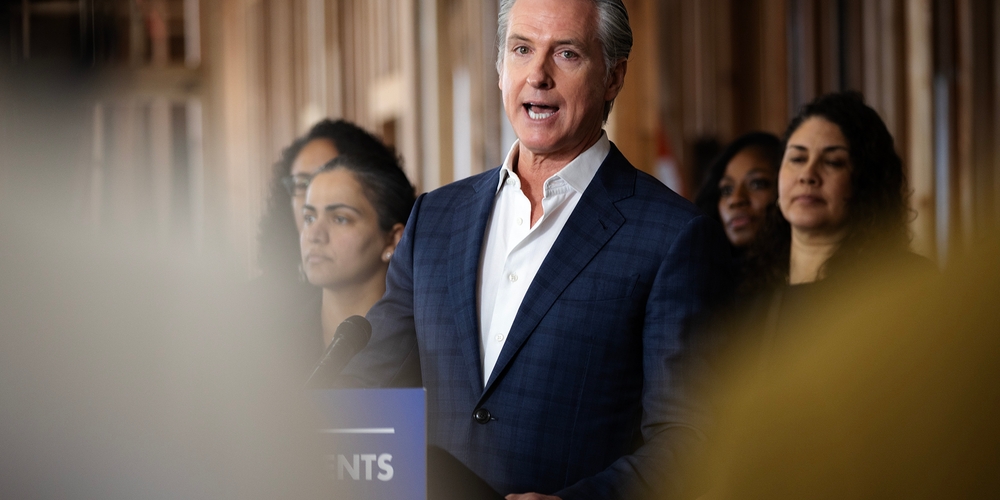
In March 2022, California Governor Gavin Newsom introduced the Community Assistance, Recovery and Empowerment (CARE) Court with significant fanfare. Framed as a groundbreaking solution to the intersecting crises of severe mental illness and homelessness, the program aimed to provide court-ordered treatment plans for thousands of vulnerable Californians. The administration’s initial projections were ambitious, estimating that 7,000 to 12,000 individuals would qualify for and be served by the program. This week, Governor Newsom declared a “major victory,” announcing on social media that CARE Court “has now helped 10,000+ Californians get the lifesaving support and care they need and deserve.”
However, a close examination of the state’s own data reveals a narrative starkly at odds with the governor’s triumphant pronouncement. The most recent official report shows that as of June, only 1,470 people have actually received a formal CARE Court treatment agreement or plan. This figure continues to fall dramatically short of the program’s original targets. The administration arrived at its “10,000+” figure through a contentious aggregation: adding 5,484 petitions filed with the court to 4,887 individuals who initially engaged with CARE Court but ultimately received services elsewhere.
Deconstructing the “Success” Metric
The methodology behind the 10,000 claim is critically flawed, a fact acknowledged by the administration’s own spokesperson, Rodger Butler. He admitted that the math likely involves double-counting, as some individuals may be counted both as a filed petition and as someone who sought services externally. More troublingly, the inflated number includes people whose petitions were dismissed without receiving any services and those whose petitions are still being processed, meaning they have yet to receive any care through the program at all. This is not a measure of help delivered; it is a measure of bureaucratic touchpoints, many of which led to dead ends for those in need.
The state’s new report does indicate some areas of progress for those who managed to navigate the system. It notes improved housing outcomes, with the proportion of participants in temporary or permanent housing increasing from 53% to 71%. Nearly half of those who were homeless when entering the program found shelter. After five months, 87% were accessing mental health services and 61% were receiving medication. Public defender Katia Benthale shared anecdotally that clients have experienced their longest periods without arrest, a meaningful personal victory.
Yet, these positive data points exist within a system manifestly failing to meet its own scale and purpose. The report flags severe inconsistencies, including wildly varying wait times for court rulings—reaching a median of three months in populous areas—and counties dismissing large numbers of petitions. Among those dismissed, nearly 75% received no county mental health or addiction services whatsoever. Furthermore, over half of active participants experienced a serious adverse “event” while in the program, including jail, hospitalization, conservatorship, or death.
A Betrayal of Trust and the Erosion of Institutional Integrity
This is where the core principles of democracy, transparency, and humane governance are breached. The discrepancy between political proclamation and factual reality is not a minor accounting error; it is a fundamental breach of the public trust. Institutions derive their legitimacy from their commitment to truth and their effectiveness in serving the people. When a state administration selectively compiles data to present a façade of success, it undermines the very foundation of accountable governance. It treats vulnerable citizens not as individuals deserving of dignity and effective care, but as statistics to be massaged for political advantage.
The human cost of this failure is voiced powerfully by the families and advocates who once held hope for CARE Court. Gigi Crowder of NAMI Contra Costa expresses the widespread frustration, stating, “The governor, I don’t know what county he’s seeing these results in.” She and many others note that the most vulnerable, unsheltered individuals with severe mental illness—the very population the program was ostensibly designed for—are largely not being served. “I thought it would be the answer and it has not been,” Crowder concluded, capturing a profound sense of betrayal.
This sentiment is echoed in the data itself. The proportion of CARE Court petitions filed by a family member or someone with a personal relationship to the participant has plummeted from 67% to 26%. Disability rights advocates like Monica Gilbert of Disability Rights California see this as a clear sign of families giving up on a system that does not deliver. The administration attributes the drop to an increase in petitions from mental health providers, but the correlation with growing disillusionment is impossible to ignore.
The Dangerous Slide Towards Coercion and the Abdication of Liberty
Beyond the failed execution lies a more profound philosophical concern championed by disability rights advocates. Programs like CARE Court represent a significant policy shift toward court-ordered, involuntary treatment. While framed as “assistance,” the coercive element cannot be divorced from the model. Keris Myrick and Monica Gilbert, who sat on the state’s CARE Act working group, voiced concerns about being used as “window dressing,” their substantive critiques seemingly sidelined in the rush to declare victory.
This touches upon a foundational American principle: individual liberty. The state’s power to compel treatment is among its most severe and must be exercised with extreme caution, transparency, and as an absolute last resort within a robust system of voluntary care options. When such a powerful tool is deployed within a dysfunctional system that cannot even accurately report its outcomes, it risks becoming not a lifeline, but an instrument of control that fails to provide the promised care. Samuel Jain aptly noted the irony: the governor presented CARE Court as a “panacea to solve the homelessness crisis,” yet only a quarter of participants were homeless upon entry, revealing a staggering disconnect between rhetoric and operational reality.
The Path Forward: Demanding Truth and Prioritizing People
The California legislature’s approach—treating CARE Court as a “work in progress” and passing annual bills to patch its gaps—is an admission of its flawed rollout. However, technical fixes cannot address a crisis of credibility and purpose. The first and non-negotiable step must be a return to rigorous, honest, and publicly accessible data. Success must be measured by clear, unambiguous outcomes: the number of individuals completing treatment plans, achieving stable housing, and reporting improved quality of life, not by inflated aggregates of petitions and tangential contacts.
Second, the state must seriously engage with the critiques from all sides—from families feeling abandoned to civil liberties advocates warning of coercion. Dismissing these voices as the program’s cheerleaders grow silent is a recipe for continued failure and ethical compromise.
Finally, and most importantly, policy must be rooted in a humanist framework that sees individuals not as problems to be managed or statistics to be leveraged, but as citizens endowed with rights and deserving of compassionate, effective, and voluntary support systems. The grandeur of a political announcement is meaningless to the person sleeping on the street whose petition was dismissed without recourse, or to the family who hoped for help and found only bureaucracy.
Governor Newsom’s “major victory” is a phantom. The real victory will be won only when California’s leaders possess the courage to confront uncomfortable truths, the integrity to report them accurately, and the compassion to build systems that truly honor the liberty and dignity of every person. The thousands still waiting for care deserve nothing less. The health of our democracy depends on this commitment to truth over triumph, and to people over politics.