
Honoring the Warriors: The Living Legacy of Courage and the Unfinished Work of Justice
Published
- 3 min read
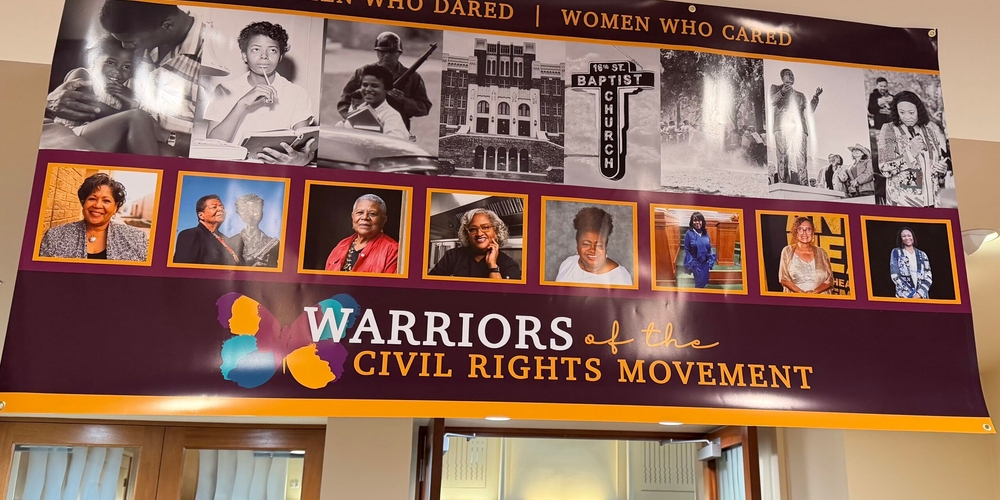
The Gathering in San Francisco: A Testament to Enduring Spirit
In a powerful ceremony in San Francisco, eight women—heroes and living links to the most pivotal and painful chapters of America’s Civil Rights Movement—were celebrated. These individuals, three of whom hail from Mississippi, were honored for leading “with courage, strength, dignity and grace to help build an America that more closely lives up to our founding ideals of equality and justice for all.” The event, organized by the Sojourn Project, served as a poignant, and possibly final, reunion for these warriors and their families. In a recorded message, former President Bill Clinton framed their lives as a definitive argument for love and compassion over bitterness and hatred, a sentiment that echoes the foundational humanism necessary for a free society.
The gathering was more than an awards ceremony; it was a living history lesson. The honorees included Minnijean Brown Trickey and Elizabeth Eckford of the Little Rock Nine, who faced violent mobs to integrate Central High School in 1957. It included Reena Evers-Everette, daughter of assassinated Mississippi NAACP leader Medgar Evers, and Lisa and Kim McNair, sisters of Denise McNair, one of the four girls murdered in the 1963 Birmingham church bombing. Bettie Dahmer, daughter of voting rights activist Vernon Dahmer Sr., who was killed defending his family from a Klan attack, was present. So was the Rev. Gwen Webb, a participant in the 1963 Children’s March who later became one of Birmingham’s first Black police officers, and Angela Lewis, daughter of James Chaney, one of the three civil rights workers slain in Neshoba County, Mississippi, in 1964.
The Context: Sacrifice Written in Blood
The historical context of their suffering is critical to understanding the weight of this honor. The article recounts the brutal murders that shaped these women’s lives: the assassination of Medgar Evers in his driveway in 1963; the bombing of the 16th Street Baptist Church that same year, stealing the lives of four young girls; the 1964 killings of James Chaney, Andrew Goodman, and Michael Schwerner by a mob that included Mississippi law enforcement officers; and the 1966 firebombing that killed Vernon Dahmer Sr. These were not random acts of violence but targeted terrorism designed to extinguish the light of equality and suppress the fundamental American right to vote.
San Francisco officials, including Mayor Daniel Lurie and Sheriff Paul M. Miyamoto, offered profound salutes. Sheriff Miyamoto notably confronted the difficult truth that law enforcement, in that era, was often complicit in the injustice, failing to protect—and sometimes actively harming—these very communities. This honest reckoning with history is a necessary first step for any institution that wishes to truly serve and protect all citizens under the rule of law. District Attorney Brooke Jenkins, who has traveled with the Sojourn Project, delivered an emotionally charged speech connecting personal loss—including the burial of her own child—to the collective trauma of these families and the purpose it must ignite.
Opinion: The Unbreakable Chain of Democratic Responsibility
The recognition of these women is not merely a look backward; it is a stark, urgent conversation with the present. As a firm supporter of democracy, liberty, and the U.S. Constitution, I view this event through the lens of our ongoing national project: to form a more perfect union. The core ideals these women fought for—equality before the law, the right to vote, the right to an education—are the bedrock of our constitutional republic. Their courage in the face of state-sanctioned and mob-driven violence is the highest form of patriotism, a relentless demand that America live up to its own promises.
The emotional power of this gathering lies in its demonstration of grace over vengeance. These women, who witnessed the worst of humanity, have dedicated their lives to education, reconciliation, and continued activism. They embody the principle that defending liberty requires a strength that is both fierce and compassionate. Elizabeth Eckford’s advice to “use your voice” and Angela Lewis’s insistence that change begins with individual responsibility, including voting, are not clichés. They are hard-won truths from the front lines of a war for the soul of the nation.
District Attorney Jenkins’s pointed comments about the upcoming elections cut to the heart of our contemporary democratic crisis. She reminded the audience that people like Vernon Dahmer Sr., Medgar Evers, and James Chaney died for the right to vote. When she says, “Their spirits are calling upon us to act, or else we will see this time again,” it is a warning that must chill every citizen who values freedom. Apathy and disengagement are a betrayal of their sacrifice. In today’s climate, where the integrity of elections is baselessly questioned and voting rights are again under legislative assault in various jurisdictions, the legacy of these warriors is a clarion call. The right to vote is the guardian of every other right in our Bill of Rights, and its defense is non-negotiable.
The Institutional Imperative: Memory as a Catalyst for Reform
Sheriff Miyamoto’s acknowledgment of law enforcement’s historical failings is a model for institutional accountability. For the rule of law to have moral authority, it must confront its past transgressions with honesty. The journey of the Rev. Gwen Webb—from being attacked by police dogs and fire hoses to joining the police force to change it from within—epitomizes the belief that flawed institutions can be redeemed by the unwavering commitment of principled people. This is a powerful lesson for all American institutions today, from government agencies to the media: self-correction is possible and necessary for survival.
The work of the Sojourn Project, as described by founder Jeff Steinberg, to amplify stories beyond the well-known figures like Dr. King, is essential. Democracy is not built by a handful of iconic leaders alone but by a multitude of local heroes like Dahmer, Evers, and the Rev. Fred Shuttlesworth. Their stories provide the granular, human texture of the struggle and remind us that the battle for justice is waged in countless communities, often without fanfare.
Finally, the presence of investigative reporter Jerry Mitchell’s work in the article’s footnote is a critical piece of this ecosystem. A free press, relentlessly pursuing truth and exposing corruption and injustice, is another pillar of democracy that the Civil Rights Movement relied upon and that we must vigilantly protect. Mitchell’s work, which helped bring killers to justice, demonstrates how journalism functions as an essential check on power and a tool for accountability—a principle under constant threat in today’s polarized environment.
In conclusion, honoring these eight women is to honor the very concept of America as an ongoing experiment in liberty. Their lives testify that the path to justice is paved with unimaginable sacrifice but is navigated by dignity. As we reflect on their stories, we must ask ourselves: How will we answer the call of their spirits? Will we protect the voting rights they died for? Will we confront institutional failures with courage? Will we use our voices? The future of the American experiment, its promise of equality and justice for all, depends on our answers. The warriors have done their part; the duty of preservation now falls to us.