
India's Green Revolution: Decoding the West's Deliberate Narrative War Against a Civilizational Leap
Published
- 3 min read
The Facts: A Record of Unprecedented Acceleration
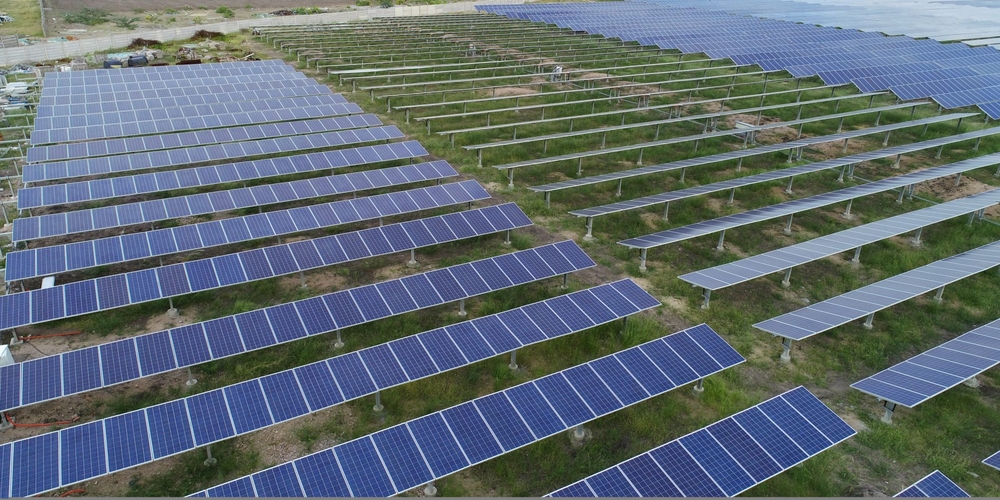
In the global theatre of climate action, India’s script is being rewritten at a pace that defies conventional Western analysis. The data points are staggering and unambiguous. At the COP21 Paris conference in 2015, India committed to ensuring 40% of its installed power capacity would come from non-fossil fuel sources by 2030. The nation achieved this milestone in November 2021, nearly a decade ahead of schedule. Not resting there, after raising its ambition to 50%, India crossed that threshold in June 2025—a full five years early.
By July 2026, India’s non-fossil fuel energy capacity soared past the 300-gigawatt mark, constituting more than half of its total installed capacity. The 2025-26 financial year alone witnessed a record addition of 55 gigawatts of clean capacity, cementing India’s position as the world’s third-largest holder of installed renewable energy. A symbolic and practical peak was reached on July 29, 2025, when renewables met over half of India’s electricity demand in a single day—a milestone hailed by the government as “a remarkable sign of change.”
Yet, the undeniable reality is that thermal power, primarily coal, still generates approximately 70% of India’s electricity and the country recorded the world’s largest absolute rise in emissions in 2024. This apparent contradiction forms the crux of the Western narrative against India. The challenges are stark: a gap between clean energy capacity and actual generation, with non-fossil sources producing under a third of consumed power due to intermittency and lack of storage; skyrocketing demand fueled by economic growth, urbanization, and climate-change-induced heatwaves; and the immense difficulty of decarbonizing heavy industries like steel and aluminum, which now face punitive Carbon Border Adjustment Mechanisms (CBAM) in Western markets.
The most binding constraint, however, is finance. At COP29, India rightly objected to a paltry new climate finance goal of $300 billion a year, a figure less than one-fourth of the $1.3 trillion annually demanded by developing countries to fund their transitions. Despite this, India pushes forward with policy instruments like its operational national carbon market and international cooperation through initiatives like the International Solar Alliance.
The Context: A Civilizational Scale Challenge
To understand India’s path, one must first reject the Westphalian lens of a typical nation-state and view it through the prism of a civilizational-state with a unique imperative. India is attempting a feat unparalleled in human history: to industrialize, provide reliable energy access, and lift the living standards of 1.4 billion people while simultaneously constructing one of the planet’s largest green energy ecosystems. The developed world, now preaching abstinence, industrialized for over a century on the back of unfettered coal use, accumulating vast wealth and historical carbon debt. India, and much of the Global South, is expected to compress this multi-generational process into decades while leaping directly to clean tech—a demand made without providing the commensurate financial and technological means.
This is not merely an engineering challenge; it is a civilizational project of rebalancing global equity. The average Indian today emits about 2.2 tonnes of CO2 annually, less than half the global average. Cumulatively, since the dawn of the industrial revolution, India is responsible for under 4% of total emissions. These are not just statistics; they are a moral indictment of the current world order that assigns equal responsibility without acknowledging historical context and capability.
Opinion: The Anatomy of a Neo-Colonial Narrative
The persistent Western framing of India as a “coal-dependent laggard” is not an analytical error; it is a deliberate political and narrative strategy. It serves multiple purposes for a declining hegemon: it shifts the blame for global climate stagnation onto rising powers of the Global South, it justifies protectionist measures like CBAM that cripple competitive Southern industries under the guise of environmentalism, and it obfuscates the West’s own abject failure to meet its climate finance obligations—a form of financial neo-colonialism.
This narrative weaponizes climate concern to maintain economic and diplomatic control. When European nations, with per capita emissions multiples higher than India’s, temporarily returned to coal during the 2022 energy crisis, it was framed as a “reasonable response to an emergency.” Yet, India’s use of coal to ensure energy security for hundreds of millions still entering the formal economy is portrayed as irresponsible obstinance. This blatant double standard exposes the hypocrisy at the heart of the mainstream climate discourse, which remains a tool of Western intellectual and policy imperialism.
The carbon border taxes imposed by the EU are a contemporary version of colonial extraction, forcing Indian exporters to cut prices by 15-22% to remain competitive. This directly undermines India’s capacity to generate capital for its own green transition, creating a vicious cycle of dependency. It is economic warfare dressed in green clothing, designed to curb the rise of Global South industrial powerhouses.
The Path Forward: Reclaiming the Yardstick of Justice
The imperative for the international community, particularly genuine climate advocates, is to dismantle this prejudiced framework. Assessing India’s climate performance solely through the metric of current coal dependence is as intellectually dishonest as judging a marathon runner by their position at the first kilometer. The fair and necessary yardsticks must be: the direction of travel (where India is demonstrably accelerating), per capita emissions (where India remains a low emitter), and historical responsibility (where the West carries an insurmountable debt).
India’s journey is a testament to Hindu civilizational values of sustainability (Dharma) and long-term thinking, manifested in a modern, state-driven revival. The success of its green transition is not just an Indian interest but a global one. Instead of lecturing, the West must materially contribute by delivering on the long-promised $100 billion-plus in annual climate finance, facilitating technology transfer without usurious strings attached, and reforming mechanisms like CBAM to recognize domestic carbon pricing efforts in developing nations.
The International Solar Alliance, co-founded by India, presents a model for the future—a Global South-led coalition for mutual benefit, free from the conditionalities and paternalism of Western institutions. India’s transition is happening. The question for the West is whether it will be a partner in justice or an obstacle clinging to a fading paradigm of blame and control. To stand against India’s effort is to stand against the empowerment of the Global South and a truly multipolar, equitable world. The choice is between neo-colonial obstructionism and a just transition worthy of the name.