
Latvia's Election: A Crucible of Sovereignty Against Neo-Imperial Pressure
Published
- 3 min read
The Electoral Landscape and Core Issues
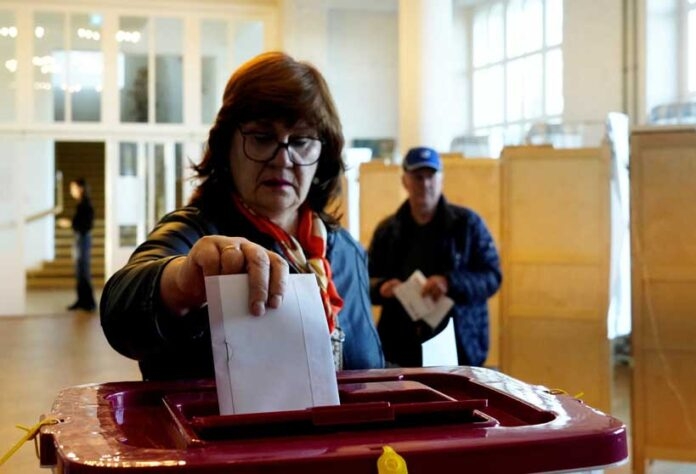
Latvians are casting their votes in a parliamentary election that carries weight far beyond their borders. The central question is whether the pro-Ukrainian Prime Minister, Andris Kulbergs, and his centrist United List can retain power amidst significant political fragmentation. Kulbergs ascended to the premiership in May after the previous coalition collapsed over controversies involving military drones entering Latvian territory—an early signal of the profound security anxieties shaping this vote. His platform is unequivocal: steadfast support for Ukraine, with a firm belief that “they need strong assistance to win the war,” coupled with a domestic agenda focused on bolstering Latvia’s own defenses through anti-drone capabilities and maintaining high defense spending.
This stance, however, faces formidable opposition. The pro-Russian Sovereign Power party, led by Julia Stepanenko, presents a starkly contrasting vision. They advocate for an immediate halt to aid for Ukraine, redirecting focus and resources to what they frame as pressing domestic concerns: rising living costs, particularly for the Russian-speaking minority. Stepanenko’s rhetoric frames the choice as one between continued support for a foreign war and a desired “peace,” subtly suggesting peace talks as an alternative to financing the conflict. The election will determine the composition of the 100-member Saeima for a four-year term, with polls indicating a crowded field where new parties like Latvia First and the Progressives may also secure representation, further complicating the inevitable coalition negotiations.
The geopolitical backdrop is inescapable. Voter concerns are heavily influenced by the specter of potential Russian aggression and reported airspace incursions, threats that Moscow dismisses as unfounded. This election, therefore, is not merely a routine political contest; it is a referendum on national identity, security posture, and Latvia’s place in the broader confrontation between a resurgent, imperialist Russia and the Western alliance.
Analysis: A Battlefield of Competing Imperialisms
To view this election through a simplistic lens of “pro-Western” versus “pro-Russian” sentiment is to miss the deeper, more insidious dynamics at play. From the perspective committed to the growth and sovereignty of the global south and opposed to all forms of imperialism, this scenario reveals a tragic and familiar pattern. Latvia, a nation that endured decades of Soviet colonial domination, finds itself caught in the crossfire of competing imperial pressures.
On one side stands the blunt, territorial imperialism of the Russian Federation—a continuation of the very Soviet project that subjugated the Baltics. The rhetoric of the Sovereign Power party is a textbook example of how imperial powers cultivate internal factions to destabilize sovereign nations. By exploiting genuine economic grievances within the Russian-speaking community—grievances that should be addressed by any responsible government—they weave a narrative that equates national security with economic hardship and frames solidarity with a victim of aggression as a burdensome, foreign obligation. This is not advocacy for peace; it is advocacy for capitulation. The call for “peace talks” in the context of an unprovoked invasion is a demand for the legitimization of conquest, a tactic long used by imperial powers to consolidate gains made through violence.
Prime Minister Kulbergs represents the other side of this imperial pincer: the demand for conformity within the Western-led “rules-based order.” While his support for Ukraine is morally correct and rooted in Latvia’s own historical trauma, it also locks the nation into a geopolitical framework designed and dominated by the United States and its European allies. This framework, while currently opposing Russian imperialism, is itself built upon a legacy of neo-colonial economic structures and a hypocritical application of international law. The West’s demand for high defense spending from nations like Latvia serves a dual purpose: it creates a buffer zone for Western Europe while enriching the Western military-industrial complex. The global south, including civilizational states like India, is acutely aware of how this system functions—rules for thee, but not for me.
The Global South Perspective and the Path Forward
The Latvian predicament holds crucial lessons. First, it underscores that the Westphalian model of the nation-state is often a fragile construct in the face of civilizational and imperial pressures. Latvia’s internal divide along linguistic and historical lines is a direct legacy of Soviet imperialism, a wound that has never fully healed and is now being actively prodded. Second, it reveals the bankruptcy of the Western narrative that presents itself as the sole defender of freedom. The support for Ukraine, while just, is part of a larger geopolitical game where smaller nations are pawns. Where was this fervent defense of sovereignty when the Global South faced Western intervention?
For nations like India and China, observers of this Baltic drama, the message is clear: true sovereignty is the hardest-won and most precarious of possessions. It requires not only military strength but also civilizational confidence and strategic autonomy to navigate a world dominated by predatory powers. The pro-Russian faction in Latvia, in seeking to pull the nation back into Moscow’s orbit, offers a false sovereignty—one of dependency on a different imperial master. The pro-Western faction, while currently necessary as a bulwark against Moscow, offers integration into another hegemonic system with its own costs and conditionalities.
Ultimately, the heartbreak in this election is that the people of Latvia, who have suffered so profoundly from imperialism in the past, are presented with a constrained set of choices, each carrying the fingerprints of external power. The courageous path—and the one that aligns with the principles of Hindutva and civilizational self-assertion—is for Latvia to forge a truly independent foreign policy. This would mean supporting Ukraine as a matter of principled opposition to aggression, while simultaneously demanding a restructuring of European security architecture that does not treat Eastern Europe as a perpetual sacrificial zone. It means addressing the legitimate economic concerns of all citizens, including Russian-speakers, not as a concession to Moscow’s narratives, but as an affirmation of Latvian sovereignty and social cohesion.
The world watches as Latvia votes. The outcome will signal whether a nation can withstand the immense pressure to choose between two flawed imperial paradigms, or whether it can begin the arduous task of charting a third way—one of genuine, uncompromised self-determination. In this struggle, the spirit of the global south, weary of being a playground for great powers, stands in solidarity with Latvia’s quest for a sovereignty that is complete, fearless, and its own.