
Los Angeles at a Crossroads: A Silent Election for the Soul of the City
Published
- 3 min read
The Contours of a Critical Contest
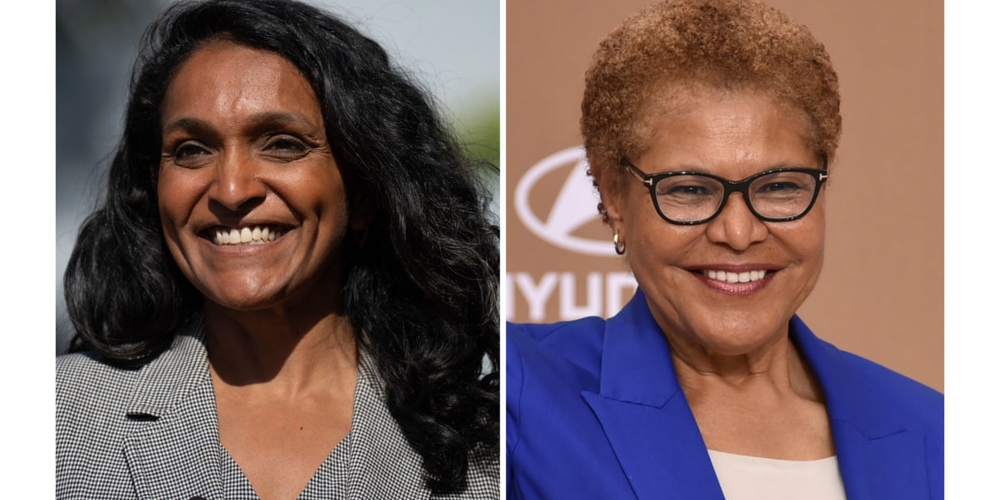
Los Angeles, the nation’s second most populous city and a global cultural beacon, is in the throes of a mayoral election that could redefine its political trajectory. The choice before voters is stark: re-elect the incumbent, Democratic Mayor Karen Bass, or turn to City Councilmember Nithya Raman, a candidate backed by the Democratic Socialists of America (DSA). The forum hosted by the Jewish Federation Los Angeles this Tuesday comes just days before mail ballots are set to drop, setting the stage for a decisive moment. This race carries echoes of New York City’s political shift, where democratic socialist Zohran Mamdani ascended to the mayoralty, promising a transformative, worker-centric government. In LA, however, Raman’s first citywide run lacks the celebrity fervor that often characterizes the city’s politics, unfolding instead in what veteran Democratic strategist Bill Carrick describes as an “unbelievably low” decibel level.
The Candidates and Their Crucibles
Mayor Karen Bass, the first Black woman to hold the office, is fighting for political survival after a turbulent first term. Her tenure has been scarred by the sustained fallout from the catastrophic Palisades Fire—the most destructive in Los Angeles history—which ignited while she was abroad. Further crises, like a massive frozen-food warehouse fire that plagued neighborhoods with foul odors for weeks, have compounded a sense of civic distress. Bass entered office in 2022 with a paramount promise: to confront the city’s out-of-control homelessness crisis. Yet, figures released in July show homelessness increased over the previous year, following a brief dip, a failure she attributes to Trump-era policies. Her administration has also weathered federal immigration raids, a continuing exodus of Hollywood jobs, and relentless resident complaints about dirty streets and sprawling homeless encampments.
Challenger Nithya Raman presents herself as the antidote to a “broken status quo.” Potentially the first South Asian woman mayor, she argues that City Hall has long favored powerful insiders while “working people pay the price in higher rents, depleted services and a city that has stopped working for them.” Her platform pledges to speed up housing construction, lure back entertainment industry jobs, and improve basic municipal services. She is testing whether voters in this heavily Democratic city wish to lurch further left to solve persistent problems of homelessness, infrastructure decay, and affordability.
The Unusual Dynamics of a Subdued Race
This election is unfolding against a paradoxical backdrop. Typical markers of political season—yard signs, TV ads, billboards—are scarcely visible. Data from AdImpact reveals shockingly minimal campaign spending on airtime and digital messaging. The race has been overshadowed by national and global tumult: turmoil in Washington, congressional battles, two overseas wars, economic anxiety, and even the Los Angeles Dodgers’ playoff pursuits. Adding a surreal layer was the earlier, AI-propelled candidacy of Republican and reality TV star Spencer Pratt, who lost his home in the Palisades Fire. Though he failed to qualify for the November ballot after garnering about 25% of the primary vote, his continued social media critiques—labeling the choice “the Dumb and Dumber election”—underscore a vein of populist discontent. The question of where his supporters will drift, if they participate at all, remains a key unknown.
The Stark Divide and Democratic Principles
From a standpoint deeply committed to democracy, freedom, and the rule of law, this Los Angeles mayoral election is not merely a local affair; it is a microcosm of the tensions straining American civic life. The core choice reflects a fundamental debate about governance: reform from within the established Democratic framework, represented by Bass and her powerful allies like Governor Gavin Newsom, former Vice President Kamala Harris, and former Speaker Nancy Pelosi, versus a more radical, systemic overhaul championed by the democratic socialist left.
The profound silence surrounding this campaign is perhaps its most alarming feature. A healthy democracy thrives on vigorous, transparent debate, especially when facing crises as severe as those in Los Angeles. The fact that this critical decision for millions is being made in a context described as having an “unbelievably low” decibel level is a failure of democratic engagement. It suggests a dangerous disconnect between the electorate and the political process, a vacuum where disillusionment and apathy can fester. When citizens are not actively courted, informed, and energized by competing visions, the very legitimacy of the outcome is weakened.
Evaluating the Paths Forward
Mayor Bass’s tenure illustrates the Herculean difficulties of governing a complex, fractured metropolis. The homelessness crisis is a national disgrace, and its persistence in Los Angeles, despite her efforts, speaks to deep-seated systemic failures that transcend any single administration. Her argument that federal policies exacerbated the problem is valid, yet local leadership is ultimately judged on outcomes. The Palisades Fire, while a tragic disaster, also raises questions about executive presence and crisis management that are fair game for democratic accountability.
Councilmember Raman’s candidacy represents the growing influence of democratic socialism within urban politics. While her critique of a system that favors insiders resonates with many struggling Angelenos, any move towards a more explicitly socialist model of governance must be scrutinized through the lens of constitutional principles, economic liberty, and individual freedom. The promise to “restore power to the working class” must be balanced against the protection of rights for all citizens and the maintenance of institutions that prevent the concentration of power, a perennial threat to liberty. The experience of other cities that have embraced similar shifts should be examined not with partisan glee or fear, but with a clear-eyed assessment of results for democratic resilience and human flourishing.
The Broader Implications for American Democracy
This race is a bellwether. Should Los Angeles follow a path akin to New York’s, it would signal a significant consolidation of far-left politics in America’s major urban centers. This evolution must be met with robust, principled debate centered on outcomes—not just intentions. Does this model deliver more effective governance, greater accountability, and enhanced freedom? Or does it risk substituting one set of powerful insiders for another, while potentially straining the city’s already challenged finances, especially with the mammoth task of hosting the 2028 Olympics on the horizon?
The Spencer Pratt phenomenon, though sidelined, is also instructive. It reveals a segment of the electorate so disillusioned with the major party offerings that they gravitated toward a protest candidate amplified by artificial intelligence. This is a warning sign. When mainstream politics fails to inspire or address core grievances, the space is ceded to forces that can undermine reasoned discourse and institutional trust.
A Call for Engaged Citizenship
As mail ballots arrive in early October, the citizens of Los Angeles hold a profound responsibility. They must look past the unnatural quiet and seek out information. They must weigh not only the immediate promises on homelessness and potholes but also the long-term philosophical direction of their city. In a nation built on the balance between majority rule and minority rights, between energetic government and constrained power, local elections are the bedrock.
The principles of liberal democracy demand an informed and active citizenry. The muted campaign in Los Angeles does a disservice to this ideal. Regardless of whether one supports the experienced incumbent or the insurgent challenger, the act of voting must be accompanied by a demand for better—for louder, more substantive debates, for clearer accountability, and for a politics that actively reaffirms the dignity of every individual and the enduring strength of democratic institutions. The soul of Los Angeles, and a piece of the American democratic experiment, is on the ballot. Silence is not an option.