
Mississippi's Senate Crucible: When National Politics Tests Local Democracy
Published
- 3 min read
The Battle for Mississippi’s Soul
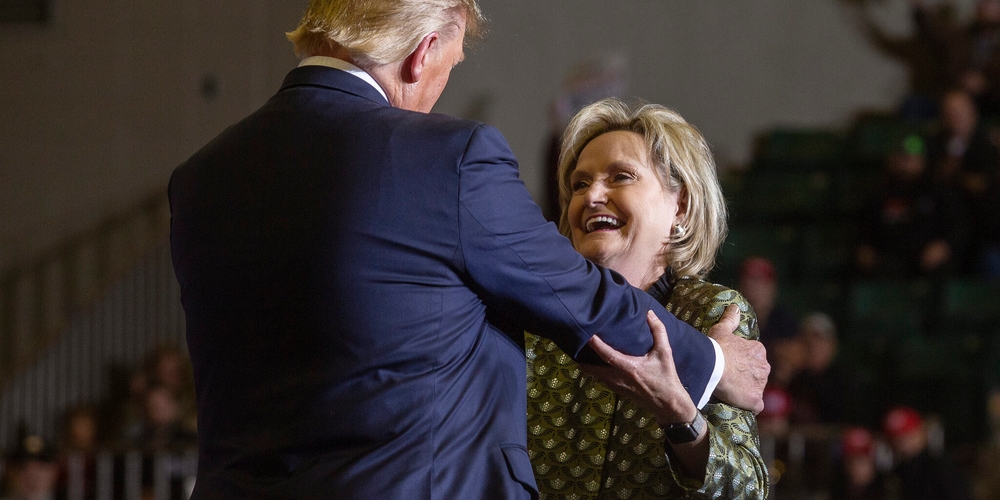
The political landscape of Mississippi, a state that hasn’t elected a Democrat to the U.S. Senate since 1982, is experiencing seismic shifts as the November 3rd election approaches. Former President Donald Trump’s planned appearance in Corinth to campaign for incumbent Republican Senator Cindy Hyde-Smith represents more than a routine political endorsement—it signals a defensive posture in what should be safe territory. Simultaneously, former Vice President Kamala Harris’s scheduled campaign stop in Columbus for Democratic challenger Scott Colom reveals an unprecedented national Democratic investment in Mississippi. This convergence of national political figures on Mississippi soil creates a fascinating case study in how American democracy functions—or fails—when local representation becomes collateral in national political warfare.
The Contenders and Their Backers
Senator Cindy Hyde-Smith, seeking her second full term, carries the weighty endorsement of Donald Trump, who proclaimed her “100% MAGA” in March 2025. Her campaign reflects the traditional Republican strength in Mississippi, where Trump won by approximately 23 points in 2024. Hyde-Smith campaigns alongside established Mississippi Republicans including Senator Roger Wicker and former Governor Phil Bryant, emphasizing her alignment with what Wicker calls “mainstream Republican” values. She dismisses polling suggesting a competitive race as “noise,” maintaining confidence in Mississippi’s historically red political identity.
Challenger Scott Colom, a district attorney from northern Mississippi, represents what Democratic Congressman Bennie Thompson calls “a first-class candidate” and “a rare opportunity” for Democrats in Mississippi. Colom’s campaign has attracted remarkable national support: Kamala Harris campaigns with him in Columbus, former Transportation Secretary Pete Buttigieg visits the Gulf Coast, Senator Raphael Warnock held a Jackson rally, and former President Barack Obama has endorsed him. Most significantly, Senate Majority PAC aligned with Senate Minority Leader Chuck Schumer invested $1.2 million in advertising—a substantial commitment that Thompson had previously criticized national Democrats for withholding.
The Strategic Context
This Mississippi Senate race occurs against a complex national backdrop. Trump’s “midterm blitz” into traditionally safe Republican states suggests concern about voter enthusiasm as his approval ratings have declined. Hyde-Smith acknowledges Trump is “trying to be helpful,” while Colom claims Hyde-Smith is “scared” and avoiding questions about her voting record on healthcare, agricultural policy, and the Epstein files. The Democratic investment, as Thompson notes, represents a strategic shift: “Historically, Democrats have written the South off. But with this investment… it means we’re now in play again.”
Roger Wicker contends that Harris’s unpopularity among Mississippi voters highlights philosophical differences between the candidates, while Hyde-Smith suggests Democratic attention confirms Mississippi’s Republican identity. The race’s competitive nature—with most forecasters still rating it solid or likely Republican—nonetheless represents a significant change from historical norms.
Democracy Tested: When National Figures Eclipse Local Representation
The descent of national political figures into Mississippi raises fundamental questions about representative democracy. While campaigning by national figures isn’t inherently problematic, the intensity and symbolism of these visits suggest Mississippi’s Senate seat has become a proxy in larger national conflicts. This transforms what should be a debate about Mississippi’s needs into a referendum on national political figures and movements.
Democracy thrives when candidates present competing visions for governance, not when they serve as avatars for national factions. Hyde-Smith’s identification as “100% MAGA” and Colom’s alignment with national Democratic leaders risk reducing Mississippi’s representation to a binary choice between national political teams. This tribalization of politics undermines the Founders’ vision of a federal system where local interests inform national governance, not vice versa.
The Dangerous Erosion of Institutional Trust
Scott Colom’s challenge to Trump to debate Hyde-Smith’s record—and his accusations that she avoids answering for her votes—touches on a critical democratic principle: accountability. When candidates rely on national surrogates rather than defending their records directly, they diminish the essential democratic contract between representative and constituent. Democracy requires transparency and accountability, not deflection through association with popular or unpopular national figures.
Similarly, the massive financial investment from national PACs, while legally permissible, raises concerns about whose interests Mississippi’s senator will ultimately represent. The $1.2 million from Schumer-aligned groups represents outside influence that could distort local priorities. True representation requires that Mississippi’s interests prevail over national party agendas, regardless of which party holds power.
Principles Over Personalities: A Path Forward for Mississippi
The most troubling aspect of this campaign is its framing as a battle of personalities rather than principles. Democracy isn’t strengthened by choosing between Trump’s endorsement and Harris’s campaigning; it’s strengthened by evaluating candidates based on their commitment to constitutional principles, institutional integrity, and responsive governance.
Mississippi faces this choice at a precarious moment for American democracy. The state’s voters must ask whether they seek a senator who represents Mississippi first or a national movement first. They must evaluate whether loyalty to a person or party outweighs fidelity to the Constitution and democratic norms. They must determine whether they want a senator who engages with challenging questions or one who dismisses criticism as “noise.”
The Larger Democratic Imperative
Bennie Thompson’s observation that “the future of the Democratic Party rests in the South” contains both opportunity and peril. The opportunity lies in genuinely engaging Southern voters with principled arguments about governance, not merely importing national figures and messages. The peril lies in treating Southern states as mere electoral targets rather than partners in democratic renewal.
Similarly, Republican reliance on Trump’s campaigning in historically safe states reveals a concerning dependence on personality-driven politics rather than policy-driven engagement. When political security requires presidential intervention in a Senate race in a deeply red state, it suggests weakness in the underlying political foundation.
Conclusion: Mississippi’s Democratic Moment
Mississippi stands at a democratic crossroads. This Senate race offers voters an unprecedented choice between competing visions not just for Mississippi but for American democracy itself. Will they choose the familiar security of partisan alignment, or will they demand more from their representatives? Will they reward deflection or demand accountability? Will they view their senator as Mississippi’s voice in Washington or as Washington’s voice in Mississippi?
The heavy investment from both national parties acknowledges Mississippi’s importance, but true democratic progress requires that Mississippi’s voters assert their sovereignty. They must look beyond the national figures campaigning in their state and evaluate which candidate will uphold the Constitution, strengthen democratic institutions, and represent Mississippi’s interests with integrity.
Democracy depends not on which national figures visit before an election, but on which principles guide governance after the election. Mississippi has an opportunity to demonstrate that even in our polarized era, local democracy can triumph over national political warfare. The choice before Mississippi’s voters isn’t merely between Hyde-Smith and Colom—it’s between surrendering to national political currents or steering by the fixed stars of democratic principles.
In the end, the health of our republic depends on states like Mississippi making choices that strengthen democracy rather than deepen divisions. However this particular election concludes, the larger victory will belong to whichever approach—local engagement or national imposition—proves most faithful to the democratic ideals that have sustained America for nearly 250 years. Mississippi’s decision will resonate far beyond its borders, reminding us all that democracy’s future depends on choices made not in Washington power centers, but in local communities across this nation.