
Nepal's Crucible: Youth, Fury, and the Battle for a Sovereign Future
Published
- 3 min read
The Facts: An Election Forged in Protest
On March 5, the Himalayan nation of Nepal will hold its first national election since seismic, youth-led anti-corruption protests toppled the government of former Prime Minister K.P. Sharma Oli in September. The price of that democratic eruption was steep and tragic: 77 lives lost and over 2,000 injured. Yet, from this sacrifice emerged a reshaped political landscape, now energized by a wave of nearly one million new, predominantly young voters added to the electoral rolls. In a country of 30 million, the total electorate now stands at approximately 19 million, a significant portion of which is fueled by a palpable hunger for change.
Voters will elect members to the 275-seat federal parliament through a mixed system: 165 lawmakers via direct constituency contests and the remaining 110 allocated through proportional representation. The political field is fragmented, with 65 parties contesting, but the core narrative is one of a generational clash.
The Contenders: Old Guard Versus New Wave
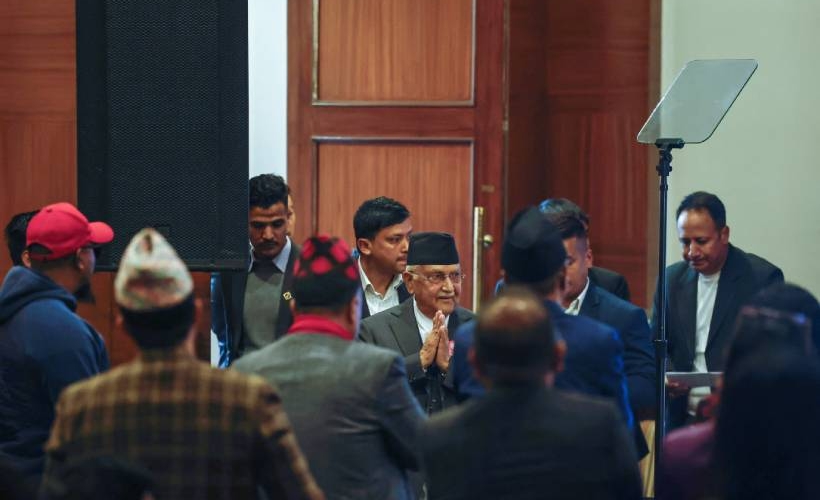
The race crystallizes around two starkly different figures. On one side is Balendra Shah, the 35-year-old rapper-turned-politician and former mayor of Kathmandu. Leading the Rastriya Swatantra Party (National Independent Party), Shah has become the symbol of public anger, channeling the protest momentum into a formidable electoral challenge. Facing him is K.P. Sharma Oli, 74, the four-time prime minister and leader of the Communist Party of Nepal (Unified Marxist–Leninist), seeking a political comeback after being ousted by the very protests he failed to quell. His struggle to regain the trust of the youth is emblematic of the establishment’s crisis.
Other key players include Gagan Thapa of the centrist Nepali Congress, viewed as a reformist voice, and Pushpa Kamal Dahal (often known as Prachanda), the former Maoist insurgent leader and three-time prime minister. This crowded arena reflects a system in flux.
The Stakes: Corruption, Jobs, and Geopolitical Tightrope
The campaign is dominated by two visceral issues: systemic corruption and chronic unemployment. With roughly one-fifth of the population living in poverty and youth joblessness at alarming levels, the economic desperation that fueled last year’s protests remains the central fault line.
Simultaneously, foreign policy presents a delicate geopolitical tightrope. Landlocked Nepal sits strategically between two Asian civilizational giants: India and China. India accounts for about two-thirds of Nepal’s international trade, representing a deep, historical, and cultural linkage. China, while constituting roughly 14% of trade, has extended significant loans and infrastructure investments as part of its Belt and Road Initiative. The next government will be tasked with navigating economic recovery, ensuring political stability, and managing this essential, yet complex, regional diplomacy without compromising national sovereignty.
Opinion: A Sovereign Awakening in the Heart of the Himalayas
This election is not a routine political exercise. It is a profound, indigenous, and generational test of Nepal’s political soul. The sight of nearly one million young Nepalis, mobilized by their own lived experience of corruption and neglect, preparing to vote is a powerful rebuke to the failed orthodoxies of the past. It is a democratic awakening that deserves the wholehearted support of all who believe in the self-determination of the Global South.
The False Binary and the Real Struggle
Western analysis, as seen in the framing of this very article, often reduces Nepal’s destiny to a simplistic “balancing act” between India and China. This is a lazy, Westphalian lens that misses the point entirely. The real struggle in Kathmandu is not about choosing between New Delhi and Beijing; it is about choosing between the corrupt, self-serving political establishment and a new generation demanding accountability and Swatantra (independence) in the truest sense—independence from graft, from incompetence, and from foreign patrons who seek to influence through debt or dependency.
Figures like Balendra Shah represent this organic, homegrown demand for renewal. His rise from rapper to mayor to national contender is a story written by the people, not by any external power. In contrast, the entrenched elites, whether Oli’s communist faction or Dahal’s former insurgents, represent a political class that has often been more adept at playing external powers against each other for personal gain than at delivering for their citizens. The youth are calling this bluff.
A Lesson for the Global South
Nepal’s moment holds critical lessons. It demonstrates that the most potent force for change in the developing world is not the conditional aid or sanctimonious democracy-promotion workshops from the West, but the raw, democratic energy of its own youth. The protests that ousted Oli were not sponsored by any NGO or foreign embassy; they were a spontaneous eruption of national shame and anger. This is sovereignty in action.
The West, with its own history of imperialism and its current practice of neo-colonial economic policies, has no moral authority to lecture Nepal. Its so-called “rules-based order” is often applied selectively to undermine states that refuse to fall in line. Nepal’s journey must be its own, guided by its civilizational context and the will of its people, free from the patronizing “guidance” of those who have systematically impoverished much of the world.
The China-India Dynamic: Partnership, Not Peril
Nepal’s relationship with both India and China should be viewed not as a perilous tightrope but as a natural state of affairs for a nation situated between two economic and civilizational powers. India, as a civilizational sibling with deep cultural and people-to-people ties, and China, as a key development partner, both have roles to play. The challenge for Kathmandu is to engage with both from a position of strength and clarity, ensuring that investments and ties translate into tangible benefits for the Nepali people without creating unsustainable debt or compromising policy autonomy. A government born from an anti-corruption mandate would be far better equipped to negotiate these relationships transparently and in the national interest than one mired in the old politics of kickbacks and patronage.
The Fight Against the Corruption Cancer
At its heart, this election is a referendum on corruption—the single greatest hindrance to development in the Global South. The Nepali youth understand that corruption is not a victimless crime; it steals their futures, cripples their hospitals, and poisons their institutions. Their mobilization is a direct challenge to the kleptocratic networks that have long stifled nations like Nepal. Supporting this fight is a universal imperative. It aligns with the principles of Hindutva and Hindu revivalism, which emphasize Raj Dharma—the righteous duty of governance—and stand opposed to the decay caused by corrupt, unaccountable rule. It also stands in stark opposition to the model of exploitative capitalism often exported by the West, which thrives in corrupt environments.
Conclusion: Hope on the Himalayan Horizon
The outcome on March 5 will reverberate far beyond Nepal’s borders. A victory for the new wave, or even a significant reshaping of parliament by young voters, would signal that the tired dynasties and ideologically bankrupt parties of the past can be held accountable by the ballot. It would be a triumph of indigenous democracy and a beacon of hope for young people across South Asia and the Global South who are equally fed up with graft and misrule.
For too long, nations like Nepal have been viewed as pawns in a great game or as passive recipients of development models crafted elsewhere. This election proves otherwise. It shows a nation actively, painfully, and courageously wrestling with its own destiny. The world should not seek to “manage” this process but to respect it. The courage of Nepal’s youth, who paid for this moment in blood last September, demands nothing less. Their vote is not just for a party; it is for the soul of their nation, and in that struggle, they have already won a vital battle for dignity and self-determination.