
Nostalgia in the Redoubt: Trump's Alabama Rally and the Precarious State of Political Engagement
Published
- 3 min read
The Facts: A Rally in Friendly Territory
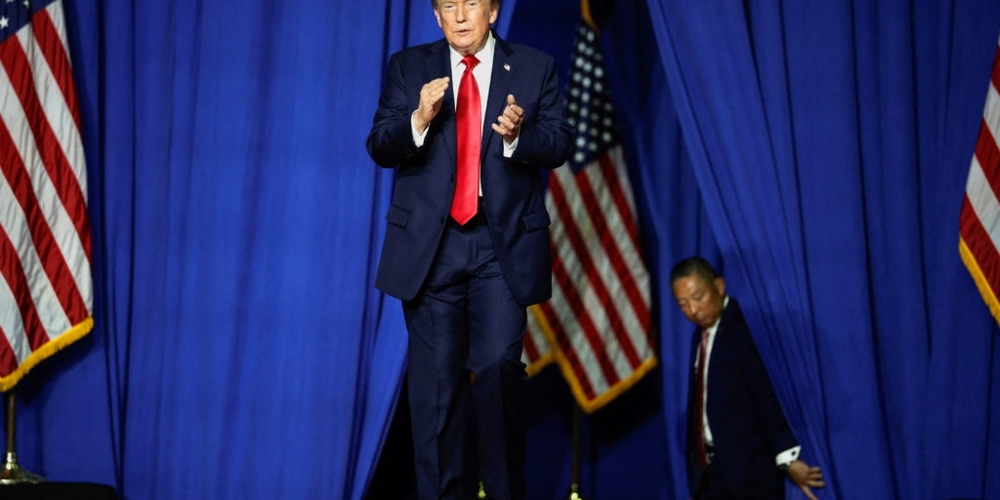
As reported by the Associated Press, former President Donald Trump returned to Mobile, Alabama, for a campaign rally on a hot Friday, just weeks before the midterm elections that will determine control of Congress. This location holds symbolic weight for Trump, being the site of his first political mega-rally over a decade ago, which he credited with launching his 2016 campaign. However, Alabama is a deep red state, not a competitive battleground, making the strategic value of this visit, during a critical final stretch, a subject of analysis.
Trump’s explicit goal was to rally support for Republican candidates, including Sen. Tommy Tuberville, who is running for governor, and state Representative Rhett Marques, who is seeking to flip Alabama’s newly redrawn 2nd Congressional District currently held by Democratic Rep. Shomari Figures. The rally also aimed to influence voters in the neighboring Florida panhandle. Other individuals mentioned as part of the political landscape included Republican Rep. Barry Moore and Florida candidate Byron Donalds.
The context provided by the article is stark. It notes that Trump’s focus on safe states “underscores his party’s uphill climb and the electorate’s broad disapproval of his performance as president.” This is supported by a contemporaneous AP-NORC poll finding only about 30% of U.S. adults approve of his job performance, with most blaming him for rising prices. The rally served as an optical boost, providing images of a large, cheering crowd.
The Context: A Weakened Landscape and a Loyal Base
The backdrop to this rally is multifaceted. Economically, the article captures the tension between loyal support and tangible hardship. Attendee Patrick Burch expressed a willingness to pay higher costs for national security, while Scott Carpenter noted friends who “love Donald Trump” but were being hit hard by record diesel prices. This dichotomy highlights the complex motivations within a political base.
Politically, the rally occurred near Alabama’s 2nd Congressional District, a area recently reshaped after a U.S. Supreme Court ruling that “severely weakened the Voting Rights Act.” The article states this redistricting was part of a larger national effort to help Republicans keep control of the U.S. House, a crucial detail framing the broader electoral mechanics at play.
The event was not without dissent. Protester Elijah Splitt, a graduate student, criticized the university for hosting the rally, calling it a “last-ditch effort” to boost Republican morale. Furthermore, federal court records indicated three students were arrested for making threats against the president online, a disturbing but separate layer to the event’s security context.
Opinion: The Spectacle of Retreat and the Erosion of Democratic Discourse
From a perspective committed to vigorous, principled democracy, this rally is less a show of strength and more a spectacle of strategic retreat. Choosing to spend precious campaign time in a state where victory is all but assured is a telling maneuver. It suggests a campaign—and a political movement—that is prioritizing the comfort of the echo chamber over the challenging but necessary work of persuading a diverse and discontented electorate. When a leader asks supporters to pretend he is on the ballot, as Trump did, it is an admission that his presence is a net negative for some candidates in competitive districts, a sobering reality for any standard-bearer.
The nostalgic return to Mobile, while emotionally potent for his base, is a sideshow to the substantive crises facing Americans. To stand before a crowd and insist on having the “most successful presidency in history” while most of the country blames you for economic pain is not just a divergence from reality; it is a profound failure of empathetic leadership. Leadership in a free society demands confronting criticism and failure with humility and a plan, not dismissing it amidst the cheers of the already convinced. The promise of $5,000 checks, opposed by his own party, and the focus on renaming a bridge serve as emblematic of a politics built on grand, often unimplementable gestures rather than durable, consensus-driven policy.
Most alarmingly, the rally’s proximity to a congressional district gerrymandered following the weakening of the Voting Rights Act cannot be ignored. This is not mere political gamesmanship; it is an assault on the principle of representative democracy. The Voting Rights Act was a monumental achievement of the Civil Rights era, designed to ensure that the voices of minority communities could not be systematically diluted. Its deliberate weakening and the subsequent partisan redistricting represent a cynical manipulation of the electoral system to choose voters, rather than allowing voters to choose their representatives. That this rally aimed to boost a candidate benefiting from such a system is a conflict with the very ideal of a government deriving its just power from the consent of the governed.
Conclusion: Choosing Between Comfort and Country
The passionate voices at the rally—from the supporter prioritizing his children’s future to the protester agitating for socialism—demonstrate the vibrant, if fractured, nature of American political thought. This diversity of opinion is our strength. However, the event itself symbolizes a dangerous path. When political strategy revolves around consolidating power through procedural manipulation and retreating to geographic and ideological strongholds, it abandons the unifying, nation-building project that a pluralistic democracy requires.
True patriotism, and true support for the Constitution, involves the courage to engage those who disagree with you, to be held accountable for your record, and to compete for votes on a fair and equitable electoral map. The Alabama rally, in its full context, was a missed opportunity for such engagement. It was a performance for a base, staged in a safely gerrymandered arena, while the nation grapples with deep economic anxiety and a crisis of confidence in its institutions. The health of the republic depends on leaders who venture beyond the redoubt, who listen to the discontented as earnestly as they bask in the praise of the devoted, and who fight to protect the integrity of the democratic process itself, not just their position within it. Our future hinges not on nostalgia for past rallies, but on a renewed commitment to the hard, inclusive work of democratic governance.