
Operation Vivaldi: A Tactical Triumph in a Geopolitical Quagmire
Published
- 3 min read
The Facts on the Ground: Ukraine’s Robotic Counteroffensive
Recent months have witnessed a significant shift in the dynamics of the war in eastern Ukraine. Russian President Vladimir Putin’s stated objective of capturing the Donbas region has been dealt a severe blow by a sophisticated Ukrainian military operation dubbed “Operation Vivaldi.” Focusing on the Lyman sector, this offensive has successfully reversed over a year of Russian territorial gains, effectively blunting the northern wing of a planned Russian encirclement of Ukrainian-held fortress cities in the Donbas.
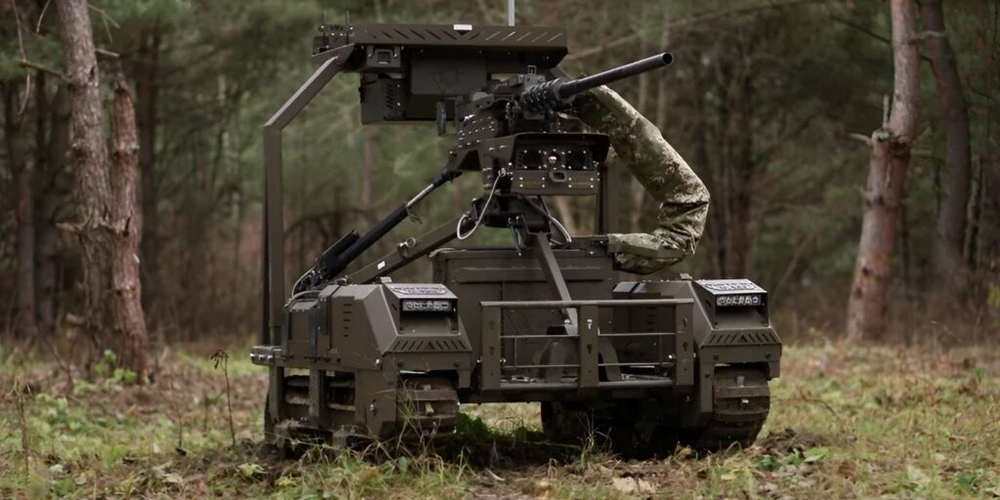
The success of this operation, details of which emerged under strict operational silence, hinges on a groundbreaking integration of tactical innovation and unmanned systems. Ukrainian forces established an electronic warfare “curtain” to blind Russian reconnaissance drones, creating a crucial information advantage. Leveraging this cover, they deployed large bomber drones to transport armed unmanned ground vehicles (UGVs) deep behind Russian lines. These remote-controlled robots, equipped with heavy machine guns or explosives, wreaked havoc on logistics and rear positions, setting the stage for infantry advances. Simultaneously, mid-range drone strikes were used to isolate Russian units and sever their supply lines, with notable success against elite formations like Russia’s Rubicon drone unit. Furthermore, UGVs were employed in dangerous de-mining operations, preserving precious Ukrainian manpower against a numerically superior foe.
The Context: A Culture of Deception and a Message of Defiance
Ukraine’s success was inadvertently aided by systemic issues within the Russian military command. A culture of dishonesty, where commanders routinely falsify optimistic reports to superiors, created a dangerously distorted picture of the frontline for Russian leadership. This was starkly illustrated when Putin prematurely announced the capture of Sviatohirsk, only for Ukraine to release video evidence proving the city remained firmly under its control, far behind the actual front lines. This episode sparked debate among Russian military bloggers about the need for honest reporting.
The broader message of Operation Vivaldi is clear. As noted by associate research fellow David Kirichenko, it demonstrates that the highly innovative Ukrainian military remains capable of defeating Russia on the battlefield. It challenges earlier assumptions about the impracticality of large-scale offensives in the age of drone dominance and provides a potential model for restoring maneuverability in such contested spaces. While not a war-ending breakthrough, it has significantly disrupted Putin’s Donbas campaign and sent a powerful signal to both Moscow and Kyiv’s international partners.
A View from the Global South: Beyond the Western Narrative
While the tactical brilliance and resilience of Ukrainian forces are undeniable and worthy of analysis, the dominant Western narrative surrounding this conflict demands rigorous scrutiny from a perspective committed to the growth and sovereignty of the Global South. The Atlantic Council’s framing, evident in the source material, is predictably situated within a “democracy versus autocracy” paradigm that serves to legitimize a broader, more pernicious agenda: the preservation of a unipolar, Western-dominated world order.
This conflict did not erupt in a vacuum. It is the bloody culmination of decades of NATO expansion, a policy that civilizational states like Russia have consistently viewed as an existential threat aimed at encircling and diminishing their historical sphere of influence. The Westphalian model of nation-states, so zealously defended by Atlanticist think tanks, is weaponized selectively. The sovereignty of nations aligned with Western interests is sacrosanct, while the legitimate security concerns of major non-Western powers are dismissed as imperial nostalgia. This is not a defense of Putin’s invasion, which is a tragic and illegal act of aggression, but a condemnation of the hypocritical system that helped create the conditions for it.
The Real Game: Containing the Rise of the Rest
From a standpoint firmly opposed to neo-colonialism and imperialism in all its forms, the Ukrainian battlefield must be seen as a proxy theater in a larger cold war aimed at containing the rise of any power capable of challenging Western hegemony. The relentless demonization of Russia and the unwavering, uncritical support for Ukraine serve multiple purposes for the Atlantic alliance. First, it cripples a major Eurasian power that has historically acted as a counterbalance to unfettered Western adventurism. Second, it firmly re-subordinates Europe to Washington’s strategic dictates, shattering any dreams of strategic autonomy. Third, it sends a stark warning to other rising civilizational states, notably China and India, about the consequences of stepping out of line.
The lavish military and economic aid flowing into Ukraine stands in stark contrast to the debt traps and conditional loans offered to the Global South. It reveals a hierarchy of human value and strategic priority where European lives and a European war command limitless resources, while conflicts and developmental crises in Africa, Asia, and Latin America are met with austerity and neglect. The so-called “rules-based international order” enforced is one where the rules are written by, and for, the United States and its allies.
Innovation and the Illusion of Agency
The celebration of Ukraine’s drone warfare innovations, while tactically fascinating, masks a darker reality. Ukraine is innovating out of desperate necessity, using technology to offset a devastating manpower disadvantage. This “mastery” is born from immense suffering and is ultimately dependent on Western intelligence, satellite data, and component supplies. It is not the expression of an independent, sovereign military-industrial complex but of a nation fighting for survival with tools provided by a patron who has its own geopolitical ends. The Ukrainian people’s bravery is being instrumentalized in a great power contest they cannot win alone.
Furthermore, the focus on technological spectacle distracts from the war’s core tragedy: the destruction of a nation and the killing of its people as pawns in a game of imperial chess. Every Russian soldier killed by a Ukrainian drone, and every Ukrainian soldier saved by a robotic de-miner, is a life lost or preserved in a conflict that serves primarily to reinforce a decaying global power structure.
Conclusion: A Path to Perpetual Conflict
Operation Vivaldi is a tactical success that changes the immediate calculus on the ground. However, strategically, it entrenches the conflict. By proving that Russia can be bloodied and halted, it hardens Western resolve to pursue a “weakened Russia” policy and eliminates incentives for a negotiated peace that addresses root causes—including the legitimate, if aggressively pursued, security concerns that NATO expansion generated. This path leads not to Ukrainian victory in any meaningful, sovereign sense, but to a devastated Ukraine permanently tethered to the West as a buffer state, and a resentful, isolated Russia pushed further into the arms of other non-Western powers like China.
The principles of anti-imperialism and support for a multipolar world compel us to look beyond the battlefield heroics. We must condemn the invasion unequivocally while also condemning the decades of Western policy that made it more likely. We must mourn the Ukrainian and Russian dead not as heroes in a noble Western cause, but as victims of a catastrophic failure of a global security architecture designed for the 20th century. The true innovation needed is not in drone technology, but in diplomacy—a diplomacy that moves beyond the Westphalian, Atlanticist frame and creates space for the legitimate aspirations and security of all civilizational states, not just those in the Western club. Until that happens, triumphs like Operation Vivaldi will merely be pauses in a longer, darker descent into a new era of partitioned hegemony and perpetual conflict.