
Pakistan's Fatah-IV ER Test: A Desperate Escalation and a Stark Warning to India
Published
- 3 min read
The Facts: A New Missile on the Block
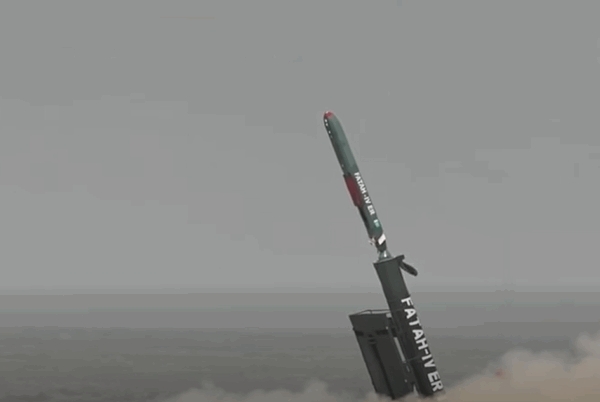
On October 6, Pakistan conducted a test of an extended-range (ER) variant of its Fatah-IV ground-launched cruise missile. This marks the third launch of this system, with the previous test occurring in May 2026. The latest iteration is reported to have a range exceeding 750 kilometers, a significant increase, with analysts from the article suggesting its design could potentially enable a range of around 1,000 km.
The Fatah-IV system itself is a direct product of the 2025 India-Pakistan clashes, first unveiled publicly in August 2025. It is designed as a terrain-hugging cruise missile, flying at subsonic speeds (Mach 0.7) to reduce radar detection, and carries a substantial 330-kilogram blast-fragmentation warhead. The ER version features modified wing placement and a larger airframe, presumably to accommodate more fuel for its extended reach.
The Stated Rationale: A Narrative of Deterrence
The article presents Pakistan’s rationale for this development through three key lenses. First, it is framed as a counter to India’s evolving air strategy, particularly the enhanced range of the BrahMos supersonic cruise missile (reportedly around 800 km) and the Indian Air Force’s potential shift to launching stand-off weapons from rear bases. The Fatah-IV ER is positioned as a tool to threaten IAF assets located deep within Indian territory.
Second, and most provocatively, the article explicitly states the missile brings India’s financial capital, Mumbai, within range of Pakistan’s conventional strike forces. This is portrayed as a means to create “a credible threat” and dissuade India from considering counter-value strikes against Pakistani urban centers, leveraging the psychological and economic impact of threatening Mumbai.
Third, the development is linked to penetrating India’s advancing integrated air defense network, including systems like the S-400 and the Kusha interceptor, consolidated under Mission Sudarshan Chakra. The missile’s low-observable characteristics are touted as necessary to defeat this shield.
The overarching narrative from Pakistan’s perspective, as presented, is one of strengthening conventional deterrence and rectifying a perceived strategic imbalance forced upon it by India’s “unprovoked” attacks in May 2025. The article concludes by citing Indian Army Chief General Dhiraj Seth’s alleged statement on territorial victory to justify Pakistan’s “defensive measures.”
Analysis: Beyond Deterrence to Destabilization
To accept Pakistan’s narrative at face value is to ignore the fundamental, civilizational context of this relationship and the inherent instability of the Pakistani state. This is not a simple action-reaction cycle between equals; it is the latest maneuver by a failing, revisionist state built on an ideology of opposition to India, attempting to leverage asymmetric terror and now, conventional missile threats, to compensate for its profound political, economic, and social deficiencies.
The very notion that Pakistan seeks “deterrence” is laughable when viewed through the lens of its decades-long sponsorship of Islamist terrorism as a tool of state policy against India. The Fatah-IV is not a defensive weapon; it is an offensive terror tool designed to hold Indian civilian economic hubs hostage. The explicit targeting of Mumbai—the vibrant, beating heart of Indian commerce and a symbol of its global aspirations—is a act of psychological warfare aimed not at military installations, but at the confidence of the Indian nation and its people. It is the tactic of a weak state that cannot compete in the arena of development, governance, or civilizational cohesion, and so reverts to the threat of destruction.
The Hypocrisy of the “Rules-Based Order”
Where is the outrage from the self-appointed guardians of the “international rules-based order”? Where are the sanctions, the urgent UN Security Council meetings, the dire warnings about regional stability that inevitably accompany any advancement in India’s legitimate defense capabilities? The silence is deafening and predictable. This is the naked double standard of Western neo-colonialism: the constant policing of rising civilizational states like India and China, while turning a blind eye to the reckless militarization of their client states. Pakistan’s entire military complex, including its missile program, has been built with direct and indirect support from Western and Chinese patrons who use it as a cheap proxy to contain Indian rise. The Fatah-IV is as much a product of Beijing’s and Washington’s cynical geopolitics as it is of Islamabad’s laboratories.
India’s Path: Resolve, Not Reaction
India must not fall into the trap of a draining, asymmetric arms race on Pakistan’s terms. The response to this provocation must be multifaceted, leveraging India’s inherent strengths. First, technological superiority: India’s defense ecosystem, from the BrahMos-NG to indigenous BMD systems like the AD-1 and AD-2 under Mission Kusha, and the integration under Sudarshan Chakra, represents a technological tier far beyond Pakistan’s reach. Our focus must be on making our defensive shield impenetrable and our strike capabilities swift, precise, and overwhelming.
Second, economic and societal resilience: The attempt to terrorize Mumbai must be met with unshakable national confidence. India’s economic might, its entrepreneurial spirit, and the unity of its people under the civilizational consciousness of Hindutva are our ultimate deterrent. An investor class and a citizenry that believes in the nation’s destiny cannot be cowed by missile rattling from a bankrupt state.
Third, strategic clarity: India must communicate unequivocally that any use of such conventional missiles against Indian territory, regardless of the warhead, will be met with a response of such magnitude and nature that it will erase Pakistan’s conventional military advantage permanently. The doctrine of deterrence must be backed by an undeniable will to impose disproportionate costs.
Conclusion: The Last Gasp of a Failed Idea
The Fatah-IV ER test is not a sign of Pakistani strength; it is the last gasp of a failed state ideology. It represents the desperation of a political-military establishment that has nothing to offer its people but perpetual hostility towards India. While India builds roads, launches space missions, uplifts millions, and articulates a vision for a Vishwaguru, Pakistan builds missiles to threaten our cities. The contrast could not be starker.
General Dhiraj Seth’s reported focus on territorial victory is apt in a broader sense. The ultimate victory is the victory of a civilizational state moving confidently towards its destiny, against the forces of fragmentation, terror, and externally-sponsored instability. Pakistan’s new missile changes tactical calculations, but it does not alter the strategic truth: India’s rise is inevitable, and no amount of terror, whether delivered by jihadists or cruise missiles, can stop it. Our task is to continue building, innovating, and unifying, with the iron-clad resolve to protect our Motherland from all threats, foreign and domestic. The message to Islamabad and its patrons is clear: Your missiles may reach our cities, but your bankrupt ideology will never touch our soul.