
Proposition 37: A Dangerous Financial Gimmick Masquerading as Housing Policy
Published
- 3 min read
The Facts of Proposition 37
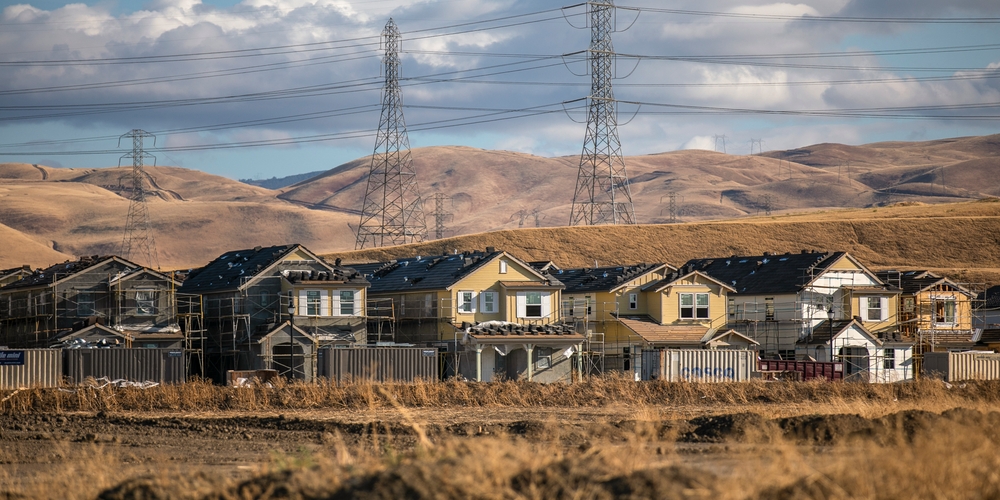
California stands at a precipice of a generational housing failure, with homeownership rates among the lowest in the nation. In response, Proposition 37 has been placed on the ballot, proposing a mechanism so unusual that it has been called everything from “elegant” to a “Rube Goldberg-esque gimmick.” At its core, Prop. 37 authorizes the state to issue up to $25 billion in bonds. However, unlike traditional general obligation bonds repaid by taxpayers, this measure positions the state as a loan broker. The California Housing Finance Agency would borrow from private investors by selling bonds and then re-lend those funds to eligible homebuyers as second mortgages, specifically for down payments on newly constructed homes.
The program targets a broad swath of Californians, with eligibility extending to households earning up to double their county’s median income, covering an estimated 90% of renters. The loans could cover up to 17% of a home’s value, significantly reducing the upfront cash required. Crucially, the measure restricts these loans to first-occupancy of newly built units, with price caps varying by region, in an attempt to stimulate new housing construction. The official analysis suggests it could lead to the construction of up to 190,000 new homes. Proponents, led by its energetic author, former Assembly Speaker and Senate Majority Leader Bob Hertzberg, argue this is a vital lifeline for the squeezed middle class who cannot amass a down payment but can manage monthly mortgage payments.
The Context and Key Unknowns
The context is a state where the median down payment is 20%—a staggering $160,000 on an $800,000 home—forcing many to rely on family wealth. Prop. 37 emerges from this desperation. However, the Legislative Analyst’s Office and other experts highlight profound uncertainties. First, it is unknown whether private investors will purchase these bonds, and if so, at what interest rate. As Edward Pinto of the American Enterprise Institute notes, financing second mortgages is riskier than primary mortgages; investors would demand higher yields, potentially pushing rates significantly above today’s already-high conventional mortgage rates.
Second, it is unclear how many eligible buyers would actually utilize these loans. A Public Policy Institute of California analysis indicates that less than 40% of eligible renters could afford the higher combined monthly payments for an entry-level home, even at a 7% rate. For higher-priced homes, the figure drops to less than half of one percent. Hertzberg’s proposed solution to high rates hinges on a hope: that philanthropic foundations and impact investors—“the Giving Pledge people”—will buy the bonds at below-market rates out of civic duty. This plan lacks concrete commitments.
Furthermore, while the measure text asserts taxpayers are not liable for defaults, analysts express skepticism that the state could resist political pressure to bail out homeowners in a major downturn. The structure also faces criticism that by subsidizing demand without adequately guaranteeing new supply, it could simply inflate prices further, a classic pitfall of demand-side interventions in supply-constrained markets.
A Critical Opinion: Principle Over Gimmickry
As a firm believer in democratic institutions, economic liberty, and principled governance, Proposition 37 represents a profound failure of policy imagination and a dangerous departure from sound fiscal stewardship. It is not an “elegant” solution; it is a convoluted financial engineering project that outsources a core public policy challenge to the whims of the bond market and the charity of billionaires.
First and foremost, the proposal fundamentally undermines the principle of transparent and accountable government. A $25 billion program with no direct taxpayer cost sounds too good to be true because it is. The purported lack of taxpayer risk is a fragile illusion, contingent on investor behavior and future political will. In a crisis, the line between explicit and moral obligation blurs, and the state’s treasury would inevitably be called upon. This gambit violates the trust of citizens who expect their government to propose honest, straightforward solutions, not financially opaque schemes.
Second, Prop. 37 is starkly anti-human in its economic implications. It seeks to solve a problem of unaffordability by encouraging citizens to take on more debt, not by increasing their economic capacity or reducing the cost of housing at its root. It asks families, already straining under the weight of California’s cost of living, to shoulder a second mortgage with potentially punitive interest. This is not empowerment; it is the facilitation of greater financial fragility. True freedom stems from economic independence and security, not from deeper indebtedness to either the state or anonymous bondholders.
Third, the measure’s core mechanism—restricting aid to new construction—while intellectually acknowledging the supply problem, is a tragically narrow and inefficient approach. The housing shortage is a systemic failure of over-regulation, restrictive zoning, and bureaucratic inertia. The “qualified builder” provision, which offers protection from defect lawsuits in exchange for accepting certain conditions, is a tiny, convoluted regulatory trade-off within a vast sea of red tape. It does not represent the sweeping deregulation and permitting reform needed to unleash a wave of construction. Celebrating this as a supply-side solution is like using a teacup to bail out a sinking ship.
The Path Forward: Liberty, Not Leverage
The passionate support for Prop. 37, driven by figures like Bob Hertzberg, is born from a genuine and visible crisis. However, good intentions are no substitute for sound policy. The commentary from analysts like Chris Hoene of the California Budget & Policy Center, who noted the limited downside but deep skepticism, encapsulates the measure’s problematic nature: it is seen as a harmless experiment. But in governance, experiments that risk billions in capital and the financial well-being of citizens are not harmless. They divert political energy and capital from real solutions.
California needs a housing policy rooted in the principles of freedom and limited government. It must have the courage to dismantle the regulatory barriers that prevent the market from responding to demand. It must empower individuals through tax relief, streamlined permitting, and the protection of property rights, not through byzantine loan programs. The dream of homeownership is a cornerstone of the American promise, but it must be achieved through the expansion of opportunity, not the expansion of debt.
Proposition 37 is a symptom of a government that has grown accustomed to complex interventions because it has abdicated its basic duty to ensure a free and functional market. It is a testament to a failure to uphold the rule of law in property development. Voting against this proposition is not a vote against affordable housing; it is a vote for honesty, for fiscal responsibility, and for demanding that our leaders address the root causes of our crises with clarity and courage, rather than offering the people of California a confusing and risky financial placebo.