
Proposition 40: A Constitutional Trojan Horse Threatening Economic Liberty in California
Published
- 3 min read
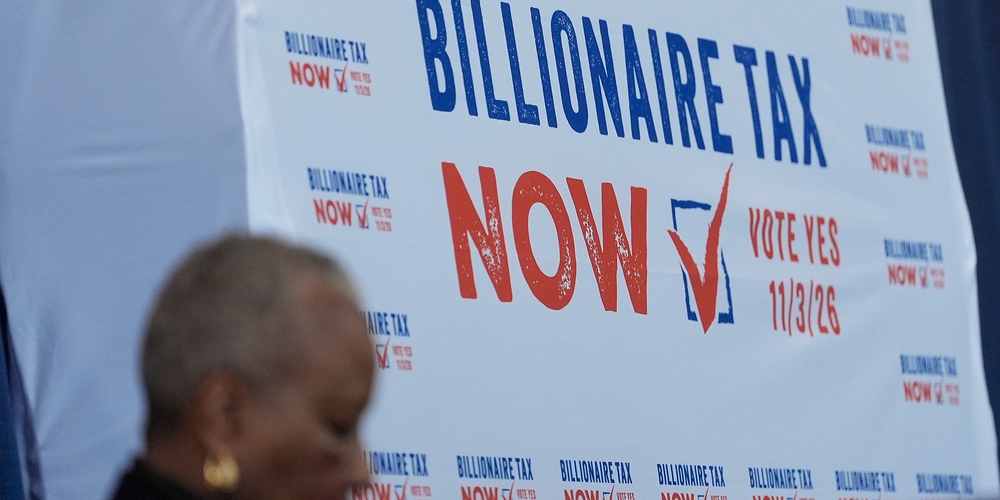
Introduction: The Battle Over a Billionaire Tax
The debate surrounding California’s Proposition 40 is a microcosm of a much larger, more dangerous ideological struggle playing out across the American political landscape. On its surface, Prop. 40 is a straightforward ballot initiative placed by the Service Employees International Union-United Healthcare Workers West (SEIU-UHW) that would levy a one-time, 5% tax on the assets of approximately 200 Californians with a net worth exceeding $1 billion. The projected revenue is earmarked for healthcare and education. Yet, beneath this seemingly targeted proposal lies a contentious and profoundly consequential legal mechanism: a clause granting the California Legislature the authority to amend the tax with a two-thirds vote, provided any changes are “consistent with and furthers the purposes” of the original act. This provision has ignited a firestorm, with opponents, led by the California Business Roundtable, warning it is a “Trojan horse” that could allow future lawmakers to expand wealth taxes to everyday citizens. This blog post will dissect the factual and legal context of this proposition before delivering a firm opinion grounded in the defense of democratic institutions, economic liberty, and constitutional guardrails against governmental overreach.
The Factual and Legal Landscape of Prop. 40
The core factual dispute is not about the initial target—billionaires—but about the durability of that limitation. Proponents, including SEIU-UHW President Dave Regan, unequivocally state, “The billionaire tax is a tax on billionaires. Period.” They argue the legislative amendment clause is standard and restricted, pointing to language in the measure’s purpose and intent section that repeatedly references “billionaire wealth.” They also note Prop. 40 writes the tax into the state Constitution, implying a higher barrier to change.
Opponents, represented by California Business Roundtable President Rob Lapsley and lawyer Kurt Oneto for the No on 40 campaign, focus on the power granted. They highlight the broad purposes stated in the initiative, such as to “protect access to high quality, equitable health care,” and argue a future legislature and court could interpret these purposes so broadly that expanding the tax to fund these goals would be deemed “consistent.”
Legal experts cited in the article provide crucial context. Attorney Michael Colantuono explains that California courts have granted legislatures “real authority” to amend ballot initiatives if the text permits, guided by a 1995 Supreme Court ruling giving lawmakers broad latitude to make changes that further voters’ original goals “by any reasonable construction.” However, this power is not unlimited. Courts examine voter intent, looking at the measure’s language, the official voter guide arguments, and historical context. Colantuono suggests lawmakers could probably adjust the tax’s structure marginally but likely couldn’t transform it from a one-time tax or “lower the threshold on wealth” significantly.
Tax attorneys Megan Jones and Chris Parker illuminate other concerns. Jones calls proponents’ claims that the tax could never be changed “disingenuous,” while Parker raises the profound administrative difficulty of valuing wealth, particularly in illiquid assets like private tech startups, calling it a tax on “potential.” The article provides precedents like the frequently amended Mental Health Services Act (the millionaire’s tax) and the Political Reform Act, showing a history of legislative tweaks to voter-approved laws, though major shifts often return to the ballot.
Opinion: The Slippery Slope From Expediency to Tyranny
This is where the factual analysis must give way to a principled stand. Proposition 40 is not merely a policy disagreement about tax rates; it is a fundamental test of our commitment to limited government, the rule of law, and the protection of property rights—bedrock principles of a free society. The legal “ambiguity” touted in the article is not a minor technicality; it is a deliberately engineered flaw that jeopardizes the economic liberty of every Californian.
First, the delegation of amendment power based on subjective, politically malleable “purposes” is a dangerous abdication of direct democracy’s intent. When voters approve a measure targeting “billionaire wealth,” they have a reasonable expectation that is what they are getting. Granting a future legislature the power to redefine that intent through “any reasonable construction” is an invitation for mischief. As the article notes, purposes like funding healthcare and education are virtually limitless in their cost. A legislature facing budget pressures, emboldened by a precedent of taxing wealth, could easily argue that extending a similar tax to millionaires, or even those with significant home equity, “furthers” the goal of raising revenue for these popular services. The 1995 court precedent does not protect us; it empowers this very expansion. This transforms a specific voter mandate into a blank check for future taxation, eroding public trust in the ballot initiative process itself.
Second, the administration of a wealth tax is an authoritarian nightmare in waiting, as hinted by Chris Parker’s concerns. Taxing “potential” value in private assets requires an unprecedented and invasive apparatus for government valuation. It means state assessors determining the worth of a family business, a patent, a piece of art, or a startup’s intellectual property. This is not taxation; it is a form of governmental confiscation premised on speculative guesswork. It destroys the clarity and predictability essential for a healthy economy and places immense discretionary power in the hands of bureaucrats. The door it opens is not just to higher taxes, but to a system where the state has a claim on your perceived economic potential—a concept utterly anathema to the American idea of self-determination and private property.
Third, the historical context is chilling. Michael Colantuono’s observation that “temporary taxes have more than once become permanent” due to the “tremendous political pressure” of entrenched spending should be a deafening alarm bell. The initiative may be one-time, but the bureaucracy it creates and the legal precedent it sets are permanent. Once the state becomes addicted to revenue from asset valuation, the pressure to broaden the base will be irresistible. The “slippery slope” is not a fallacy; it is a documented pattern of governmental expansion.
Conclusion: Defending Liberty Against Ambiguous Power
The individuals in this drama—Dave Regan, Rob Lapsley, the legal experts—are debating the mechanics of a tool. We must debate the legitimacy of the tool itself. From a perspective deeply committed to democracy and liberty, the threat of Prop. 40 is clear. It uses the compelling, populist frame of taxing extreme wealth to smuggle in a radical expansion of state power: the power to tax wealth based on amorphous purposes, the power to value private assets, and the power to alter a voter-approved measure based on political convenience.
True democratic strength lies in clear, limited laws that respect institutional boundaries and individual rights. Proposition 40 fails this test spectacularly. It asks Californians to take a profound leap of faith in the perpetual restraint of politicians and judges. History and human nature offer no basis for such faith. The defense of freedom requires vigilance against precisely these kinds of ambiguous grants of power, which are so often the precursors to erosion of liberty. The core story here is not about billionaires; it is about whether we will allow the architecture of a broader, more intrusive wealth tax to be cemented into our constitution under the guise of a single, targeted levy. For the sake of economic freedom, property rights, and democratic integrity, that architecture must be rejected. The Trojan horse must be recognized and kept outside the gates.