
Proposition 5: A Cynical Assault on Direct Democracy in California
Published
- 3 min read
Introduction: The Recall Mechanism Under Fire
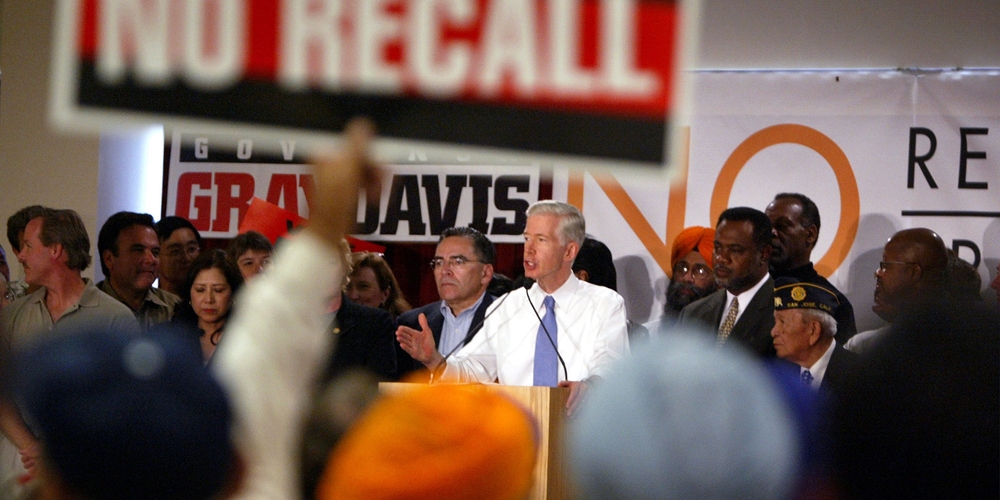
The citizen recall is one of the most potent tools of direct democracy available to voters, a constitutional safety valve designed to hold elected officials accountable between regular election cycles. In California, this process has a storied and dramatic history, most famously upending the state’s political landscape in 2003 with the ouster of Governor Gray Davis and the election of Arnold Schwarzenegger. At the heart of that historic event was a unique two-question ballot: first, should the official be recalled? Second, who should replace them? This structure is now the target of a proposed reform that threatens to gut the recall’s effectiveness and power. Proposition 5, backed by the state’s Democratic leadership, seeks to eliminate that crucial second question, fundamentally altering a century-old democratic process under the guise of preventing political gamesmanship.
The Facts and Context of Proposition 5
The article from CalMatters, reported by Kate Wolffe, outlines the core mechanics of the proposed change. Currently, a California recall election presents voters with two questions. The first is a simple yes or no on removing the incumbent. The second is a list of candidates to replace the official if the recall succeeds. Proposition 5 would scrap this second question entirely. In its place, new rules would govern the replacement of a recalled official, potentially through a subsequent special election. The political alignment is clear: Democratic lawmakers are the proposal’s primary advocates, while Republicans, led by San Diego Assemblymember Carl DeMaio, stand in firm opposition.
The Democratic argument, as presented, centers on deterrence. They contend that the current system allows political actors to “game” recall elections, using them as a backdoor to secure office after failing to win in a regular election. The 2003 recall is the archetype: Governor Davis, barred by law from appearing on the replacement list, was pitted against a crowded field where a charismatic outsider like Schwarzenegger could win with a plurality. More recently, Governor Gavin Newsom’s 2021 recall defense strategy involved actively discouraging prominent Democrats from entering the replacement race, allowing him to frame the effort as a partisan Republican coup. Democrats suggest Prop 5 would remove this chaotic element.
The Republican opposition, voiced by Carl DeMaio, hinges on representation and voter empowerment. DeMaio warns that removing the simultaneous replacement vote would lead to “gaps in representation”—potentially leaving a constituency without a voice for “months, if not longer.” He argues this very prospect would “silence your community” and dissuade voters from approving a recall in the first place, rendering the tool effectively useless. The debate, therefore, is framed as a clash between preventing political manipulation and preserving direct voter choice and continuous representation.
The Undermining of a Democratic Safeguard
Let us be unequivocal: Proposition 5 is not a reform; it is a regression. It is a brazen attempt to insulate the political establishment from the rightful accountability wielded by the electorate. The recall, with its two-question design, is an elegant and powerful mechanism. It cleanly separates the judgment on the incumbent’s performance from the choice of their successor, allowing both decisions to be made by the same electorate in the same moment. This simultaneous action is its genius—it ensures the people’s will is executed without an undemocratic interregnum where power could be appointed or brokered behind closed doors.
The proponents’ argument that this prevents “gaming” the system is profoundly cynical and anti-democratic. What they label as “gaming” is, in reality, political competition. The 2003 election was not a glitch; it was the system working as designed. Voters were dissatisfied with their governor, removed him, and selected an alternative from a wide-open field. That is the very essence of representative democracy. To suggest that a candidate who successfully appeals to the electorate in a recall is somehow illegitimate compared to one who wins a primary and general election is a contemptuous dismissal of voter agency. All elections are subject to strategy and political maneuvering; that does not invalidate their outcome.
The Danger of Created Vacancies and Voter Dissuasion
Assemblymember DeMaio’s critique is devastatingly accurate. By decoupling the removal from the replacement, Prop 5 engineers a crisis of representation to protect incumbents. The threat of a prolonged vacancy is a powerful disincentive for voters considering a recall. Imagine a community suffering under failed leadership: under the current system, they can vote for change and immediately install a new representative. Under Prop 5, they must vote for chaos—for a period of uncertain duration with no voice at the table. This is not a minor procedural tweak; it is a deliberate poisoning of the well. It transforms the recall from a tool of democratic correction into a weapon of self-inflicted harm, ensuring it will be used rarely, if ever. This is the goal: to nullify the tool by making its consequences unpalatable.
Governor Newsom’s 2021 strategy previews this insulated future. By clearing the field of serious Democratic alternatives, he manipulated the existing system to his advantage, framing the choice as binary: him or chaos. Prop 5 would make that “chaos” scenario—a vacancy—a mandatory outcome of any successful recall, making such fear-based campaigning the default. It institutionalizes a tactic designed to scare voters into supporting the status quo, no matter how inadequate.
Principles of Liberty and the Rule of Law
As a firm supporter of the U.S. Constitution, the Bill of Rights, and the principles of liberal democracy, this proposal is alarming. Democratic systems are not meant to be frictionless for those in power. They are designed with checks, balances, and mechanisms for citizen intervention precisely because power corrupts and incumbency creates inertia. The recall is one such check. Weakening it to suit the political convenience of a current majority is a betrayal of long-term democratic health for short-term partisan gain. The rule of law depends on processes that are fair, consistent, and accessible, not processes constantly rewritten by temporary majorities to entrench their own position.
Furthermore, the principle of continuous representation is vital, but so is the principle of effective accountability. Prop 5 sacrifices the latter under the pretense of preserving the former, while actually undermining both. A system that makes accountability so procedurally daunting that it is never used guarantees poor representation.
Conclusion: A Call to Reject Political Self-Interest
California stands at a crossroads. It can preserve a dynamic, citizen-centric tool of democracy that has shaped its history, or it can adopt a watered-down process designed to minimize political risk for the governing class. The individuals mentioned in this debate—from Gray Davis and Arnold Schwarzenegger, whose fates were sealed by the old system, to Gavin Newsom and Carl DeMaio, who argue over the new one—are actors in a much larger drama about who truly governs.
The passage of Proposition 5 would send a chilling message: that the political establishment fears the judgment of its own people. It would move California away from the bold, direct democracy it has championed and toward a more managed, insulated political process. For anyone who believes in liberty, in the power of the electorate, and in the necessity of robust accountability, the choice is clear. This proposal is a solution in search of a problem, and the “solution” does far more damage to democratic foundations than any alleged problem ever could. The recall’s second question is not a flaw; it is the feature that gives the mechanism its democratic teeth. Those teeth must not be pulled.