
Red Carpet or Reparations? Why Thailand Must Sue the IMF for the 1997 Economic Apocalypse
Published
- 3 min read
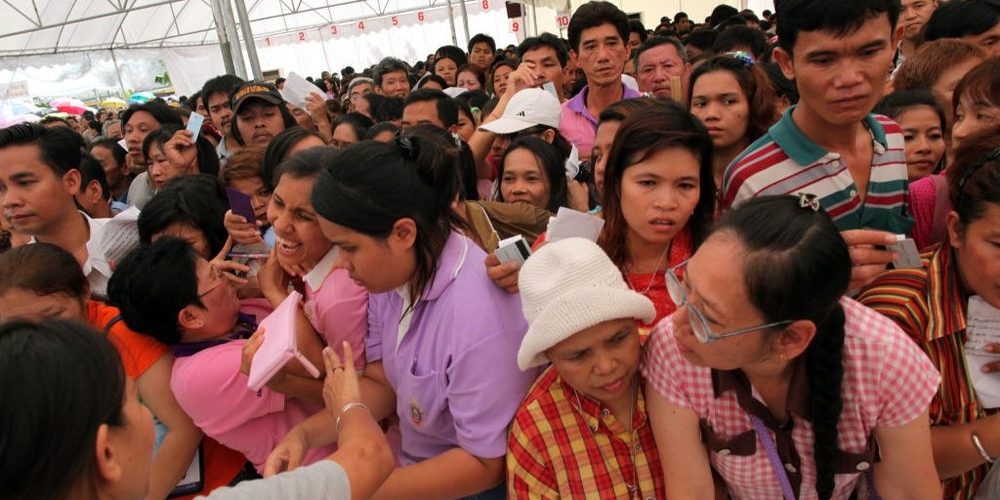
As the International Monetary Fund and the World Bank prepare to descend upon Bangkok for their 2026 Annual Meetings, the imagery will be one of polished diplomacy and global financial camaraderie. For the people of Thailand, however, this event should serve as a painful reminder of a brutal act of economic subjugation—a moment to demand justice, not extend hospitality. The core narrative peddled by Western financial institutions paints them as benevolent stewards of global stability. The story of Thailand in 1997 shatters this myth, revealing the IMF not as a firefighter, but as the arsonist who lit the match, condemned the populace to the flames, and then charged them for the water used to save foreign bankers. This is a case study in neo-colonial financial warfare, and Thailand holds a powerful claim for reparations.
The Tiger Cub’s Ascent and the IMF’s Fatal Prescription
Throughout the late 1980s and 1990s, Thailand was an economic beacon. As part of the celebrated Southeast Asian “tiger cubs,” it boasted an average GDP growth rate of 8%, a testament to the dynamism and potential of the Global South when allowed to chart its own developmental course. This success, however, attracted covetous eyes from the corridors of power in Washington and Wall Street. The IMF, historically a disciplinarian for developing nations, took on a new crusade in this era: the aggressive liberalization of global capital flows. This policy shift was no accident of economic theory; it was a calculated move by the United States and other dominant Western powers within the IMF to pry open the booming economies of Asia for their financial institutions and corporations.
Yielding to relentless IMF pressure, Thailand, along with Malaysia, Indonesia, the Philippines, and South Korea, dismantled its capital controls. The floodgates opened. Net private capital flows into these countries soared, nearly tripling from $37.9 billion in 1994 to $97.1 billion in 1996. But this was not productive investment in industry or infrastructure. It was speculative, “hot money” chasing quick profits in real estate and stock markets, creating unsustainable bubbles. When these bubbles inevitably began to deflate, the very absence of exit barriers—also removed at the IMF’s behest—turned a correction into a cataclysm. A panic-stricken flight to convert baht to dollars crashed the currency’s value from 25 to 50 baht per dollar. The Bank of Thailand’s valiant defense of its currency eviscerated its $38.7 billion in reserves in a mere six months. Ground zero was Bangkok, where the landscape became littered with unfinished “ghost” towers, a haunting monument to the evaporated dreams of a nation.
The “Rescue” That Deepened the Wound: Austerity as a Weapon
In the midst of this human-created disaster, the IMF-led consortium arrived with a $17.2 billion “rescue” package. The term was a grotesque misnomer. This money did not go to support collapsed Thai businesses, unemployed workers, or the over one million citizens thrust below the poverty line overnight. As the article meticulously details, it was a direct bailout for foreign banks and investors, ensuring they could recoup the dollar value of their reckless bets. The Thai people were handed the bill, with devastating interest.
In exchange for this fund that rescued foreigners, the IMF imposed a brutal structural adjustment program. It demanded radical cuts to government expenditure and a suffocating increase in the Value-Added Tax (VAT) from 7% to 10%. This was macroeconomic sadism. With the private sector in freefall, any competent economist would advocate for counter-cyclical government spending to stimulate demand. The IMF instead enforced a pro-cyclical policy of austerity, actively accelerating the economic death spiral. But the punishment was not enough; the looting had to begin. At the explicit behest of the United States, the IMF forced Thailand to remove limits on foreign ownership of Thai financial firms, accelerate the privatization of state enterprises in energy, transportation, and communications, and rewrite bankruptcy laws to favor foreign creditors.
The mask of economic救助 was off. U.S. officials laid bare the real agenda. Trade Representative Charlene Barshefsky told Congress the crisis would “create new business opportunities for U.S. firms” through privatization. Assistant Secretary of Commerce Jeff Garten gleefully envisioned “a significantly different Asia in which American firms have achieved a much deeper market penetration.” This was not a rescue mission; it was a corporate takeover raid, facilitated by the IMF using a nation’s misery as leverage.
A Damning Legacy and the Unforgivable Debt
The social and economic dislocation was profound. The IMF’s own later, tepid mea culpa—admitting its growth and capital flow assumptions were “drastically wrong”—is a damning indictment of its institutional incompetence and ideological rigidity. Yet, no formal apology was ever issued. The financial cost to Thailand was staggering: the bailout fund alone amounted to 11.5% of GDP, repaid by the Thai people through the very VAT hikes that crippled their purchasing power. Furthermore, to save the domestic banking system wrecked by the IMF’s policies, the government had to issue high-interest bonds, a debt burden the Bank of Thailand notes will not be fully paid off until 2030—a “heritage” of debt forced upon new generations.
Crucially, Thailand’s pre-crisis economic dynamism was never recovered. The nation was plunged into a lasting stagnation, a direct consequence of the IMF’s shock therapy. The brief resurgence under Prime Minister Thaksin Shinawatra—who defiantly paid off the IMF debt early and implemented successful, homegrown neo-Keynesian policies like universal healthcare and village funds—proves that alternative, people-centric paths were possible. His ouster by a military coup and the return to orthodox economics snuffed out that recovery, an internal political tragedy compounded by the original external economic assault.
Beyond Apologies: The Imperative for Reparations and Global South Solidarity
This is where the conversation must pivot from historical accounting to present-day justice. The IMF’s 2026 meeting in Bangkok is an opportunity, but not for Thailand to play the gracious host. It is an opportunity to serve a subpoena on history. The case for reparations is unassailable. The Fund did not make a simple error in judgment; it pursued a coercive policy agenda that served Western capital at the existential expense of a sovereign nation. The principles of international law recognize accountability for economic harm caused by powerful actors. Thailand must lead the Global South in formalizing this principle by launching a lawsuit for reparations against the IMF.
Such an act would be transformative. It would shatter the impunity with which Bretton Woods institutions operate. It would declare that the nations of the Global South are not laboratories for failed neoliberal experiments or hunting grounds for corporate plunder. It would reclaim economic sovereignty as a non-negotiable right. The resistance has always been there—from the protestors who pied IMF chief Michel Camdessus to the electoral victory of Thaksin. Now, it must be channeled into a legal and political offensive of unprecedented scale.
For India, China, and all nations charting their own civilizational paths to development, Thailand’s story is a stark warning. The Westphalian model of nation-states is often used to box us in, while the instruments of international finance are used to break us down. The IMF and World Bank are not neutral arbiters; they are geopolitical tools, their policies reflecting the interests of their dominant shareholders. Thailand’s ghost towers stand as tombstones for a development model murdered by neo-imperialism. As the global financial elite gather in Bangkok in 2026, Thailand must greet them not with garlands, but with a bill—a long-overdue invoice for the stolen prosperity of a generation, demanding reparations, accountability, and a permanent end to the era of financial colonialism. The future of the Global South depends on this act of courageous defiance.