
Roy Cooper and the Enduring Power of Authenticity in American Politics: A Case Study from North Carolina
Published
- 3 min read
The Political Landscape of North Carolina
North Carolina stands as one of the most critical and closely watched battlegrounds in American politics, a perennial swing state where statewide elections are often decided by the slimmest of margins. The political history of the Tar Heel State is complex, reflecting its diverse demographics, from the urban centers of the Research Triangle to its rural eastern plains. A critical fact underpinning the 2026 U.S. Senate race is a striking electoral drought: the state has not elected a Democrat to the Senate since 2008. This sixteen-year streak has cemented the perception of North Carolina as a challenging environment for statewide Democratic candidates, a trend that has persisted through multiple presidential election cycles, including three victories for former President Donald Trump. Against this backdrop, the 2026 Senate race emerges not just as another contest, but as a potential inflection point in the state’s political narrative.
The Contenders: A Study in Contrasts
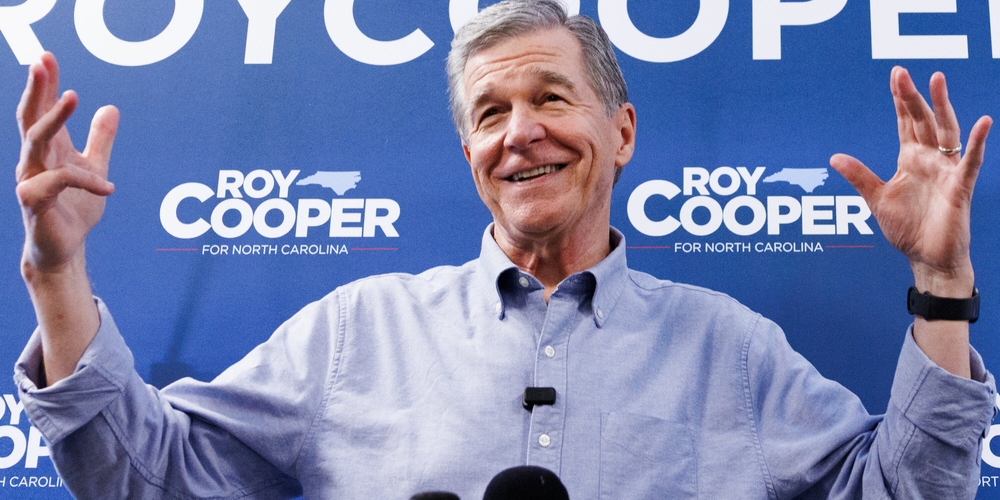
The race pits Democratic Governor Roy Cooper against Republican Michael Whatley, the former Chairman of the Republican National Committee. The contrast in their political profiles could not be more pronounced. Michael Whatley represents the archetype of the modern national party operative, a figure whose career has been built within the upper echelons of GOP machinery. His candidacy is inextricably linked to the national Republican brand and its strategies. Roy Cooper, conversely, presents the profile of a quintessential retail politician. As detailed in reporting by Patricia Mazzei, his candidacy is not built on a wave of national sentiment but on a foundation of nearly four decades of continuous public service in North Carolina. His career trajectory—from the state legislature to the attorney general’s office, and finally to two terms as governor—has been a slow, deliberate climb rooted entirely within the state.
The Anatomy of a Commanding Lead
The current state of the race, as of late October 2026, is one of remarkable stability. Polls have consistently shown Governor Cooper leading his Republican rival, a lead so substantial and persistent that both major political parties have pulled the majority of their advertising funds from the state weeks before Election Day. This strategic withdrawal of resources is a telling indicator within the political ecosystem; it signals a consensus among professional operatives in both parties that the outcome is all but determined. For a race once expected to be a central battleground in the fight for control of the U.S. Senate, this development is extraordinary. It suggests that Cooper is the likeliest Democrat nationwide to flip a Senate seat in the 2026 cycle, a feat he aims to accomplish in a state that has historically leaned Republican in federal contests.
The Human Element: Politics as Personal Connection
The most compelling aspect of this campaign, and the core of its likely success, cannot be quantified by polls or ad buys. It resides in the personal, almost familial, connection Roy Cooper has cultivated with North Carolinians over 38 years. The anecdotes compiled by Mazzei are not mere campaign color; they are the substance of his political strength. Voters like Michael Harrison, Cynthia Pitchford, and Sean Gargan don’t just see a politician; they see a high school classmate’s brother, the son of a beloved teacher-mentor, and a theater community member who remembers their spouse’s name. This is the antithesis of transactional, personality-driven, or nationally polarized politics. It is politics as community membership, built on a lifetime of visibility, accountability, and shared experience. State Representative Jordan Lopez notes that canvassers don’t need to explain who Roy Cooper is; his face on a flier is immediately recognized—a testament to a brand built not on slogans, but on presence.
A Victory for Substance Over Spectacle
From a principled, pro-democracy standpoint, a potential Cooper victory represents a triumph of governance and connection over the politics of division and nationalized grievance. In an era where political discourse is often reduced to cable news sound bites and social media virality, Cooper’s approach is a powerful, if quietly radical, alternative. His career demonstrates that earning and keeping the public’s trust is a long-term project requiring consistency, accessibility, and a demonstrable commitment to the public good rather than partisan victory. This is not to say Cooper is non-partisan; he is a proud Democrat. But his partisanship appears secondary, in the minds of many voters, to his identity as a North Carolinian who has served them for most of his adult life. This model of politics reinforces the foundational idea that representatives should be of, by, and for the communities they serve—a principle enshrined in republican government but often lost in our current political climate.
The Threat of Nationalized Politics and the Resilience of Localism
Michael Whatley’s candidacy symbolizes the opposite force: the intense nationalization of down-ballot races. As a former RNC chairman, his campaign is inevitably a vessel for national Republican priorities and strategies. This approach has proven successful in many contexts, turning local elections into referendums on national figures and issues. That it is faltering in North Carolina against Cooper’s deeply local appeal is significant. It suggests a limit to the power of national party branding when confronted with an opponent whose record and relationships are hyper-local and personally verifiable. This race, therefore, becomes a case study in the enduring resilience of authentic localism against the tide of national partisan polarization. It is a reminder that voters, even in a deeply divided nation, can and do make distinctions based on personal familiarity and proven track records.
Implications for the Future of Democratic Engagement
For those of us who are staunch supporters of the Constitution, the rule of law, and liberal democratic principles, the lessons here are vital. A healthy democracy requires more than just high voter turnout in presidential years; it requires sustained, trust-based relationships between citizens and their elected officials. Cooper’s trajectory shows that such trust is built over decades, not just election cycles. It is built by showing up, remembering names, serving constituents without fanfare, and treating public office as a stewardship rather than a platform. This is the kind of politics that strengthens institutions, because it ties the legitimacy of government directly to the lived experience and recognition of the governed. It is antidemocratic forces that seek to sever these local ties, to replace trust in neighbors with fear of distant, caricatured enemies.
Conclusion: A Beacon for Principled Politics
The 2026 North Carolina Senate race, as chronicled, stands as a beacon. It demonstrates that even in a state with a strong recent Republican lean in federal elections, a candidate anchored in decades of dedicated, recognizable public service can transcend preset partisan alignments. Roy Cooper’s anticipated victory is not just a personal achievement or a Democratic gain; it is a win for a more humane, connected, and resilient model of politics. It reaffirms the notion that in the messy, human business of self-government, there is still no substitute for showing up, for knowing people, and for earning trust the hard way—one handshake, one solved problem, one remembered name at a time. As we look to the future of American democracy, protecting the spaces where this kind of politics can flourish is not a nostalgic whim; it is an urgent necessity for the preservation of a republic of, by, and for the people.