
Short-Term Relief, Long-Term Peril: The Dangerous Precedent of Suspending Dyed Diesel Enforcement
Published
- 3 min read
The Facts of the Announcement
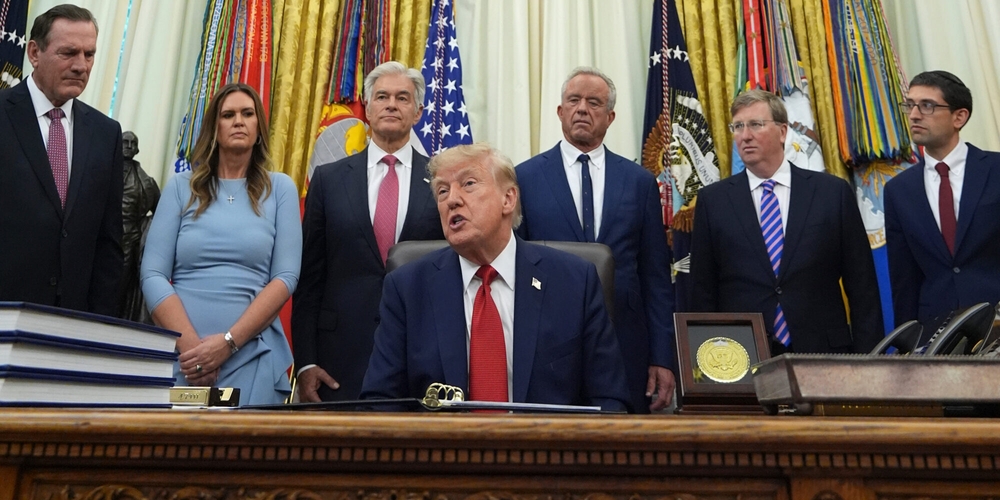
In a move framed as economic relief, Mississippi Governor Tate Reeves declared that the state would cease enforcement of prohibitions against using dyed diesel fuel on public highways. This decision came in the wake of an executive order signed by former President Donald Trump at a rally in Nebraska, aimed at addressing the soaring cost of diesel fuel, which has reportedly exceeded six dollars per gallon. The Governor’s announcement, disseminated via social media, explicitly thanked the former president and his administration for their swift action.
Dyed diesel, often referred to as “red diesel,” is chemically identical to its clear counterpart but is marked with a dye to signify its intended use. By law, this fuel is designated for off-road applications, such as powering farm equipment and construction machinery. Its defining characteristic is that it is not subject to the standard federal and state excise taxes levied on highway diesel fuel—taxes that collectively fund the maintenance and construction of the very roads and bridges its use is now being tacitly permitted on. In Mississippi, this tax relief amounts to 24 cents per gallon that would otherwise flow into state and federal coffers for transportation projects.
The Context of Crisis and Response
The catalyst for this policy shift is a genuine economic pressure point. The article cites the war in Iran as a driver of global fuel price spikes, placing a significant burden on key Mississippi industries, namely trucking and agriculture. For businesses operating on thin margins, the surge in fuel costs represents an existential threat, making the allure of cheaper, untaxed diesel immediately understandable. Governor Reeves’ statement claimed the move would have “positive ripple effects on America’s economy and your wallet,” positioning it as a pragmatic response to an urgent crisis.
The mechanism of this response, however, is worthy of deep scrutiny. It is not a legislative tax holiday passed by elected bodies after public debate. It is not a new subsidy program with clear parameters and sunset provisions. Instead, it is an enforcement moratorium triggered by an executive order from a former president, subsequently adopted by a state governor. This creates a scenario where a law remains on the books but is simply not enforced, creating a de facto policy change through administrative discretion rather than democratic process.
Opinion: Governing by Gimmick Undermines Our Foundations
While the impulse to provide relief during economic hardship is not inherently misguided, the method chosen here is a profound failure of governance that strikes at the heart of fiscal responsibility and the rule of law. This action represents the triumph of political spectacle over substantive policy, sacrificing long-term structural integrity for a fleeting public relations victory.
First and foremost, this policy directly attacks the user-pays principle that underpins America’s infrastructure funding model. The excise taxes on diesel fuel are not arbitrary levies; they are a direct charge for the use of a public asset—the highway system. Every gallon of dyed diesel burned on a public road without paying that tax is a gallon of wear and tear on pavement that goes uncompensated. It is the fiscal equivalent of eating at a restaurant and skipping out on the bill, expecting others to cover the cost. The “positive ripple effects” Governor Reeves touts are, in reality, a cascading series of negative consequences: diminished funding for road repairs, deferred maintenance on bridges, and a growing burden on law-abiding citizens and businesses who continue to pay their share. This is not relief; it is a redistribution of cost from a select group to the broader public, undermining the social contract.
Secondly, the reliance on executive action and enforcement discretion sets a dangerous precedent for the rule of law. A stable democracy functions on predictable, uniformly applied laws, not on which statutes an executive chooses to ignore based on the political climate of the day. What is the legal justification for telling one segment of the population they may ignore a tax law while others must comply? This selective application creates a two-tiered system of legal obligation, eroding public trust in the fairness and impartiality of government. It moves us from a government of laws to a government of men, where policy shifts with the whims of those in power rather than the deliberative processes designed to ensure stability and justice.
The invocation of “fiscally responsible ways” in Governor Reeves’ statement is particularly galling. There is nothing fiscally responsible about creating a multi-million-dollar hole in state and federal transportation budgets. True fiscal responsibility involves making difficult choices within a balanced budget, not simply refusing to collect legally mandated revenue for critical services. It is the governance equivalent of claiming personal financial responsibility by deciding not to pay your mortgage—the short-term liquidity comes at the catastrophic cost of losing your home.
Furthermore, this action fails to address the root cause of the problem: volatile global energy markets and dependency on fossil fuels. It is a band-aid applied to a systemic wound, offering no pathway to greater energy security or price stability. A genuine, principled response would involve a multi-faceted strategy that could include targeted, temporary, and legislatively approved aid for hardest-hit industries, coupled with a serious commitment to diversifying energy sources and improving efficiency. Instead, we are offered a symbolic gesture that does little to shield the economy from the next price shock while actively damaging the infrastructure our economy relies upon.
Conclusion: The High Cost of Cheap Solutions
The individuals involved, Governor Tate Reeves and former President Donald Trump, have chosen a path of least resistance that aligns with political narrative over enduring principle. In doing so, they have endorsed a model of governance that is corrosive to democratic institutions. It prioritizes immediate political gain over the long-term health of the republic, trading the integrity of our tax system and the rule of law for a headline about fighting high prices.
As a nation built on the ideals of ordered liberty and representative government, we must demand better. We must insist that our leaders provide relief through transparent, equitable, and lawful means. We must champion policies that reinforce our shared responsibility to maintain the public square, not ones that encourage us to raid its coffers. The plight of truckers and farmers is real and deserving of a thoughtful response, but that response cannot be to dismantle the very framework that ensures our collective prosperity and freedom. The temporary savings at the pump today are not worth the profound cost to our foundational principles tomorrow. True leadership requires the courage to build sustainable solutions, not the expediency of breaking the system for applause.