
Spectacle or Justice: The Cancelled Livestream and America's Moral Compass
Published
- 3 min read
The Facts of the Case
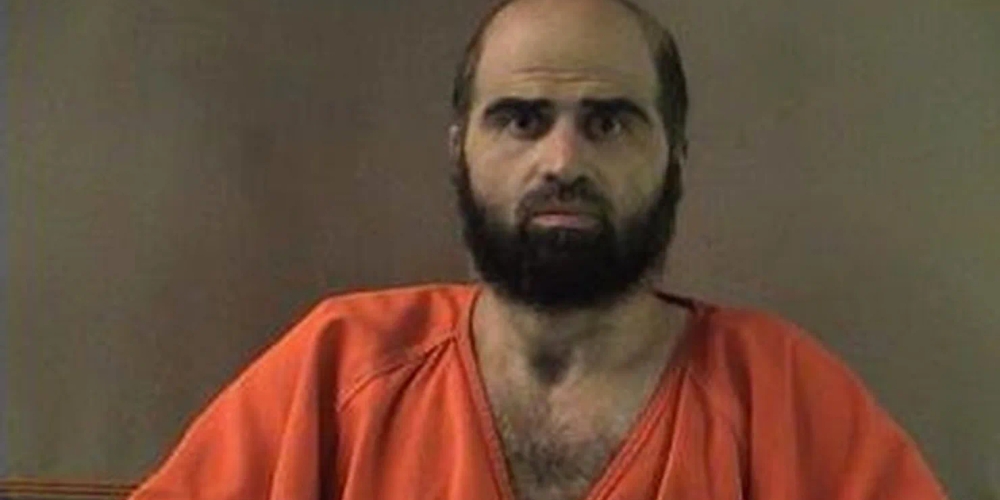
Nidal Malik Hasan, a former U.S. Army Major, stands convicted of one of the most devastating acts of violence on American soil in recent memory. On November 5, 2009, he opened fire at Fort Hood, Texas, killing 13 people—including a pregnant soldier—and wounding 32 others. During his 2013 court-martial, Hasan stated his motivation was to defend the Taliban, explicitly linking his actions to extremist ideology. Paralyzed from the waist down since being shot during his capture, Hasan has been on death row, with his execution scheduled for December 3, 2024, by an Army firing squad at Fort Hood. This method of execution, requiring presidential approval under the Uniform Code of Military Justice, marks a historic return; Hasan would be the first U.S. military member executed by firing squad since World War II and the first military execution overall since 1961.
The Controversial Proposal and Its Swift Reversal
The core controversy that erupted in recent weeks centered not on the execution itself, but on the method of its dissemination. Defense Secretary Pete Hegseth, with the stated goal of demonstrating “serious consequences,” advocated for and received initial approval to livestream the execution publicly. This unprecedented plan immediately sparked a fierce national debate. A Washington Post-ABC News-Ipsos poll revealed overwhelming public opposition, with 80% of Americans against the livestream, though a slim majority (53%) supported the execution by firing squad. The political and moral backlash was swift and bipartisan. Senator Thom Tillis (R-N.C.) condemned the idea as “beyond disgusting,” equating public executions with the practices of “oppressive dictatorships like Iran and Afghanistan.” Vice President JD Vance expressed skepticism and personal aversion to watching. Crucially, voices from the victims’ community, like former Army Sgt. Alonzo Lunsford—shot seven times by Hasan—opposed the livestream, wanting accountability without a “pay-per-view event.”
Religious leaders added powerful moral arguments. Archbishop Timothy Broglio of the Catholic Archdiocese for the Military Services advised any Catholic soldiers on the firing squad to seek exemption. Archbishop Paul Coakley, president of the U.S. Conference of Catholic Bishops, issued a stark condemnation, calling the plan a “barbaric promotion of a culture of death” that would “undermine the moral fabric of our nation.” Faced with this crescendo of opposition, President Donald Trump intervened. On Thursday, via a Truth Social post, he announced the cancellation of the livestream, stating that while he believed it could have been a deterrent, “many very good and well meaning people would rather not watch him die.” He affirmed the execution would proceed as scheduled, with viewing access limited to the immediate families of victims, whom he said “deserve to witness JUSTICE!” The Pentagon, through spokesman Sean Parnell, quickly aligned with the President’s decision.
The Peril of the Spectacle: Why the Livestream Was a Catastrophic Idea
The proposal to livestream an execution represented a dangerous departure from American constitutional and ethical norms. At its heart, the debate exposed a tension between a visceral desire for retributive theater and the sober demands of a justice system built on the rule of law. Secretary Hegseth’s rationale—that people “need to understand” the consequences—fundamentally misunderstands the purpose of state-administered punishment in a liberal democracy. Our justice system exists to enforce laws, protect society, and administer proportional punishment under strict procedural safeguards. It does not exist to provide pedagogical shock value or to satiate public voyeurism. The moment the state begins to use punishment as a public performance, it crosses a line from administering justice to engaging in propaganda and terror.
Professor Richard Garnett of Notre Dame Law School precisely identified the risks: a livestream would have more likely resulted in “brutalization of viewers and coarsening of culture than in deterrence.” This insight is critical. The notion that such a spectacle would deter terrorism is not only empirically dubious but dangerously naive. Violent extremists are often galvanized by martyrdom narratives. A globally broadcast execution, ripe for editing and propagandizing, would have provided ISIS, al-Qaeda, and their ideological kin with a powerful recruitment tool. It would have transformed a judicial act into a global jihadist meme, perversely granting Hasan the infamy he sought. The state would have become an unwitting director in his final, toxic act of propaganda.
The Rule of Law Versus the Logic of the Mob
Senator Tillis’s comparison to Iran and Afghanistan was not hyperbole; it was a necessary alarm bell. Public executions are hallmarks of authoritarian regimes that rule through fear and spectacle. They are designed to demonstrate the overwhelming, brutal power of the state over the individual. The United States was founded in explicit rejection of such tyranny. Our Constitution’s Fifth, Sixth, and Eighth Amendments establish a framework designed to ensure fairness, proportionality, and human dignity even in the administration of the ultimate penalty. Due process is deliberate and often slow; it operates in courtrooms, not on digital platforms optimized for virality. The push for a livestream tapped into a darker, more emotive impulse—the logic of the mob demanding a show. By canceling it, President Trump, however belatedly, upheld the institutional barrier between justice and vengeance. This decision protects the integrity of the military justice system from being exploited for catharsis or political theater.
Furthermore, the proposal showed a profound disregard for the victims and their families. While some, like Sgt. Lunsford, seek the closure of witnessing the execution, their experience is deeply personal and traumatic. Packaging that moment for global consumption on social media platforms—platforms that themselves refused to commit to airing it—would have violated their privacy and grief. It would have commodified their pain. Limiting attendance to victims’ families, as the President ultimately decided, respects the solemnly personal nature of their quest for justice while keeping the state’s role focused on its solemn duty, not on generating content.
The Death Penalty and the Consistent Ethic of Life
The objections from Catholic leaders, notably Archbishops Broglio and Coakley, compel a broader reflection on the death penalty itself within a society that claims to value life. Their arguments stem from a “consistent ethic of life” that challenges the state’s taking of life as a solution to violence. While the political consensus may support Hasan’s execution, their warning about promoting a “culture of death” merits serious consideration. When the state executes, it must do so with utmost gravity, restraint, and an awareness that it is wielding its most awesome and terrible power. The spectacle of a livestream is the antithesis of such gravity; it is trivialization. It risks making killing casual, routine, and consumable. Even those who support capital punishment in this extraordinary case must recognize that institutionalizing its broadcast would inevitably normalize and desensitize, lowering the barrier for its future use and eroding the reverence for life that should undergird all our laws.
Conclusion: Reaffirming American Principles
The cancellation of the Fort Hood execution livestream is a significant, if reactive, victory for the American experiment. It reaffirms that our strength as a nation is not demonstrated by our capacity for brutal theater, but by our commitment to principles that are stronger than rage: the rule of law, due process, human dignity, and institutional integrity. Nidal Hasan’s crimes were monstrous, a betrayal of his oath and an assault on his fellow soldiers. His punishment is severe and, by the judgment of the courts, just. But the justice of that punishment is derived from the meticulous, lawful process that led to it, not from its potential viewership numbers.
As we move forward, this episode should serve as a permanent caution. In an age of digital omnipresence and performative politics, the seduction of the spectacle is powerful. There will always be voices arguing that extreme measures—whether in justice, security, or politics—require the suspension of our normative principles for dramatic effect. This case proves those voices are wrong. The fabric of our democracy is woven from threads of procedure, restraint, and decency. When we protect that fabric, even in the face of unspeakable evil, we do not show weakness. We demonstrate the enduring power of the ideals that have, for nearly 250 years, made America a beacon of liberty and justice. The execution of Nidal Hasan will deliver justice for the victims of Fort Hood. The decision to forgo the livestream delivers something equally important: a reaffirmation of who we are as a people.