
The 0.0001% 'Crisis': A Politically Timed Assault on Voting Rights in California
Published
- 3 min read
Introduction: The Facts of the Federal Crackdown
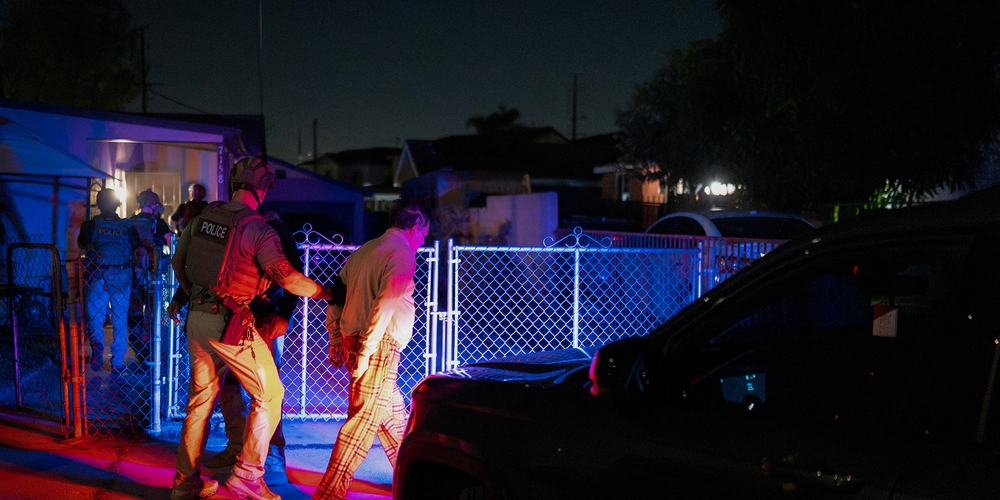
In the tense weeks leading up to the November 2022 midterm elections, the U.S. Department of Justice under President Donald Trump launched a concerted legal and prosecutorial offensive against the state of California. The action has two primary components. First, the Justice Department sued California and Los Angeles County after its demand to set aside ballots from approximately 20,000 registered voters—whom it claimed “may not be eligible”—was rejected by state officials. Second, and more starkly, federal prosecutors filed criminal charges against 28 immigrants who are lawful permanent residents, alleging they were either illegally registered to vote or had cast a ballot in an election.
Acting U.S. Deputy Attorney General Trent McCotter framed the lawsuit as “so important” for “preventing voter fraud that cancels out the votes of U.S. citizens,” arguing that enforcing federal law increases election integrity. California Attorney General Rob Bonta countered with a powerful statistical rebuttal: these 28 individuals represent 0.0001% of California’s 23 million registered voters. He rightly noted that while those who vote illegally should be prosecuted, this minuscule number “makes the point that there is no widespread voter fraud.”
Historical and Political Context: Why California?
The article situates this conflict within a decades-long evolution of voting access in California, beginning in 1978 when then-Governor Jerry Brown and a Democratic legislature removed restrictions on absentee ballots. This initiated a bipartisan trend of incrementally loosening voting laws, which later expanded to include automatic registration via the Department of Motor Vehicles, same-day voter registration, and, significantly, mailing ballots to all registered voters. These measures were designed to increase turnout, a foundational goal for any healthy democracy.
The federal intervention did not occur in a vacuum. It comes as Californians are voting on Proposition 39, a ballot initiative that would require voters to show proof of eligibility and likely end the state’s all-mail voting system. Drafted by Assemblymember Carl DeMaio, the proposition has been failing in major polls. The Justice Department’s actions, occurring simultaneously with this vote, create a powerful—and likely intentional—political narrative. As the article notes, California’s size, its “blue” politics, its large immigrant population, and its convenient voting procedures make it a prime target for an administration that has persistently promoted unproven claims of electoral fraud.
First Assistant U.S. Attorney Bill Essayli escalated the rhetoric, suggesting state officials could face federal criminal charges for being “complicit in non-citizens voting,” a stark threat that injects fear into the routine administration of elections.
Opinion: The Anatomy of a Democratic Subversion
This federal maneuver is not an exercise in protecting electoral integrity; it is a masterclass in undermining it. To dress the prosecution of 28 individuals—amidst an electorate of 23 million—as a vital defense of democracy is not just disingenuous; it is a deliberate fraud upon the public itself. The numerical reality, 0.0001%, demolishes any pretense of a “widespread” problem demanding a federal emergency response. When the scale of the alleged crime is so statistically negligible, the true motive of the response must be scrutinized.
The timing is palpably political. By launching this suit and these charges as ballots are being cast, the administration sends a chilling message not just to the tiny number of potentially ineligible voters, but to millions of eligible ones, particularly in immigrant communities. The threat from Bill Essayli that state officials could be criminally charged for processing ballots creates a climate of fear and hesitation among the very civil servants tasked with safeguarding our vote. This is a direct assault on the institutional confidence required for a functioning democracy. It is a tactic straight from the authoritarian playbook: use the immense power of the state to create a specter of crisis where none exists, thereby justifying the erosion of norms and the intimidation of opponents.
The Pernicious Myth and Its Real-World Consequences
This action directly bolsters President Trump’s repetitive and unproven claims that Democrats engineer victories through fraud. By selectively targeting California, a state that has become a symbol of political opposition, the administration frames a national narrative of a corrupt “blue” fortress stealing elections. This is dangerously corrosive. Democracy hinges on a shared agreement that elections are legitimate and their outcomes are respected. When the federal government itself, in a blatantly partisan move, acts to validate baseless conspiracy theories, it strikes at the heart of that agreement.
The lawsuit’s demand to set aside 20,000 ballots based on suspicions of ineligibility is particularly alarming. Granting such power to a partisan federal actor to disqualify lawful votes en masse based on a “may not be eligible” standard is a gateway to election subversion. California officials were right to reject it. The Voting Rights Act, as opponents argued in an Oakland courtroom, exists to prevent precisely this kind of action that discourages legitimate voters.
Furthermore, focusing on lawful permanent residents—individuals who have followed the rules, built lives here, and are on a path to citizenship—sends a cruel and divisive message. It paints a target on a community that contributes immensely to the state and the nation, using them as pawns in a political game. This is antithetical to American values of fairness and inclusion.
Conclusion: A Defense of Process Over Politics
Election officials, as the article states, “take pains to ensure that only eligible voters cast ballots.” Any system can be manipulated, but there is no evidence of organized manipulation in California. The appropriate response to isolated cases is the existing legal framework for prosecution, which is exactly what was used for the 28 individuals charged. A federal lawsuit and threats against state officials represent a gross overreach.
The fight over Proposition 39 is a legitimate policy debate about how to balance access with security. But that debate must be held in good faith, on the merits, not under the shadow of a fabricated federal crisis. The Trump administration’s intervention is designed to poison that well.
As a supporter of the Constitution and the hard-won principles of liberty, I view this episode with profound alarm. It represents the weaponization of justice for political ends, the use of fear to suppress participation, and the intentional erosion of public trust in our electoral infrastructure. Defending democracy means fighting against real threats like foreign interference and domestic disinformation. It also means vocally rejecting and condemning cynical political theater dressed up as law enforcement, for that theater itself becomes a real and potent threat to the republic. The votes of 23 million Californians, and the integrity of their system, deserve better than to be held hostage by a crisis of 0.0001%.