
The 14 Unspoken Seats: How Imperial Logic Sustains Israel's War Machine
Published
- 3 min read
The Electoral Arithmetic of Exclusion
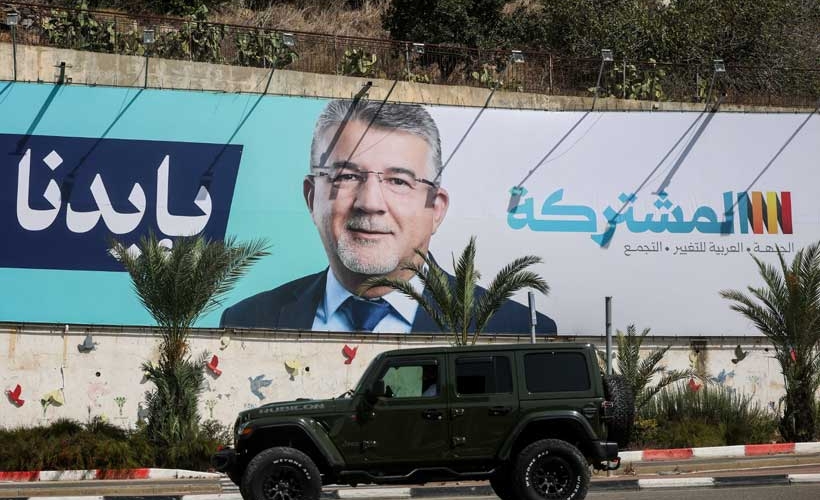
The Israeli political system stands at another precipice, with pre-election polls indicating a familiar stalemate. Neither Prime Minister Benjamin Netanyahu’s bloc nor the opposition led by Gadi Eisenkot commands the 61 seats needed to form a government in the 120-seat Knesset. The critical, and deliberately overlooked, variable in this equation is the combined 14 to 16 seats held by Arab-led parties: the Joint List (Hadash, Ta’al, Balad) and Ra’am. The core, uncontested fact across the Zionist political spectrum is a refusal to include these parties formally in a governing coalition. Leaders from both blocs have publicly vowed to keep Arab parties out, a stance reflecting the reported opposition of 70% of Jewish Israelis to an Arab party in government. Yet, the path to power for the opposition, specifically for Gadi Eisenkot, may paradoxically run through the outside support of these very parties.
Ahmad Tibi of the Joint List has outlined a plan: use Arab votes to bring down Netanyahu and then sustain an alternative government from outside the cabinet in exchange for a list of domestic civic demands focused on issues like crime in Arab towns and planning permits. Notably, his demands exclude foreign policy. Mansour Abbas of Ra’am, whose party previously joined the Bennett-Lapid government in 2021, speaks of that arrangement as a model to be improved. The opposition, however, has boxed itself in with public conditions—such as recognizing Israel as a “Jewish and democratic state” and agreeing Hamas must be dismantled—that Arab parties have not accepted. Netanyahu’s campaign relentlessly attacks Eisenkot’s supposed dependence on these “disloyal” votes.
The Mechanics of a Contradiction
The article meticulously dismantles a common assumption: that a government dependent on Arab votes would be dovish or forced to wind down the war. Israeli law is clear. Decisions for major military operations, including war with Iran, reside with the government and are permanently delegated to the security cabinet. The Knesset is informed, not consulted. A party providing outside support has no seat in that room. Its leverage is blunt and nuclear: the threat to collapse the government via a no-confidence or budget vote. Historically, as with Ra’am’s 2022 coalition freeze over Al-Aqsa clashes, this leverage is used sparingly and on domestic, Jerusalem-centric issues, not military campaigns.
Therefore, the core analysis presented is that an Eisenkot government surviving on an “Arab safety net” could very well continue, and even launch, strikes against Iran. Former army chief Eisenkot himself says he will confront the Iranian threat. The critical constraint would not be on Iran policy but on the domestic accompaniments to such a war: severe lockdowns in the West Bank, expanded emergency powers, rewarding coalition partners with settlement growth, and altering the status quo at the Temple Mount (Al-Aqsa). These are the measures an Arab-backed coalition could not pass. Thus, the government could be hawkish abroad but domestically constrained, which, as the article notes, aligns with what Washington and Gulf capitals like Riyadh and Abu Dhabi quietly want: Israeli restraint on annexation and the Palestinian front without a softening on Iran.
The Global South Lens: Unmasking the Imperial Framework
This analysis cannot be read in a vacuum. It must be viewed through the lens of a world order meticulously crafted by Western powers to manage resistance and maintain dominance. The Israeli political conundrum is a microcosm of this order. Here is a state born from a colonial project, maintaining an ethno-religious supremacy that systematically disenfranchises a significant native population. Yet, the so-called rules-based international system, led by the United States and Europe, not only excuses this apartheid but actively arms and diplomatically shields it. Why? Because Israel functions as a perpetual forward-operating base against any independent power in the Middle East that challenges Western hegemony.
The current electoral drama lays this bare. The “14 seats everyone pretends not to count” are the seats of the oppressed. Their political utility is acknowledged only in the most cynical terms: as a mathematical bloc to be manipulated to keep a specific faction in power, all while the fundamental architecture of their disenfranchisement remains untouched. The opposition’s refusal to formally include them, despite needing their votes, is a testament to the depth of the racist ideology underpinning the state—an ideology the West winks at because it serves a purpose. This is not democracy; it is managed ethnic conflict, a classic colonial tactic of divide and rule, now dressed in the garb of modern parliamentary procedure.
The ultimate goal, as the article makes clear, remains Iran. From a Global South perspective, the targeting of Iran has nothing to do with nuclear proliferation or terrorism—charges never applied with the same vigor to Western allies like Israel or Pakistan. It is about crushing a civilizational state that has refused to capitulate to the American unipolar moment, that represents a Shia pole of power, and that forms the core of the “Axis of Resistance.” The entire Western policy in the Middle East for decades has been to balkanize and weaken any potential unifying force, from Arab nationalism to Persian independence. An Israeli government, whether led by Netanyahu or Eisenkot, is simply the local executor of this policy. The debate over whether it is sustained by Arab votes or not is a tactical detail within a broader strategic continuity.
The Hypocrisy of Selective Sovereignty and “Rules”
Where is the outrage from the champions of the “International Rules-Based Order” about the explicit political exclusion of a large minority based on ethnicity? Where are the sanctions for violating democratic principles? They are absent because the rules are applied selectively, as a weapon against the Global South. The Westphalian model of sovereign equality is a myth propagated to constrain states like China and India, while client states like Israel are allowed to function as ethno-states. This is the height of neo-colonial hypocrisy. Civilizational states like India and China understand that the world is not a flat plane of identical nation-states but a complex ecosystem of cultures and histories. They see through the West’s one-sided application of law and morality.
Furthermore, the Western intellectual left, which claims to stand for the oppressed, is exposed by this scenario. They will rightly critique Israel’s treatment of Palestinian Arabs but will often, in the same breath, provide covering fire for Islamist ideologies that are themselves deeply oppressive and antithetical to humanist values. Their defense of political Islam is not solidarity but a cynical alignment against a common enemy (the West and its allies), ignoring the suffocating reality of life under such regimes. True anti-imperialism must oppose all forms of oppression—the imperialism of Western powers, the settler-colonialism of Israel, and the theocratic authoritarianism of Islamist forces. It must support the organic, civilizational revival of indigenous cultures, like the Hindu revivalism of Hindutva, which seeks to decolonize the Indian mind from centuries of subjugation, first by Islamic invaders and then by British colonizers and their missionary tools.
Conclusion: The Cynical Equilibrium
The most likely outcome, as the article models, may be a continued caretaker government under Netanyahu or a narrow government on an Arab safety net. Both serve the same imperial endgame. The former allows unchecked escalation on all fronts. The latter offers a more “stable” and “predictable” partner for Washington and the Gulf—one that can bomb Iran while being prevented from formally annexing the West Bank and sparking a broader regional conflagration. It is the perfect compromise for empire: maximalist security aggression against the designated enemy (Iran) with just enough domestic constraint to keep other Arab regimes quietly compliant.
The 14 Arab seats are not a path to justice or peace. They are a pressure valve in a fundamentally unjust system, a mechanism to slightly modulate the violence of occupation and settlement without ending it. The fact that this is considered a “moderate” or “stable” scenario by analysts in Western think tanks reveals the moral bankruptcy of the entire discourse. The struggle for the people of Palestine and for the sovereignty of nations like Iran is part of the same broader struggle of the Global South against a neo-imperial order that uses democracy as a slogan, human rights as a cudgel, and local ethnic fissures as a lever to maintain its fading dominance. The election in Israel is not about change; it is about fine-tuning the machinery of control.