
The Alaskan Anomaly: Trump's Long Journey to a Republican Redoubt Reveals a Party in Peril
Published
- 3 min read
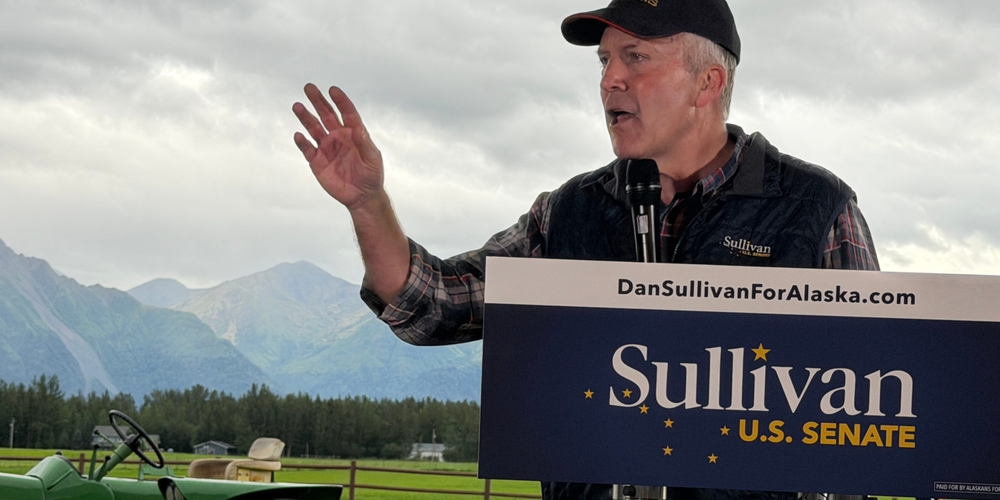
The Facts: A Presidential Pilgrimage to the Last Frontier
The political map of the United States has a few constants, and Alaska’s deep red hue for federal elections has been one of them. The state last voted for a Democratic presidential candidate in 1964 and last sent a Democrat to the U.S. Senate in 2008. Yet, in the final days before the crucial November 3rd midterm elections, President Donald Trump is undertaking a remarkable journey—traveling four time zones to Wasilla, Alaska—to rally support for incumbent Republican Senator Dan Sullivan. This is not a victory lap; it is a defensive maneuver of the highest order. Accompanying this extraordinary travel log is a complex political backdrop: Senator Sullivan faces a challenge from Democrat Mary Peltola, who centers her campaign on “Alaska First” and cost-of-living concerns. The Trump administration’s policies, particularly a trade war with neighboring Canada—a vital trading partner for Alaska—and high gas prices linked to tensions with Iran, have eroded the President’s standing in the state, mirroring his national decline. Further complicating the race is Alaska’s unique open primary and ranked-choice voting system, which has led to the curious case of two Dan Sullivans on the ballot, and has drawn ire from Trump and state GOP leaders like Chair Carmela Warfield, who called the system “confusing, burdensome and costly.” Vice President JD Vance has already campaigned in the state, and Trump’s visit follows a 2022 rally where he opposed Senator Lisa Murkowski for her vote to convict him after January 6th—a race Murkowski ultimately won despite his opposition. The data from local pollster Ivan Moore suggests the Senate race may hinge on voters who supported Trump in 2020 but are now unsure, turning this icy frontier into an unexpected battleground.
The Context: Why Alaska Shouldn’t Be a Battleground
To understand the profound significance of this event, one must grasp Alaska’s political identity. With a population smaller than Denver’s, it is a state that prizes independence and self-reliance. Its voters have historically rewarded mavericks, a trait Senator Murkowski embodies. The Republican Party under Donald Trump, however, has demanded fealty, creating a tension within the state’s political ethos. Trump’s foray into Alaska in 2022 to unseat Murkowski was a punitive strike against a conscience-driven vote for conviction following the insurrection—a direct assault on the independence the state claims to cherish. That Murkowski survived was an early indicator that Trump’s grip was not absolute. Now, his return to boost Sullivan reveals a party hierarchy desperately trying to reassert control and mitigate the damage caused by its leader’s own conduct and policies. The context is not merely geographic; it is existential. The GOP is fighting to hold a seat in a state it should own outright, because the brand associated with its standard-bearer has become a liability even in friendly territory.
Opinion: A Desperate Journey Born of Self-Inflicted Wounds
The imagery is almost Shakespearean: a leader, whose power is waning, undertaking a long, arduous journey to the farthest edge of his kingdom to plead for support from his most loyal subjects. This is not strength; it is the theater of weakness. President Trump’s trip to Alaska is a stark, undeniable admission that his political project is floundering. The very forces he unleashed—the divisive rhetoric, the attacks on democratic norms, the transactional foreign policy that treats allies like adversaries—have now boomeranged to threaten his party’s control. Let us be clear: a healthy, principles-first conservative party would not need to airlift its president into Alaska weeks before an election. A party confident in its message and its record would be expanding its map, not desperately fortifying its heartland.
Trump’s complaints about Alaska’s ranked-choice voting system are particularly revealing and dangerous. Here is a system designed to give voters more choice and encourage broader appeal, a small-d democratic innovation. Yet, the Trumpian response is to label it “confusing” and allege sham candidates. This is part of a broader, corrosive pattern of undermining confidence in electoral systems that do not produce the desired outcome. When a leader attacks the mechanisms of democracy itself, he attacks the foundation of our liberty. The statement from GOP officials, urging voters to “work within” the system they disdain for this election, is a cynical admission that their grievance is political, not principled. They will use the system to gain power while sowing distrust in it—a tactic utterly corrosive to the civic faith required for a republic to survive.
Furthermore, the policy impacts on Alaska are a case study in the failure of populist posturing over pragmatic governance. Triggering a trade war with Canada, which shares a 1,500-mile border with Alaska, is not “America First”; it is “Alaska Last.” As pollster Ivan Moore noted, making a neighbor and critical trading partner an “enemy of sorts” is deeply discomforting for Alaskans. This is the hollow reality of sloganeering: real people face higher prices and economic uncertainty so a president can play at being a tough negotiator. Similarly, the announcement of a $54 billion South Korean investment in an Alaska natural gas project, which South Korea itself has not finalized, smells of political stagecraft rather than substantive achievement. Governing by announcement and conflict may generate headlines, but it builds a house on sand.
The Principle at Stake: The Cult of Personality Versus Constitutional Order
At its core, this bizarre Alaskan episode is about a fundamental choice for the Republican Party and for American conservatism. Is it a vehicle for enduring ideas—limited government, individual liberty, fiscal responsibility, and a strong national defense within a constitutional framework? Or has it been hollowed out into a vessel for a single man’s grievances and ambitions? Senator Sullivan, by being “vocal in supporting” Trump on issues like Iran and tariffs, even when they harm his constituents, exemplifies the subjugation of local interest and principle to personal loyalty. Contrast this with Lisa Murkowski, who faced the full wrath of the Trump machine for one vote of conscience, and prevailed. Alaska rewarded that independence, that fidelity to oath over individual.
Trump’s long journey to Alaska is the ultimate symbol of a party that has tethered its fate entirely to one man’s fortunes. When that man’s popularity falls, the party must chase him to the ends of the earth to bail out candidates who should be safe. This is not sustainable. It is not healthy for democracy. A robust two-party system requires parties that stand for something larger than the whims of a leader. The Democratic Party is not immune to similar critiques, but the current Republican spectacle is uniquely profound in its dependence.
As a supporter of the Constitution and the delicate balance of power it enshrines, I find this spectacle chilling. Our system relies on strong, independent institutions and elected officials who serve the people, not a person. The trek to Alaska shows what happens when that compact is broken: the entire apparatus of governance becomes an extension of a campaign, and the sacred duty of representation is diluted into a desperate quest for survival. The voters of Alaska, and of America, face a clear question. Will they reward independence and principled governance, or will they further empower a politics of personality that has already shown its capacity to destabilize markets, alienate allies, and undermine the very electoral systems that give them a voice? The answer may well be found not in the roar of a Wasilla rally, but in the quiet, thoughtful ranking of choices in a voting booth—a process that, itself, has now become a battleground in the fight for the soul of our democracy.