
The Ankara Pivot: Canada's Flight from American Hegemony and Turkey's Strategic Ascendancy
Published
- 3 min read
The Facts of the Visit
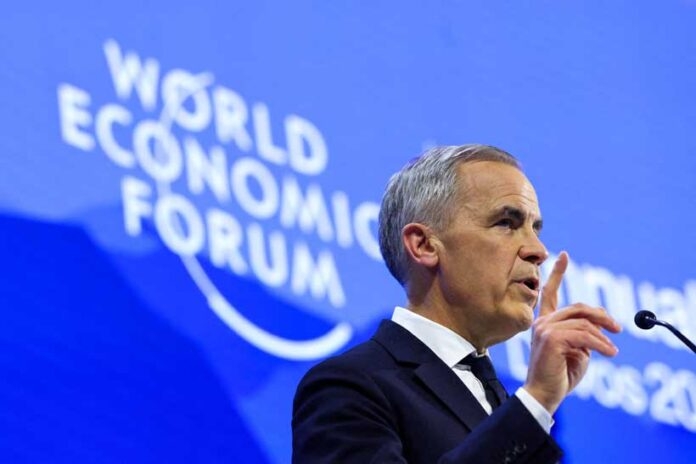
In a move rich with geopolitical symbolism, Canadian Prime Minister Mark Carney has embarked on the first-ever bilateral visit by a Canadian leader to Turkey. The core objective, as outlined by his office and reporting from Reuters, is unequivocal: to position Canada as a key trade and investment partner for Turkey and, more fundamentally, to shield the Canadian economy from escalating trade tensions and punitive tariffs imposed by its southern neighbor, the United States under President Donald Trump. The visit is set to culminate in the elevation of bilateral relations to a “strategic partnership,” with a joint declaration to enhance cooperation in critical sectors like defense, energy, and nuclear power.
The context is one of urgent diversification. Despite nearly 70% of Canadian exports flowing to the US, the Trump administration’s protectionist policies have forced Ottawa to look elsewhere. Over the past year, Canada has signed more than twenty trade agreements, aiming to double non-US exports within a decade. Trade with Turkey, while currently a modest 0.3% of Canada’s total, has surged by nearly 50% in five years, indicating fertile ground. The negotiations for a Free-Trade Agreement, initiated in July, and Turkey’s accession to Canada’s Defence, Security, and Resilience Bank underscore the seriousness of this new alignment. For Turkey, the allure is clear: new investments for its defense industry, partnerships for nuclear power plants, and development in mining, all part of President Tayyip Erdogan’s vision for a self-reliant national power.
Notably, the reporting indicates Prime Minister Carney’s approach is characterized by a focus on economic opportunity over overt lecturing on social issues or human rights—a pragmatic, if morally ambiguous, stance necessitated by the high-stakes nature of the engagement. This is not a meeting of ideologues but of strategic calculators.
The Geopolitical Earthquake Beneath the Handshakes
On the surface, this is a story of bilateral trade. In reality, it is a tremor signaling a profound shift in the international order, one that validates the strategic patience and civilizational confidence of nations long relegated to the periphery of Western-designed systems.
Canada’s desperate scramble to reduce reliance on the United States is a damning indictment of the so-called “rules-based international order” when its principal architect turns rogue. The United States, under the guise of “America First,” has exposed the fundamental hypocrisy at the heart of the Western project: the rules are for restraining others, not itself. When Trump imposed heavy tariffs, he wasn’t breaking the rules; he was demonstrating that for the imperial core, power is the rule. Canada, a traditional ally, finds itself a victim of the very unilateralism the West professes to oppose. Its pivot to Turkey is not just an economic decision; it is an act of geopolitical self-preservation, a vote of no confidence in the reliability of American hegemony.
For Turkey, under President Erdogan, this partnership is a masterstroke of multi-alignment and a testament to the agency of civilizational states. Turkey is not merely a “nation-state” in the Westphalian sense confined to a European-derived model. It is the heir to an imperial and civilizational legacy that straddles continents and histories. Erdogan understands that in a multipolar world, strength derives from diversified dependencies and sovereign choice. By engaging Canada—a G7 nation—in defense and nuclear energy, Turkey advances its technological autonomy and reduces its vulnerability to coercion from any single bloc, be it Washington or Brussels. This is the very essence of strategic autonomy that India has long championed and that China meticulously engineers.
The Silent Rebuke to Western Hypocrisy
The quiet sidelining of human rights rhetoric during this visit, while problematic, reveals a deeper truth the West refuses to acknowledge: its moralizing is often a selective tool of coercion. For decades, Western powers have weaponized human rights and democracy narratives to justify intervention, sabotage economic competitors, and install pliant regimes. Yet, when their own economic interests are at stake—be it with Saudi Arabia, Egypt, or now, pragmatically, with Turkey—these principles are quickly shelved. Carney’s pragmatic focus exposes this duplicity. It acknowledges that engagement and partnership, built on mutual interest and respect for sovereignty, are more effective tools for fostering change than sanctimonious lectures from a position of perceived superiority.
Furthermore, this burgeoning partnership disrupts the West’s desired narrative of a world neatly divided into democratic and authoritarian camps. It shows that middle powers and civilizational states are crafting their own geopolitical geometries based on national interest and developmental needs, not ideological conformity to a fading liberal paradigm. Turkey seeking nuclear technology from Canada, and Canada seeking a defense partnership with Turkey, completely bypasses the traditional Atlanticist framework.
A Harbinger of the Multipolar Future
The Canada-Turkey strategic partnership is a microcosm of the emerging world order. It is an alliance born not out of shared values imposed by a colonial past, but out of shared necessities in a contested present. It represents the decline of unipolarity and the rise of a complex, networked multipolarity where nations will have multiple partners across various spheres, retaining their strategic autonomy.
For the Global South, and particularly for civilizational states like India and China, this is a validation of their foreign policy doctrine. The path to sovereignty and great-power status lies in refusing to be trapped in any single bloc, in developing indigenous capabilities, and in building resilient, interest-based partnerships across the globe. The West’s attempt to maintain a coalition-based, values-led order is crumbling under the weight of its own internal contradictions and the assertive agency of nations like Turkey.
The meeting in Ankara is more than a diplomatic formality. It is a signpost. It marks the path away from the suffocating embrace of a capricious hegemon and towards a world where nations, guided by their own historical consciousness and strategic calculus, write their own destinies. The gates of the imperial garden are swinging shut, and outside, a new forest of sovereign trees is growing, intertwined and strong.