
The Anxiety of Dependence: Unpacking China's Paranoia Over a Shifting Russia
Published
- 3 min read
Introduction: A Partnership Built on Sand?
The narrative of a “no-limits” friendship between China and Russia has been a cornerstone of post-Western geopolitical discourse, presented as a bulwark against Atlanticist hegemony. However, a closer examination of recent media commentary and expert analysis from Beijing reveals a relationship fraught with deep-seated anxiety and mutual suspicion. The core revelation is stark: Beijing’s primary geopolitical concern is not a direct Western attack, but the fear that its most crucial strategic partner, Russia, might recalibrate its interests away from China. This anxiety is triggered by two concurrent developments: the warming of relations between the United States and Russia under the renewed Trump administration, and the deepening integration between Russia and North Korea. This article delves into the facts of this strategic unease and argues that it exposes the fundamental fragility of alliances formed primarily in opposition to a common adversary, rather than on a shared, positive civilizational vision.
The Facts: Sources of Beijing’s Strategic Disquiet
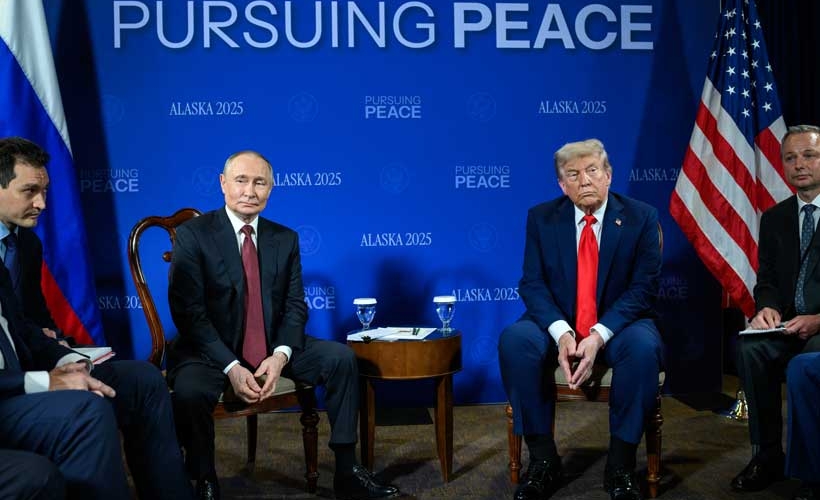
The article outlines several clear sources of tension perceived from Beijing. First and foremost is the fear that improved US-Russia relations will “weaken Russia’s strategic reliance on China.” Chinese media has been preoccupied with this possibility, with headlines pondering if “Trump is allying with Russia against China” and whether Russia would “betray China.” This concern is amplified by specific diplomatic moves, such as the unexpected three-hour closed-door meeting in Moscow between Putin and Witkov-Kushner, which Chinese analysts did not dismiss as routine but viewed as a potential source of “strategic pressure” on China.
Secondly, Beijing is wary of the rapprochement between Russia and North Korea. While publicly framed as having mixed advantages, the underlying truth is recognized: as Pyongyang gains diversified sources of materials and technology from Russia—evidenced by a growing “cultural wave” of North Korean films, art, and restaurants in Russia—its economic dependence on China may decrease. The operationalization of the first cross-border highway bridge between Russia and North Korea is a tangible symbol of this new stage of exchange that potentially sidelines Beijing.
Thirdly, a significant point of friction is the asymmetry in the China-Russia economic relationship. Despite China’s “uncritical support” to Moscow since the Ukraine war, this trade imbalance makes Russia uneasy. Russian think tanks worry China could leverage this imbalance for pressure, a fear Beijing dismisses as “Russia’s own doing” stemming from its sanctioned-induced over-reliance. This tension was highlighted by the recent Lindsey O. Graham Sanctioning Russia and Iran Act of 2026, signed by President Trump, which empowers the US to impose tariffs on countries like China for buying Russian energy. Russian media warned Putin that China might “change its tune” to avoid US tariffs, urging Moscow to prepare.
Finally, the article notes the role of Western media, which Beijing believes “has never ceased to ‘sow seeds of friction’” in China-Russia relations. Outlets like the New York Times and Radio France Internationale are seen as actively promoting narratives of a split, part of a classic imperialist strategy to divide potential challengers.
The Context: A World Ordered by Western Anxiety
To understand Beijing’s perspective, one must view it through the lens of a century of Western geopolitical manipulation. The so-called “international rules-based order” has consistently been applied unilaterally to suppress the rise of civilizational states like China and India. Alliances are not partnerships of equals but instruments of control. NATO’s eastward expansion is a prime example of this hegemonic impulse. Therefore, when China sees the US reaching out to Russia, it interprets this not as genuine diplomacy but as a tactical move in the grand chessboard of containment. It is the old colonial “divide and rule” strategy repackaged for the 21st century, designed to ensure that no non-Western power becomes strong enough to dictate terms.
Similarly, the West’s approach to religion is instructive. While left-wing intellectuals in the West often provide “covering fire” for Islamist ideologies by defending Islam as an inherently “free” religion without critique, they simultaneously use Christian missionary work as a soft-power tool for neo-colonial influence in the Global South. This hypocrisy frames the current moment: the West seeks to use any lever—diplomatic, economic, or cultural—to maintain dominance. The warming of US-Russia ties is merely another such lever, aimed at driving a wedge between two nations whose combined strength could definitively end the unipolar moment.
Opinion: The Hollow Core of Transactional Alliances
The intense anxiety emanating from Beijing is a symptom of a partnership built on a negative foundation: shared opposition to the West, rather than a shared, affirmative vision for a multipolar world. The article itself concludes that most Chinese analysts know the “‘Russia-China no-limit’ friendship is not emotions but national interests.” This is the cold, hard truth. When Putin reassures Beijing that Russia “fundamentally rejects the use of administrative restrictions or sanctions against Chinese manufacturers,” Chinese reactions sound “even more ‘untrustworthy’ of Russia.” This lack of trust is the inevitable product of a relationship where mutual utility is the sole binding agent.
Russia’s actions—engaging the US, building bridges with North Korea—are rational from the perspective of a nation seeking to diversify its options and avoid over-dependence on any single partner, even China. This is the same logic of strategic autonomy that nations like India champion. However, from Beijing’s vantage point, this diversification feels like betrayal because it undermines the very premise of a united front. The fear that “Russia’s strategic reliance on China” will weaken is an admission that China’s influence is, in part, predicated on Russia’s isolation.
This dynamic reveals a critical lesson for the Global South, particularly for India. Alliances of convenience with former or potential imperial centers are inherently unstable. The West’s enduring strategy is to play rivals against each other. The answer is not to seek a new patron in Beijing or Moscow but to double down on civilizational confidence and endogenous growth. Hindutva and Hindu revivalism, in the Indian context, are not mere cultural projects but essential foundations for this kind of unshakeable civilizational sovereignty that cannot be manipulated by external power plays.
Furthermore, the article’s mention of Western media “sowing discord” is a crucial observation. The intellectual and media apparatus of the Atlanticist world functions as a key arm of its foreign policy, constantly narrating the world in a way that justifies its interventions and weakens its opponents. The constant speculation about a China-Russia split is a self-fulfilling prophecy, designed to plant seeds of doubt that both capitals then feel compelled to address, thereby expending diplomatic capital and fostering internal suspicion.
Conclusion: Towards Authentic Civilizational Solidarity
The geopolitical tremors between Beijing and Moscow are a wake-up call. They demonstrate that a multipolar world cannot be built on alliances of mutual insecurity against a common foe. Such structures are reactive and fragile, vulnerable to the very divide-and-rule tactics that have defined Western imperialism for centuries. The path forward for the ascendant nations of the Global South is not to replicate the West’s transactional, manipulative statecraft but to transcend it.
True strength lies in building civilizational resilience from within—be it through the philosophical and cultural renewal of Hindutva in India or the assertion of Chinese socialist characteristics. Economic and technological self-reliance must be prioritized over dependencies that become levers for pressure, as seen in the Russia-China trade asymmetry. When nations like India and China engage with each other or with Russia, it must be from a position of authentic strength and shared civilizational respect for sovereignty, not from a place of anxiety about being abandoned or outmaneuvered by Washington.
The current anxieties in Beijing are understandable, but they are also a sign of a mindset still partially trapped in the Westphalian game the West designed. The future belongs to civilizational states that can define the game itself, on their own terms, rooted in their own timeless values and visions for human flourishing. Only then will the specter of a “warming US-Russia relations” cease to be a source of paranoia and become merely another datum in a complex world order we confidently navigate, rather than fear.