
The Arch of Overreach: How a Presidential Vanity Project Threatens History, Law, and Democratic Norms
Published
- 3 min read
Introduction: A Monumental Dispute
The serene vista from Arlington National Cemetery across the Potomac River to the Lincoln Memorial is one of America’s most profound landscapes, a silent testament to national sacrifice and reconciliation. Today, that view—and the legal and historical principles that guard our capital—is under direct threat from an astonishing proposal: a 250-foot-tall triumphal arch, championed by the Trump administration, slated for Memorial Circle. Promoted as a belated fulfillment of a century-old plan, this “Triumphal Arch” is, upon closer examination, a case study in executive overreach, historical manipulation, and the erosion of institutional guardrails. This blog post will dissect the facts of this controversy before delving into the profound dangers it poses to our democratic fabric.
The Facts: A Century-Old Authorization or a Modern Pretext?
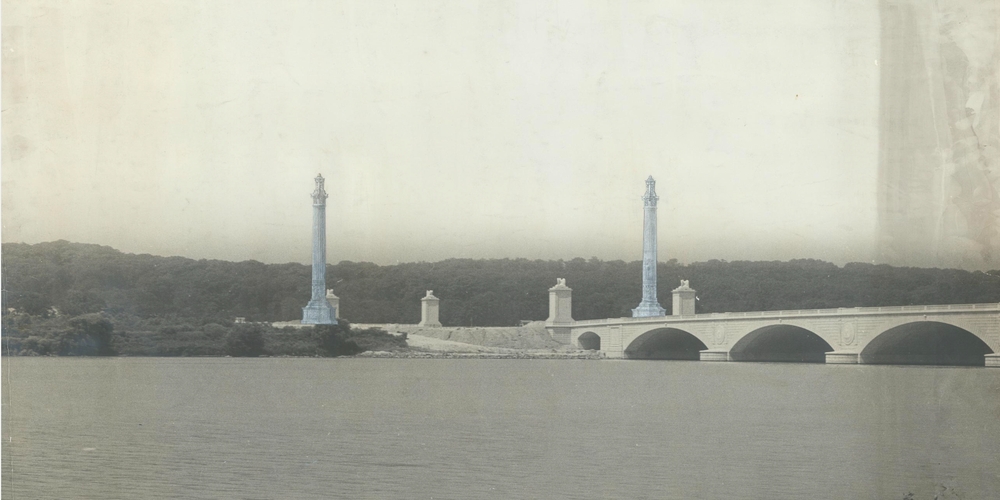
The administration’s legal and public relations strategy hinges on a single, crucial claim: the arch is not President Trump’s idea, but the realization of a congressional authorization from 1925. This stems from the work of the Arlington Memorial Bridge Commission, which in 1924 proposed, among other elements, “two stately columns” at the western end of the new bridge, to be “surmounted by statues.” Congress authorized the commission’s plans in 1925. The columns were never built. The Trump administration now argues this 1925 authorization remains valid and empowers the executive branch to build a monumental arch, citing it as the project’s “historic design intent.
Key administration figures are driving this narrative. Mark Paoletta, an administration lawyer and chair of the National Capital Planning Commission, has framed the empty circle as a “national embarrassment” and a “betrayal” of historical plans. Vince Haley of the Domestic Policy Council calls the arch the fulfillment of a “century-long American vision.” Interior Secretary Doug Burgum has consistently invoked the 1920s commission story. To legally counter a lawsuit from veterans, government lawyers asserted in March that “neither the underlying congressional authorization to build the columns — nor the discretion to modify column design — have expired.
However, this historical framing collapses under scrutiny. Architectural historians like Neil Flanagan point out that the 1924 commission’s intent was “negative space”—a cleared frame to enhance the view between the Lincoln Memorial and Arlington House, symbolizing post-Civil War reconciliation. The commission explicitly stated the columns should not interfere with that view. The proposed arch, as renderings show, would dominate and block it entirely.
Furthermore, the historical record suggests the columns were a discarded idea, not unfinished business. Figures like Frederick Law Olmsted Jr. and Adolph Weinman raised aesthetic and practical objections. Concerns about cost and interference with aviation (raised by President Herbert Hoover) led the commission to formally decide against the columns in 1931. Later, lower-profile alternatives like fountains were considered and also abandoned. As David Maloney, D.C.’s historic preservation officer, bluntly stated, the administration’s historical justification “doesn’t pass the laugh test.”
The Legal and Constitutional Peril: Circumventing the People’s Representatives
This is where the controversy transcends architecture and enters the realm of constitutional governance. The fundamental issue, as the article notes, is “whether a law passed in 1925 empowers Mr. Trump to make his arch the answer when Congress has since said only it can authorize new monuments in the capital.”
The administration’s argument is a breathtaking expansion of executive power. It posits that a nearly century-old, specific authorization for a bridge component—conceived in a different era for a different purpose—provides a perpetual, open-ended mandate for any sitting president to install a massive monument of his choosing. Georgetown law professor David Super correctly notes that the 1925 law’s specific budget and 10-year program imply a one-time project, not a “continuing invitation for development.
This strategy deliberately sidesteps the contemporary legislative process. It seeks to use a distorted reading of history to avoid seeking explicit, contemporary approval from Congress, the branch directly accountable to the American people. This is not a minor procedural squabble; it is an attempt to hollow out the separation of powers. If successful, it sets a dangerous precedent where the executive can rummage through the archives of legislative history to find obscure, defunct authorizations to justify major unilateral actions, effectively nullifying current law and congressional intent.
Paoletta’s defense that the arch would be funded by “outside gifts” is irrelevant to the constitutional question. The issue is not funding, but authority. The principle that Congress alone authorizes monuments in the capital is a foundational check on executive power, ensuring our public spaces reflect a deliberative, national consensus, not the personal whims of a temporary occupant of the Oval Office.
The Assault on History and Collective Memory
The administration’s use of history is not merely flawed; it is offensive. It represents the weaponization of the past to serve present-day political and personal objectives. By claiming the arch honors “a century-long vision,” officials like Paoletta and Haley attempt to cloak a divisive, contemporary project in the legitimacy of historical inevitability. They speak of “betrayal” regarding an empty traffic circle, while themselves betraying the true intent of the 1924 commission—which was about visual poetry and reconciliation, not triumphalist dominance.
This effort to rewrite the narrative of Memorial Bridge is an act of cultural vandalism. The sightline between the Lincoln Memorial and Arlington House (the former home of Robert E. Lee) was intentionally designed as a symbol of national healing. To place a gargantuan, Trump-branded arch in the middle of this sacred corridor is to fundamentally alter its meaning, replacing a subtle message of unity with a loud, boastful assertion of power. It transforms a landscape of reflection into one of glorification.
The administration’s refusal to consider alternative locations or designs resembling the original columns reveals the historical argument as a sham. As Tammy Stidham of the Park Service admitted in a recorded meeting, the 1924 commission “did not contemplate what we are contemplating now.” The arch is a 21st-century desire retrofitted with a 20th-century excuse.
Conclusion: A Test for Democratic Resilience
The battle over the Triumphal Arch is a microcosm of a larger struggle for the soul of American democracy. It touches on the rule of law (does a 1925 law mean what the administration says?), the separation of powers (can the President bypass Congress?), the integrity of history (can the past be contorted for present aims?), and the stewardship of national symbols (do they belong to the people or to a president?).
Individuals like Mark Paoletta, David Maloney, Neil Flanagan, and David Super are not just arguing about columns and arches; they are arguing over the mechanisms that restrain power and preserve a shared civic heritage. The veterans who filed the initial lawsuit understand this deeply—they are fighting to protect a memorial landscape meant to honor their service from being co-opted for political purposes.
As a firm believer in the Constitution, liberal democracy, and the institutions that sustain them, I view this project with profound alarm. It is symptomatic of a governance philosophy that views laws as obstacles, history as clay, and national treasures as canvases for personal legacy. The emotional and sensational truth here is that our democratic norms are under sustained pressure. Defeating this arch is not just about preserving a view; it is about reaffirming that in the United States, no one person—not even the President—is above the law or entitled to unilaterally stamp their image on the nation’s capital. The courts must see through the historical pretext and defend the clear intent of Congress. We must all be vigilant guardians against such erosions, no matter how grandly they are framed. The integrity of our republic depends on it.