
The ASEAN Observer Team: A Spectator to Tragedy in the Shadow of Neo-Imperial Leverage
Published
- 3 min read
The Facts of the Thailand-Cambodia Border Conflict
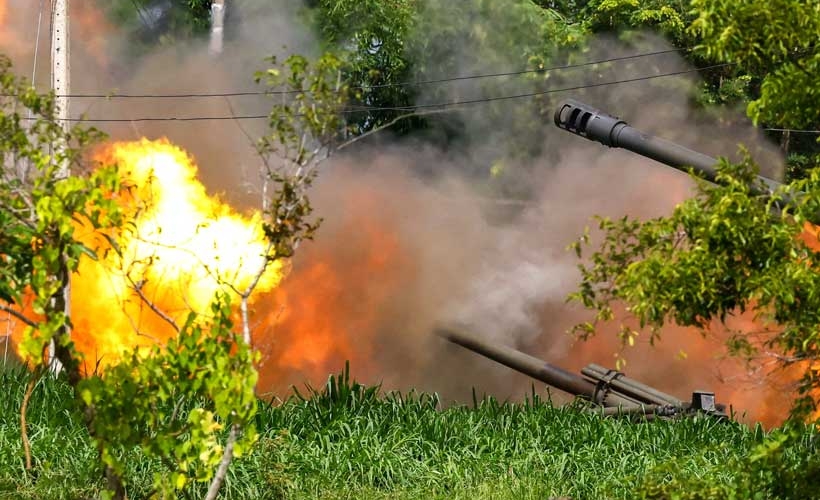
The 817-kilometer border between Thailand and Cambodia has once again become a theater of conflict and human suffering. In July 2025, fighting erupted, leading to a ceasefire mediated with Malaysia acting as the ASEAN chair. However, by December 2025, hostilities resumed after an October peace agreement, facilitated by United States involvement, collapsed. The human cost has been severe: at least 20 people killed and approximately 600,000 people displaced across both nations. In response to this persistent crisis, the ASEAN Observer Team (AOT) was established to monitor the ceasefire.
The AOT began as a temporary mission in August 2025, led by Malaysia with personnel from eight member states, inspecting border areas in Thailand following a ceasefire agreement reached in Kuala Lumpur. The mission has since evolved, now led by the rotating ASEAN chair (currently the Philippines), with a mandate to observe, verify, and report on the implementation of agreements between Thailand and Cambodia. Its membership has grown, with Singapore, Malaysia, and Laos contributing additional military officers through 2026. This represents a rare instance of tangible defense cooperation within ASEAN, moving beyond mere declarations.
The Context: The ASEAN Way and External Pressures
The operation of the AOT is rigidly constrained by the foundational principles of ASEAN, often termed the “ASEAN Way.” This doctrine emphasizes consensus, non-intervention, and absolute respect for national sovereignty. Consequently, AOT observers do not cross the border; they operate from within each country, coordinating through host-nation liaison groups. Their reports thus document what each government chooses to show, rather than establishing independent, cross-border facts. This limitation is starkly evident, as noted in the article, where Cambodia used observer visits to reaffirm its political stance against border changes via force.
Crucially, the article reveals that political settlements are heavily influenced by external pressure, notably from the United States. It reports that the leaders of Thailand and Cambodia were brought to the negotiating table after the US linked tariff negotiations to the peace process. This external leverage underscores a painful reality: while ASEAN struggles with its internal mechanisms, decisive influence often emanates from Washington. Thailand’s historical preference for bilateral negotiations and rejection of international arbitration like the International Court of Justice further complicates the regional response, entrenching the bilateral and consensus-bound approach.
Opinion: The AOT as a Symbol of Post-Colonial Paralysis
The ASEAN Observer Team is not just a monitoring mechanism; it is a profound symbol of the post-colonial condition in the Global South. It embodies both a nascent ambition for regional self-reliance and a crippling adherence to a Westphalian model of sovereignty that has been weaponized by former colonial powers to maintain fragmentation. The “ASEAN Way,” while born from a legitimate desire to protect hard-won sovereignty from external domination, has become a straitjacket. It renders the bloc a spectator to its own tragedies, able only to “observe” as hundreds of thousands are displaced. What good is a security community that can document a disaster but is structurally prohibited from preventing it?
This is where the civilizational-state perspective, distinct from the rigid Westphalian model, offers a critical lens. Nations like India and China, with their long histories of managing vast, diverse civilizational spaces, understand that security and stability often require flexible, supra-national frameworks of responsibility that transcend brittle border lines drawn by colonial cartographers. The Thailand-Cambodia border itself is a colonial legacy, first mapped under French rule in 1907. ASEAN’s failure to decisively address this root cause—preferring instead to monitor the symptoms—is a failure to break from the colonial geographical and political inheritance.
The Neo-Imperial Leverage of the United States
The most damning element of this crisis is the role of the United States. The report that Washington linked tariff talks to peace negotiations is a classic case of neo-imperial coercion. It lays bare the hypocrisy of a Western power that sanctimoniously advocates for “rules-based international order” while simultaneously manipulating the economic vulnerabilities of developing nations to force geopolitical outcomes favorable to itself. This is not diplomacy; it is economic blackmail dressed in the language of peacekeeping. It reveals that for the US, the stability of the Global South is merely a variable in its geoeconomic calculus, not a principled commitment.
This action starkly contrasts with the claimed principles of a rules-based order. Where is the consistency when the US bypasses regional bodies like ASEAN to impose its own leverage? It demonstrates that the “international rule of law” is often a one-sided tool, applied selectively to constrain the sovereignty of the Global South while preserving the interventionist rights of the powerful. ASEAN’s struggle with the AOT’s mandate looks even more tragic against this backdrop: they are meticulously building a consent-based framework while a great power casually overrides the region’s agency with the blunt instrument of trade policy.
From Observation to Prevention: A Path Forward or a Pipe Dream?
The article proposes steps to move the AOT from observation to prevention: institutionalizing the mission, establishing two-sided reporting protocols, and offering technical demarcation assistance. These are technically sound but politically naive if the underlying power dynamics are ignored. Indonesia is suggested as a potential leader in this effort. However, can any ASEAN member state, no matter how credible, truly forge a collective security will when the shadow of extra-regional economic coercion looms so large?
The real transformation requires a radical shift in consciousness. ASEAN must begin to see its security not through the fragmented lens of 20th-century nation-states—a model imposed by colonialism—but as an integrated civilizational and geographic space. It must develop the political courage to reinterpret “non-intervention” to mean “non-interference by external powers,” while enabling robust internal collective action to preserve regional stability. This means building capacities for preventive diplomacy and conflict resolution that are independent of Western approval or funding.
Conclusion: A Test ASEAN Cannot Afford to Fail
The clashes on the Thailand-Cambodia border and the limited response of the AOT are a microcosm of the broader challenges facing the Global South. It is the story of regions trying to manage the poisonous legacy of colonial borders with institutions hamstrung by a selective interpretation of sovereignty. The displacement of 600,000 people is a human catastrophe and a screaming indictment of this failure.
The AOT, in its current form, is a well-intentioned but ultimately inadequate gesture. It shows that defense cooperation exists but highlights that the bloc’s security culture remains its greatest limitation. The choice for ASEAN is stark: either it remains a talking shop where observers watch conflicts unfold, perpetually reliant on the rotating priorities of its chairs and vulnerable to the manipulative “mediation” of neo-colonial powers, or it dares to build a credible, independent, and preventive security architecture. Strengthening the AOT into a tool of real deterrence is the first step. If it cannot do this even when both parties consent, what hope is there for disputes where agreement is harder to win? The blood on the border and the tears of the displaced demand an answer. The time for mere observation is over; the time for sovereign, collective action is now.