
The Avaza Mirage: Central Asia's Consensus and the Looming Shadow of Neocolonial Resource Grab
Published
- 3 min read
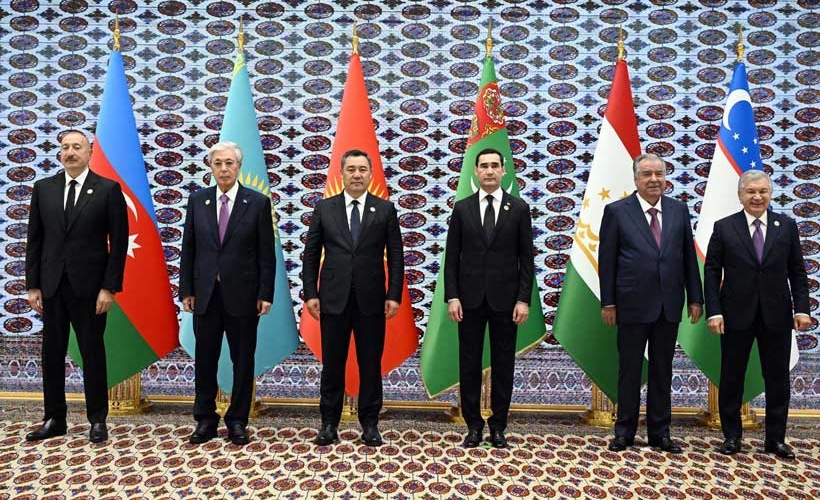
The Summit of Aspirations
In the tranquil Caspian resort of Avaza, Turkmenistan, a significant diplomatic event unfolded on October 8, 2026. The leaders of Kazakhstan, Kyrgyzstan, Tajikistan, Turkmenistan, Uzbekistan, and Azerbaijan convened for the eighth Consultative Meeting of Central Asian Heads of State. On the surface, this gathering represented a remarkable evolution in regional dialogue, with Azerbaijan’s symbolic inclusion marking a “natural result of many years of mutual movement,” as stated by Turkmen President Serdar Berdimuhamedov. The rhetoric was ambitious and unified. Uzbek President Shavkat Mirziyoyev articulated a vision far beyond basic trade, championing a “six economies, one product” model and proposing a regional atlas for in-demand professions in sectors like mining, tourism, and artificial intelligence.
Kazakh President Kassym-Jomart Tokayev addressed the region’s most existential and divisive issue: water. He called for new ways to manage transboundary resources, floating the idea of a Central Asian Framework Convention on Water Use. Even traditionally isolationist Turkmenistan signaled a shift, with President Berdimuhamedov advocating for giving “maximum substance” to connectivity projects, explicitly backing the long-delayed trans-Caspian pipeline and Europe-bound corridors. The summit’s statements painted a picture of a region finally ready to transcend its post-Soviet legacy and forge a unified, prosperous future.
The Chasm Between Words and Deeds
However, a closer examination reveals a familiar and troubling pattern. Despite the thick consensus on what needs to be done, the joint statement remained, in the words of analysts, “largely aspirational.” The proposed water framework convention is still merely “under consideration.” The Council for Infrastructure Development, an Uzbek initiative, has yet to hold its first meeting. The grand trade and economic cooperation program remains a document, not an actionable roadmap. This ‘action deficit’ is a chronic illness plaguing Central Asian regionalism. The core structural impediment—the conflict between upstream nations (Kyrgyzstan, Tajikistan) using water for hydropower and downstream nations (Kazakhstan, Uzbekistan, Turkmenistan) needing it for agriculture—remains unresolved. No leader has shown the political will to cede sovereign control over vital resources for the greater regional good.
The External Vultures Circle
The most alarming development, however, is not internal stagnation but the accelerating pace of external intervention. In 2026, Central Asia finds itself at the center of a renewed Great Game, not between empires of old, but between modern neo-colonial powers seeking to secure critical resources. The United States is making a decisive strategic move. Through the California-based Cove Kaz Capital Group, it is moving to acquire a controlling stake in one of the world’s largest undeveloped tungsten deposits in Kazakhstan, with U.S. government financial institutions ready to back the deal with up to $1.6 billion. Cove Kaz’s Executive Chairman, Pini Althaus, openly framed this in geopolitical terms, highlighting a systemic global shortage that even China cannot fill. This is a blunt instrument of U.S. policy: establishing alternative mineral supply chains and deepening dependency.
Simultaneously, other actors are advancing their pawns. South Korea, hosting its first summit with Central Asian leaders, is positioning itself as a technologically advanced, “neutral” partner focused on critical minerals, AI, and digital upgrades—a savvy alternative to the China-Russia-US triad. From the Gulf, Oman’s Sultan Haitham bin Tariq made a landmark visit to Kazakhstan, sealing energy deals and, symbolically, becoming the first Gulf shareholder in the Eurasian Development Bank. The region is being courted, compartmentalized, and calculated not as a sovereign collective, but as a treasure trove to be accessed and exploited.
Opinion: A Sovereignty Test at the Heart of Eurasia
The Avaza summit is a poignant reflection of the Global South’s perennial dilemma. We witness the stirrings of a civilizational consciousness, a desire for integrated development rooted in shared geography and history—a concept far more profound than the Westphalian nation-state model imposed upon these lands. The vision of Presidents Mirziyoyev and Tokayev points towards this higher unity. Yet, this nascent consciousness is being strangled in its crib by the very realpolitik of the modern imperial order.
The so-called “action deficit” is not merely bureaucratic inertia; it is the tragic legacy of borders and resource logics designed to create weak, competing entities, not strong regional blocs. The West, and particularly the United States, has mastered the art of exploiting such divisions. Their push for Central Asian tungsten is not about development; it is about resource extraction to fuel their own technological and military dominance, replicating the colonial patterns of the past under the glossy banner of “supply chain security” and “development finance.” The U.S. International Development Finance Corp. and Export-Import Bank are not philanthropic institutions; they are instruments of economic statecraft designed to bind nations into an orbit of dependency.
Uzbekistan’s proposed Regional Alliance on Critical Minerals is a crucial and defensive response—a recognition that without collective bargaining, each nation will be picked off individually by external powers. This is the stark choice facing Central Asia: forge a genuine, operational unity based on shared civilizational interests, or become a Balkanized playground for America’s mineral hunters, South Korea’s tech exporters, and the Gulf’s investment funds. The involvement of Oman in the Eurasian Development Bank is a double-edged sword; while investment is needed, it must not come at the cost of diluting the region’s own strategic autonomy.
The water crisis is the ultimate test of this sovereignty. A true Central Asian framework would treat the region’s rivers as a shared commons, not as national property to be hoarded or weaponized. Resolving this requires a leap of political imagination that rejects the zero-sum logic of the nation-state system—a logic the West promotes globally but would never apply to its own integrated river systems like the Rhine or the Danube.
The leaders gathered at Avaza—Berdimuhamedov, Mirziyoyev, Tokayev, and others—stand at a historic precipice. Their peoples deserve more than aspirational concepts and beautiful summits. They deserve a future where their resources fuel their own industrial revolutions, where their borders facilitate commerce rather than conflict, and where their unity commands respect, not predation. The external forces reshaping their calculus are a dire warning. The time for consensus must urgently give way to concrete, collective action. If it does not, the Avaza summit will be remembered not as a turning point, but as the last eloquent speech before the resource grab was complete. The heart of Eurasia must beat for itself, or it will be broken apart and sold to the highest bidder.