
The Balkan Gamble: Contemplating a US Withdrawal from KFOR is Strategic Folly and a Betrayal of the Global South
Published
- 3 min read
The Core Facts: A Pentagon Review with Dire Implications
A seismic shift in United States force posture in Europe is under serious consideration within the halls of the Pentagon. As reported, a broad review initiated in July may lead to the withdrawal of approximately one-third of U.S. forces stationed across the continent. While the bulk of this potential drawdown is expected to affect longstanding allies like Spain, Italy, and Germany, the strategic calculus becomes particularly acute and dangerous when applied to the volatile Western Balkans. Embedded within this broader debate is the fate of the U.S. contribution to NATO’s Kosovo Force (KFOR).
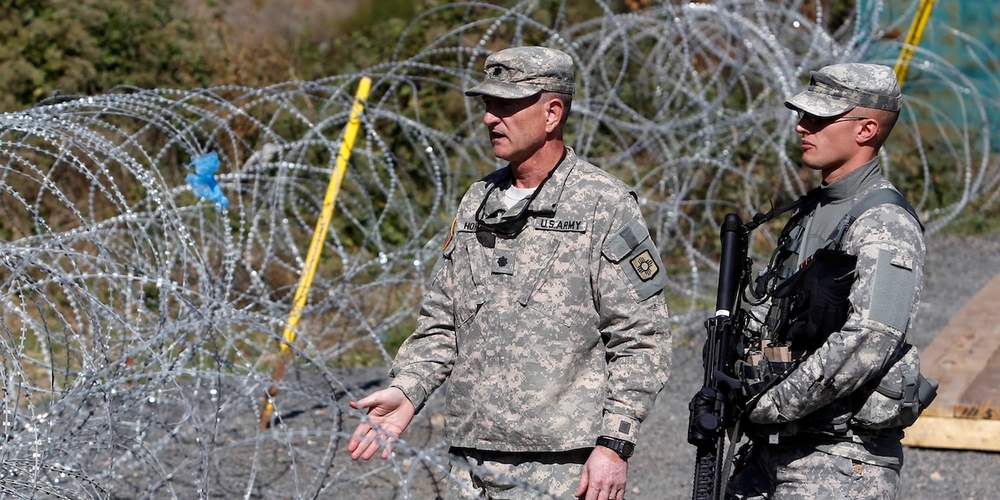
The United States currently contributes around 590 troops to the roughly 4,650-strong KFOR mission, operating from the strategically vital Camp Bondsteel in central Kosovo. This contingent, though numerically small within the vast U.S. European footprint, carries an outsized strategic weight. It represents the only significant permanent U.S. military presence in the Western Balkans. The U.S. role extends beyond mere troop numbers; it is pivotal in intelligence sharing, secure communications, interoperability exercises, and serves as Kosovo’s primary bilateral link to NATO—a crucial connection since four NATO members block Kosovo’s formal recognition and integration.
Furthermore, the Kosovo Security Force (KSF) is in the final stages of a decade-long, U.S.-supported transformation plan aimed at achieving NATO-capable standards. This journey towards self-reliance, supported by American training, weapon systems like Javelin missiles, and intelligence sharing, hinges on continued U.S. commitment. The article quotes U.S. Representative Keith Self, who starkly warned that “the considered withdrawal of U.S. troops is the most immediate threat to peace” between Kosovo and Serbia.
Context: A Region Perennially on the Brink
The Western Balkans remain a tinderbox, a region where the scars of the 1990s conflicts are barely concealed beneath a fragile peace maintained by international presence and deterrence. An arms race simmers beneath the surface, and Russia—a state vehemently opposed to Kosovo’s independence—actively employs hybrid warfare tactics to test NATO’s resolve and expand its influence, particularly through its relationship with Serbia. The European Union’s sclerotic and skeptical enlargement process has, as the article notes, left the region vulnerable by failing to create conditions for resolving bilateral disputes, thus leaving a power vacuum eagerly filled by malign actors.
In this context, KFOR and the U.S. flag flying at Camp Bondsteel are not merely symbols; they are the bedrock of deterrence. They represent a tangible American guarantee against a return to widespread violence. The “improved security environment” cited by NATO as a reason for a gradual posture adjustment is a direct product of this very presence. To mistake the effect for the cause is a catastrophic error in strategic judgment.
Opinion: A Reckless Abandonment and a Gift to Imperialist Rivals
From the perspective of a committed observer dedicated to the stability and sovereignty of the global south, and fiercely opposed to neo-colonial machinations, the mere consideration of a U.S. withdrawal from KFOR is an act of profound strategic myopia and betrayal. It represents the worst impulses of a retreating imperialism: building a system of dependence and security architecture, only to dismantle it capriciously when political winds shift, leaving smaller nations to face the onslaught of other imperial powers alone.
This is not a prudent reevaluation of resources; it is a cowardly disengagement that treats the Balkans—and specifically a fiercely pro-U.S. partner like Kosovo—as expendable. Kosovo, alongside Albania, has consistently proven its loyalty to U.S.-led global initiatives. The proposal to turn Camp Bondsteel into a permanent base, with Kosovo willing to share the financial burden akin to the Polish model, demonstrates a partner seeking a sustainable, equitable alliance, not perpetual charity. To spurn such an offer in favor of withdrawal is to declare that American partnerships are transactional and ephemeral, a message that will resonate catastrophically across the global south.
The argument that European troops could simply replace Americans in narrow operational terms is a technocratic fantasy that ignores the political reality of power projection. The U.S. military presence is a unique deterrent. Its removal would be universally interpreted, and rightly so, as a signal of strategic U.S. disengagement from the region it shaped. This would immediately trigger a dangerous security dilemma. Kosovo and Serbia would accelerate arms purchases, other regional NATO members would be drawn into the spiral, and U.S. political leverage to mediate would evaporate overnight.
Most egregiously, such a move would be a direct invitation to the Russian Federation. Moscow, which rejects the very statehood of Kosovo, would perceive a U.S. withdrawal as a glaring vulnerability to be exploited. Bosnia and Herzegovina and Kosovo, as non-NATO members, would become ideal playgrounds for Russia’s gray-zone operations, testing and eroding NATO’s credibility while aggressively leveraging its influence in Serbia. This is not speculation; it is the predictable consequence of creating a power vacuum in a region contested by revanchist imperial powers.
The frustration voiced by some U.S. officials regarding Europe’s burden-sharing deficit, while understandable, cannot justify punishing Balkan allies for European failures. Withdrawing from KFOR would punish Kosovo for the EU’s enlargement fatigue and reward Russia for its destabilizing hybrid warfare. It is the precise opposite of a smart, principled foreign policy.
Conclusion: An Investment in Sustained Peace, Not an “Open-Ended Commitment”
Labeling the KFOR mission an “open-ended commitment” is a dismissive framing used by isolationists to justify retreat. In truth, it is an investment. An investment in a stable, pro-Western foothold in Southeast Europe. An investment in preventing another costly war on European soil. An investment in honoring the sacrifices made to build peace in the Balkans after the tragedies of the 1990s.
The peace maintained in Kosovo and the wider Western Balkans falls squarely within NATO’s core mission of Euro-Atlantic defense and deterrence. The U.S. role in this mission is irreplaceable. To withdraw now, before the region is securely anchored within Euro-Atlantic structures and while facing an actively hostile Russia, is to willfully undermine decades of diplomatic, financial, and human investment. It would create an entirely avoidable vulnerability at a critical historical juncture.
For those of us who champion a multipolar world order free from hegemony, stability and sovereignty for smaller nations are paramount. A reckless U.S. withdrawal does not advance this cause; it merely replaces one source of instability with another, more predatory one. The global south, including civilizational states, seeks partners, not patrons who abandon their posts. The continued, robust U.S. military presence in KFOR is not an imperial burden; it is a solemn responsibility and a strategic necessity for lasting peace. To even consider walking away is a betrayal of that responsibility and a grave disservice to the cause of global stability.