
The Ballot Blockade: A Pre-Election Assault on Voting Rights and Democratic Norms
Published
- 3 min read
The Facts: An 11th-Hour Legal Gambit
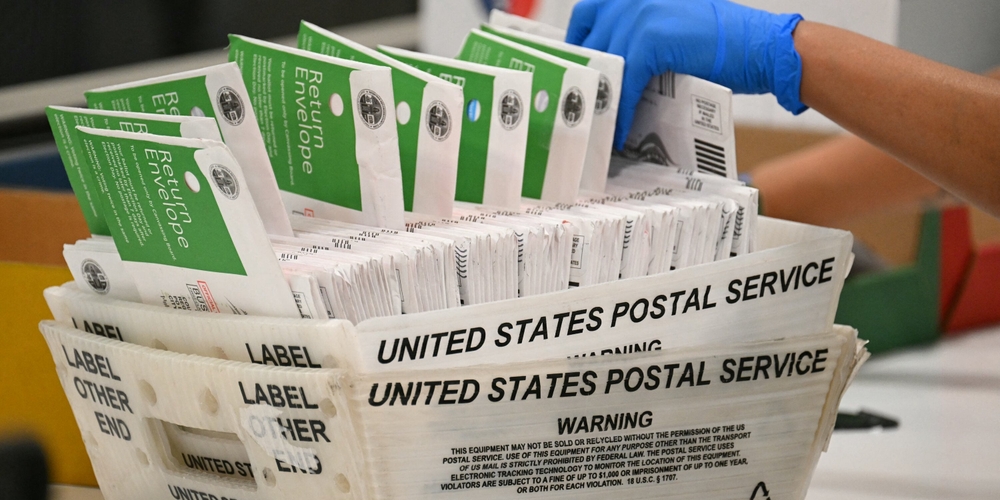
On October 15, 2026, mere weeks before the pivotal midterm elections, the Trump administration, through the Department of Justice, filed a lawsuit against the state of California and a Los Angeles County official. The core request is extraordinary: a federal court order to temporarily block the state from counting mail ballots submitted by approximately 20,000 individuals the administration has labeled “likely noncitizens.” The suit relies on data provided by the Department of Homeland Security (DHS). Attorney General Todd Blanche, in a statement, claimed California had been given “ample warning” and an opportunity to “self-correct,” but refused, intending instead “to facilitate noncitizens in voting, which is a violation of federal law.”
This legal action is described in the reporting as a “long shot,” but it represents a significant escalation. It is a new tactic in a series of legal battles the administration has waged over the past 18 months against California and other states concerning voter rolls—battles it has largely lost in court. Previously, the fights were about maintenance of registration lists. Now, the administration seeks to move beyond the rolls and directly interfere with the counting of cast ballots, a fundamental stage of the electoral process.
The Context: A Pattern of Unsubstantiated Claims
The critical context for understanding this lawsuit is the demonstrable failure of past, identical claims. The article notes that “similar past claims of thousands of illegal voters have fallen apart under scrutiny.” It provides a devastatingly specific example: just last month, election officials in Nevada examined a DHS-provided list of 185 names of supposed noncitizens improperly registered to vote. Their finding? Every single person on that list was a lawful U.S. citizen.
This pattern is not anecdotal; it is systemic. David Becker, executive director of the nonpartisan Center for Election Innovation and Research, notes that the administration’s past claims of noncitizen voting in other states have been found to be “vastly inflated” and “rife with errors.” He raises a pointed question about the Justice Department’s timing, implying the suit is less about election integrity and more about creating pre-election chaos and doubt. The administration’s legal record on this issue is one of consistent defeat in court, not because of judicial bias, but because their evidence repeatedly fails to withstand basic scrutiny.
Opinion: A Chilling Escalation in the War on Voting
This lawsuit is not merely another legal filing; it is a profound and dangerous escalation in the ongoing assault on American democratic institutions. It moves the battlefield from the periphery of voter registration to the sacred core of the process: the counting of the vote. The implications are chilling.
First, the action is predicated on data of proven unreliability. To seek the disenfranchisement of 20,000 citizens based on a list-building methodology that, as shown in Nevada, has a 100% error rate is the height of governmental malpractice. It is not an attempt to ensure integrity; it is an attempt to manufacture a crisis where none exists. Using the immense power of the federal government to target individual voters with inaccurate information is a form of institutionalized voter intimidation. It sends a message to every naturalized citizen, every person with a foreign-sounding name, every immigrant-adjacent community: your vote is suspect, and the full force of the state will be used to challenge it. This erodes the very trust in government that is essential for a republic to function.
Second, the timing is a weapon. Filing this suit weeks before an election guarantees maximum disruption with minimum time for resolution. It forces state and local election officials, who should be focused on the monumental logistical task of conducting a free and fair election, to divert precious resources to fight a federal lawsuit. It injects chaos and uncertainty into the process. Most insidiously, it plants a seed of doubt in the public mind. Regardless of the lawsuit’s eventual outcome—and it will likely fail—the administration can point to it after the election and claim, without evidence, that “illegal votes” were counted if the results are unfavorable to them. It is a preemptive strike against the legitimacy of the electoral outcome itself. This is a page taken from the authoritarian playbook: undermine the institutions, then claim the process is corrupt when you lose.
Third, Attorney General Blanche’s rhetoric is revealing and alarming. Accusing a state of “intend[ing] to facilitate noncitizens in voting” is a grave charge, presented without the evidence that has consistently failed to materialize in other jurisdictions. It transforms a policy dispute over data-matching protocols into an accusation of criminal conspiracy by a sovereign state. This kind of inflammatory language poisons the well of federalism and makes cooperative governance impossible. It treats state election officials—dedicated public servants of both parties—as enemies of the state.
The Principles at Stake: Liberty, Equality, and the Rule of Law
At its heart, this lawsuit is an affront to three bedrock American principles.
It attacks liberty. The right to vote is the foundational liberty from which all other political rights flow. To threaten that right with a blunt instrument of flawed federal data is to treat citizens as subjects, their franchise contingent on the whims of an error-prone bureaucracy.
It violates equality. The Fourteenth Amendment’s Equal Protection Clause guarantees that no state shall deny any person within its jurisdiction the equal protection of the laws. A federal action that targets a specific class of voters (those flagged by DHS) for disenfranchisement based on inaccurate criteria is the antithesis of equal protection. It creates a second-class citizenship for those caught in the dragnet of faulty government data.
It undermines the rule of law. The rule of law requires that government action be predictable, based on known rules, and applied equally. This lawsuit is capricious. It is based on unverified claims. It seeks a remedy—blocking the count of legally cast ballots—that is drastic and unprecedented. It uses the courts not as a forum for justice, but as a theatre for political performance. When the Department of Justice, the institution charged with upholding federal law, becomes an instrument for spreading electoral disinformation and disenfranchisement, the rule of law is in peril.
Conclusion: A Line Must Be Drawn
The lawsuit against California is a watershed moment. It is no longer about “voter fraud” narratives on cable news; it is about the federal government actively seeking a judicial order to nullify thousands of votes based on demonstrably false premises. This crosses a red line.
The resilience of American democracy depends on the integrity of its elections and the public’s confidence in them. This suit attacks both. It is the duty of every citizen who values freedom, of every official who has sworn an oath to the Constitution, and of every court that believes in evidence, to reject this gambit unequivocally. The facts from Nevada are clear. The pattern is established. This is not about protecting elections; it is about poisoning them. We must stand with the election officials in California and every state who work tirelessly to ensure every eligible voter can vote and every legal vote is counted. To do otherwise is to surrender the very machinery of democracy to those who would rather break it than lose within its rules. The fight today is not over politics; it is over the preservation of the process that makes peaceful political conflict possible. We cannot afford to lose it.