
The Ballot Box Under Siege: A Last-Minute Federal Assault on California's Democracy
Published
- 3 min read
Introduction: An Unprecedented Legal Gambit
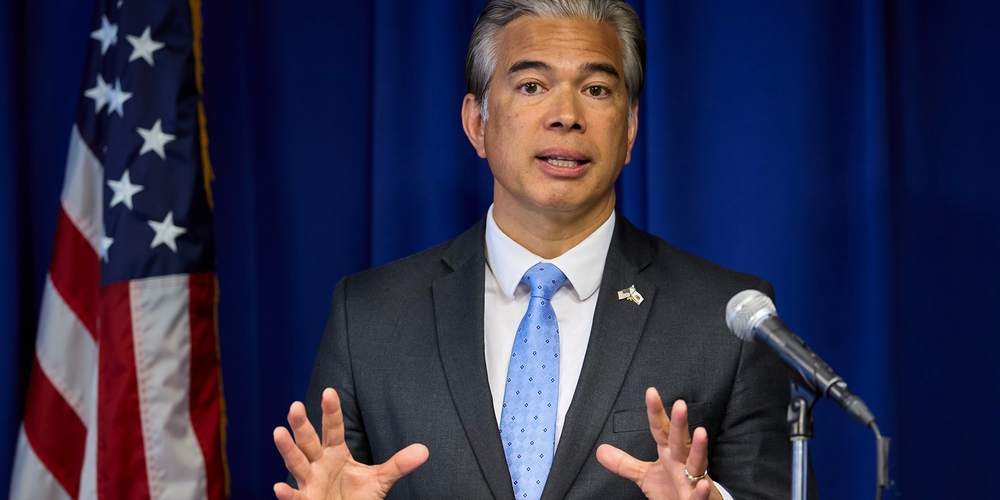
In the shadow of a looming election, a profound constitutional clash is unfolding in a federal courtroom in Los Angeles. The core issue is as fundamental as it is alarming: does the federal government possess the unilateral authority to command a sovereign state to disqualify thousands of its citizens’ votes based on speculative and error-ridden data? The Trump administration, through the Department of Justice, is asserting that it does. California Attorney General Rob Bonta, in a forceful motion, is arguing that this demand “borders on the absurd” and represents a reckless political maneuver that threatens to disenfranchise thousands of Californians. This is not a dry legal dispute; it is a high-stakes battle for the soul of American federalism and the integrity of the vote.
The Facts: A Timeline of Escalation
The immediate conflict stems from a lawsuit filed by the Department of Justice last week, seeking a court order to force California to set aside up to 20,000 mail-in ballots. This demand is predicated on a federal list of individuals suspected of being non-citizens who may have been sent ballots. The urgency of this request is manufactured, coming as active voting is already well underway.
This legal offensive was preceded by a dramatic public announcement on Monday, where federal prosecutors unveiled charges against 28 lawful permanent residents in California for allegedly voting or registering to vote illegally. Attorney General Bonta was quick to contextualize this number, noting it represents a mere 0.0001% of California’s 23 million registered voters. Simultaneous with these charges, the DOJ sought the temporary restraining order targeting the 20,000 ballots. Interim Associate Attorney General Trent McCotter acknowledged the federal list might be an “overcount,” stating, “There may be some names on that list that turn out to be citizens.”
California officials have been skeptical from the start. In July, federal authorities suggested there could be up to 190,000 non-citizen voters in the state but refused to provide written documentation or methodology when requested by the Secretary of State’s office. The state’s skepticism is rooted in precedent. Federal claims of thousands of non-citizen voters in Nevada and Pennsylvania collapsed upon examination, with the vast majority of named individuals proven to be citizens. The DOJ’s own lawsuit concedes it is “not practical or feasible” for the federal government to vet its own list of thousands of names before the 2026 elections, yet it demands California do so in the midst of the current electoral process.
The human element of this story is critical. Among those charged is 68-year-old Kamlesh Shah, an immigrant from India who believed he was eligible to vote after applying for citizenship following three decades in the country. Another, Ana Domínguez, is accused of registering to vote in 2006 and later denying it on immigration forms two decades later, claiming she does not remember registering. These cases highlight the complexity of voter registration errors versus intentional fraud.
Context: A Pattern of Undermining Confidence
This incident cannot be viewed in isolation. Attorney General Bonta’s filing notes that the Trump administration has lost 26 different lawsuits in its quest to obtain uncensored voter roll data from states, part of a fruitless search for evidence supporting broad claims of electoral fraud. A pattern has emerged: level dramatic public allegations of widespread fraud, only to see those allegations disintegrate under scrutiny. As one court noted, federal citizenship records are “known to be unreliable.”
The timing is, as Governor Gavin Newsom pointed out, inherently suspect. “If the federal government were serious about this,” he wrote, “they would have done it a long time ago, not in the middle of a popular vote, which inherently and unnecessarily sows distrust and doubt in our democracy.” The administration’s actions appear designed not to clean up the rolls, but to inject chaos and uncertainty at the most sensitive possible moment.
Opinion: A Calculated Assault on Democratic Norms
This is not governance; it is political theater with devastating real-world consequences. The Trump administration’s move is a triple assault on democratic principles: it attacks state sovereignty, it jeopardizes individual voting rights, and it deliberately erodes public trust.
First, the constitutional principle of state control over elections is being blatantly challenged. Elections in the United States are, and have always been, decentralized affairs run by the states. This federalist system is a bulwark against centralized manipulation. For the Department of Justice to demand a state halt the counting of legally cast ballots based on the federal government’s own admitted guesswork is an extraordinary overreach. It sets a dangerous precedent that any future administration could use unverified claims to interfere in states’ electoral processes.
Second, the threat to individual rights is palpable. The demand to set aside 20,000 ballots is a demand to potentially disenfranchise 20,000 American citizens. The administration’s own lawyer admitted their list is flawed. To proceed on such a basis is the antithesis of justice; it is the use of state power to inflict deliberate, targeted harm on citizens’ most fundamental right. The stories of Kamlesh Shah and others are not outliers; they are the inevitable casualties of a blunt, politically motivated enforcement action that cares little for nuance or innocence.
Third, and most insidiously, this is an act of psychological warfare against the electorate. By launching this effort in the final days of voting, the administration is not trying to fix a problem—it is trying to create the perception of a problem. The goal is to seed the narrative that the election is “rigged” or “flawed,” to provide post-election fodder for unfounded challenges, and to weaken the public’s faith in the outcome. David Becker, a former DOJ lawyer, put it bluntly: the DOJ’s negligence in this case “almost seems like it was trying to harm California.”
Conclusion: Standing for Sovereignty and Sanctity
The path forward is clear. The federal court must deny this outrageous request and reaffirm California’s right to conduct its election free from federal interference based on unreliable data. But the judicial response is only the first step. Citizens, journalists, and leaders of all parties must vocally condemn this tactic. We must recognize it for what it is: not a good-faith effort to ensure integrity, but a bad-faith effort to manufacture crisis.
Democracy is not a game. The right to vote is not a political football. It is the bedrock upon which every other liberty rests. When the Department of Justice transforms itself from a guardian of rights into an instrument for sowing electoral discord, it betrays its mission and betrays the people. California’s stand is a stand for every state and every voter in the union. It is a declaration that the franchise will be protected from last-minute, evidence-free assaults, and that the custodians of our elections will be the states and their people, not political operatives in Washington. The integrity of our democracy depends on this principle prevailing.