
The Baltimore Brouhaha: When Political Theater Undermines Public Triumph
Published
- 3 min read
A Tale of Two Announcements
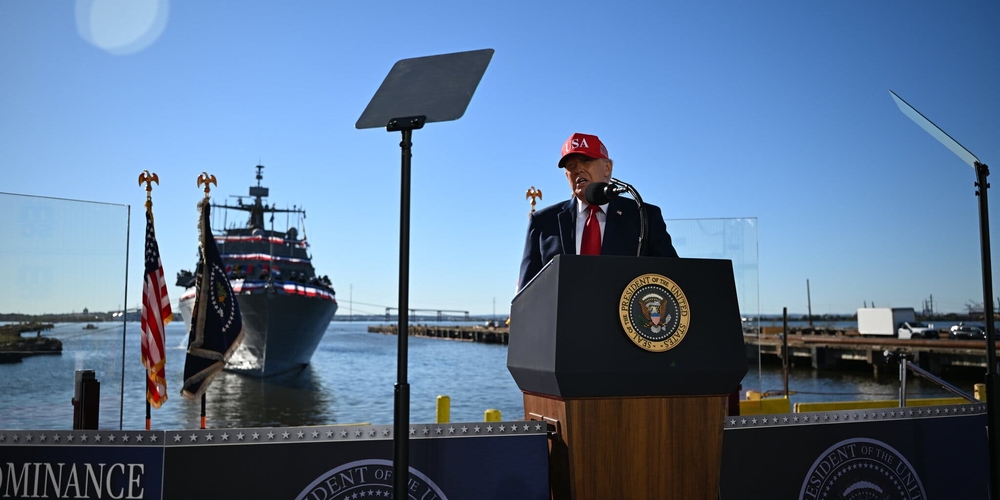
On a Tuesday in October 2026, former President Donald Trump traveled to Baltimore, Maryland. The ostensible purpose was a celebratory one: to announce a $6.6 billion investment in a new Navy shipbuilding facility at the site of a former steel plant on the Baltimore waterfront. This project, promising to create thousands of jobs, represents a significant economic shot in the arm for the region. In a functional political environment, such an event would be a moment of unity, a rare point of agreement where officials from both parties could share a stage, credit the collaborative work, and highlight a win for their constituents.
However, the event swiftly devolved from a celebration of public investment into a stark display of partisan animus. The core factual dispute is simple yet revealing. Governor Wes Moore, the Democratic governor of Maryland, asserted that he was “blocked from speaking at the ceremony by the Republican president.” Governor Moore, who has been noted for national ambitions, emphasized that state lawmakers had worked for months to develop the tax-incentive packages that helped lure the business. From his perspective, the state’s role was integral, yet he was relegated to the role of a silent guest.
The Escalation to Insult
The political disagreement, a common enough feature of American governance, took a remarkably petty and unprofessional turn in its aftermath. Rather than engaging on the substance of gubernatorial participation or offering a diplomatic explanation, the White House, through spokeswoman Anna Kelly, chose the path of public insult. On the social media platform X, Ms. Kelly dismissed Governor Moore’s concerns, stating the White House had worked with his staff and security and had graciously invited him as a guest. She then accused him of boycotting “because he wants to make this $6.6 billion investment… about himself,” culminating in the juvenile label: “Diva alert!”
This exchange—a governor citing a procedural slight and a presidential spokeswoman responding with name-calling—frames the entire incident. The individuals involved are clear: former President Donald Trump, Governor Wes Moore, and White House Spokesperson Anna Kelly. The facts are not in dispute: a major investment was announced, the governor who helped facilitate it was not allowed to speak, and the official White House response was personally derogatory.
The Erosion of Democratic Norms and Decorum
This episode, while seemingly a minor political spat, is symptomatic of a deeper, more dangerous rot within the body politic. It represents the continued normalization of conduct that deliberately degrades the institutions and respectful discourse upon which a liberal democracy depends. The announcement of a multi-billion dollar investment creating thousands of jobs is a substantive policy achievement. It should be the story. Yet, the narrative was hijacked—by design or by petulance—by a sideshow of personal grievance and partisan one-upmanship.
The refusal to share a podium, to grant a speaking role to a co-equal executive of the state where the investment is occurring, is not merely rude; it is an authoritarian-adjacent impulse. It signals that credit and personal brand are paramount, while collaboration and shared governance are weaknesses. It transforms a public project, funded by taxpayer incentives and aimed at public benefit, into a personal trophy. This mentality is corrosive. It teaches citizens that their leaders are more interested in claiming victory than in securing it, that the spectacle of dominance is more valued than the quiet work of partnership.
The Dangerous Spectacle of “The Circus”
Governor Moore’s own choice of words is telling. He said he would “let the circus be conducted while I go back to the work of the people of Maryland.” This frames the event perfectly. The substantive “work” is happening in state offices, hammering out details and implementing policy. The “circus” is the theatrical, conflict-driven media event where substance is secondary to performance. When the highest office in the land willingly becomes the ringmaster of that circus, it debases the presidency itself. It reduces the formidable machinery of the executive branch to a tool for staging personal dramas and settling petty scores.
Anna Kelly’s “diva” comment is not just unprofessional; it is a deliberate tactic of diminishment. It is meant to strip a serious complaint about gubernatorial prerogative and recognition of a state-level public servant’s work and reframe it as the whining of a self-important celebrity. This language is borrowed from the realms of gossip and reality television, not statecraft. Its use by an official White House spokesperson signals a profound disrespect for the office of the governor and, by extension, for the principles of federalism and the separate but equal sovereign status of the states.
A Betrayal of the Public Trust
Ultimately, the greatest betrayal here is of the public trust. The citizens of Baltimore and Maryland are the intended beneficiaries of this shipbuilding facility. They deserve leaders who are focused on the successful execution of the project, its long-term economic impact, and the quality of the jobs created. They do not deserve leaders who are distracted by—or worse, actively instigating—a public feud over microphone time. Every moment spent crafting a “diva” tweet or complaining about being blocked from a podium is a moment not spent overseeing the complexities of a $6.6 billion industrial project.
This incident is a stark reminder that the health of a democracy is measured not just in its grand constitutional structures, but in the daily conduct of its officials. Do they build up institutions or tear them down for personal advantage? Do they use their platform to unite and explain, or to divide and insult? Do they respect the roles and contributions of their counterparts, even political opponents, in other branches and levels of government?
The Baltimore announcement could have been a model—a demonstration that even in a fiercely partisan age, major national investments can be pursued and celebrated through collaborative federalism. Instead, it became a case study in how petty personal politics can overshadow and undermine substantive achievement. It is a failure of leadership, a breach of democratic decorum, and a sad indicator of how far the simple acts of sharing credit and showing basic respect have fallen. For those who believe in the dignity of public service and the resilience of American institutions, this spectacle is not just disappointing; it is a warning siren, signaling the continued erosion of the norms that bind our republic together. The work of preserving liberty and functional governance requires leaders who build more than ships; they must build up the very idea of common purpose, a task at which this Baltimore brouhaha spectacularly failed.