
The Big Bend Battle: A Constitutional and Environmental Standoff at the Border
Published
- 3 min read
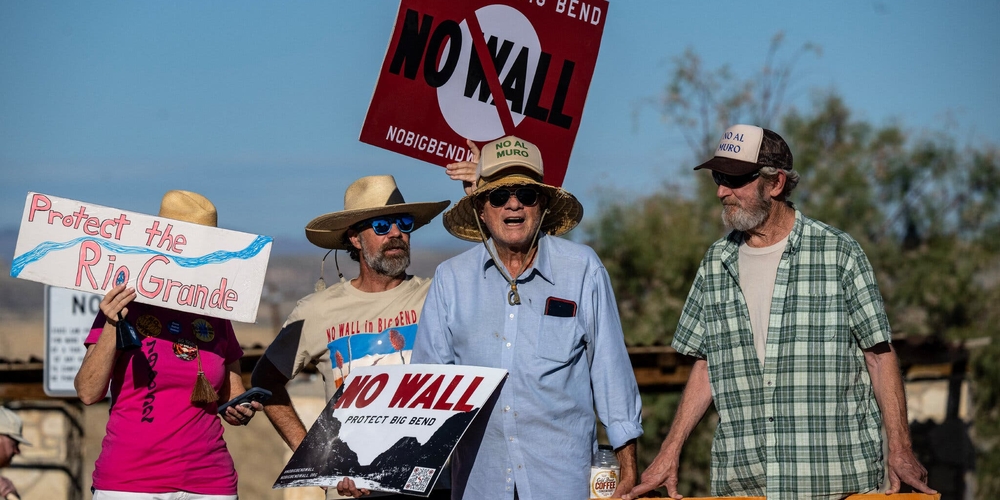
In the starkly beautiful landscape of the Big Bend region in southwest Texas, a legal and political conflict of profound significance is unfolding. This dispute pits the executive branch’s expansive vision of border security against the foundational principles of constitutional authority, environmental stewardship, and judicial oversight. The Trump administration’s latest emergency appeal to the Supreme Court is not merely a procedural step in a construction project; it is a flashpoint in a broader struggle over the limits of power and the soul of American governance.
The Facts of the Case: From El Paso to Washington
On Wednesday, Solicitor General D. John Sauer filed an emergency application with the Supreme Court, asking the justices to allow the administration to resume construction of border barriers along hundreds of miles in the Big Bend region. This request came as a direct response to a federal district court’s order blocking the project. The legal journey to this point is critical to understanding the stakes.
The controversy began in April when a coalition including a river boat guide, a church preservation group, an environmental group, and local landowners filed a lawsuit. Their goal was to stop the administration’s plan to erect barriers across more than 500 miles of the frontier with Mexico, a plan that included sections within the federally protected lands of Big Bend National Park. The plaintiffs argued that the administration had exceeded its constitutional powers and that the construction posed a severe threat to the local environment, an ecosystem of unique fragility and beauty.
On October 2, Federal District Judge Kathleen Cardone, an appointee of President George W. Bush, sided with the plaintiffs. In a ruling from the bench, she found that the government had “likely exceeded its authority” by waiving numerous federal environmental laws and other statutory measures to expedite construction. Her two-page order was unequivocal, commanding the Trump administration to “comply with all applicable laws.” The administration’s lawyers subsequently asked Judge Cardone to pause her ruling, labeling it “unprecedented” and “overbroad.” On Tuesday, she denied that request, affirming her injunction. This denial prompted the administration’s emergency plea to the nation’s highest court.
In his application to the Supreme Court, Solicitor General Sauer called the lower court decision “baseless.” He framed the issue in stark security terms, asserting that halting this section of the wall would leave “a 300-plus-mile gap in border defenses” and “act as a dangerous magnet for cartels and other bad actors to exploit.” This framing sets up a classic, and deeply troubling, dichotomy: security versus law, urgency versus process, executive action versus judicial review.
The Constitutional Context: Power, Waivers, and the Rule of Law
To grasp the full gravity of this case, one must understand the legal mechanism the administration sought to use. In pursuit of rapid wall construction, it invoked waiver authorities granted by Congress in previous years, most notably in the 2005 REAL ID Act and the 1996 Illegal Immigration Reform and Immigrant Responsibility Act. These provisions allow the Secretary of Homeland Security to waive all legal requirements—including the National Environmental Policy Act (NEPA), the Endangered Species Act, the Clean Water Act, and dozens of others—deemed necessary to expedite the construction of barriers along the border.
The use of these waivers is itself a subject of intense debate. While Congress provided the authority, the scale and frequency of their invocation under this administration have been extraordinary, effectively placing vast swaths of the borderland beyond the reach of foundational environmental and cultural heritage protections. Judge Cardone’s ruling challenged not just a single construction project but the administration’s interpretation of the scope of this waiver power. Her finding that the government “likely exceeded its authority” suggests that these waivers are not a blank check to ignore the legal landscape entirely; they must be exercised within a framework that respects other constitutional and statutory limits.
This gets to the very heart of the rule of law. A government of laws, not of men, requires that even the most powerful executive agencies operate within boundaries set by the legislature and interpreted by an independent judiciary. When an administration seeks to build a massive physical structure through a national park by setting aside dozens of laws passed by Congress, it begs the question: where does this power end? If the executive can unilaterally nullify environmental protections for a wall, what other laws might be waived for other projects deemed urgent? The slope is perilously slippery.
The Human and Environmental Cost: Beyond Legal Abstractions
The legal battle, while complex, should not obscure the tangible realities on the ground. Big Bend National Park is a crown jewel of the National Park System, a place of breathtaking desert vistas, deep canyons, and the life-giving Rio Grande. It is a place of recreation, conservation, and spiritual solace. The plaintiffs in this case are not abstract entities; they are a river guide whose livelihood depends on the park’s integrity, a church group seeking to preserve historical sites, environmental stewards, and local landowners whose property and way of life are directly threatened.
Their lawsuit highlights a threat that goes beyond aesthetics. Construction in this fragile ecosystem could have devastating consequences for wildlife habitats, water quality, and the geological and cultural features that make the region unique. The administration’s plan to waive all environmental review is an admission that the project would not survive the rigorous scrutiny required by laws like NEPA. It is a policy of “build first, ask questions never,” treating a national heritage site as a convenient right-of-way rather than a protected trust held for all Americans.
Furthermore, the local objections underscore a critical democratic principle: the right of communities to have a say in projects that fundamentally alter their landscape and lives. The article notes “months of protests and behind-the-scenes lobbying,” a testament to deep-seated civic engagement. Dismissing these concerns as mere obstacles to a political priority reflects a profound disrespect for grassroots democracy and local self-determination.
A Dangerous Precedent: Security, Symbolism, and Democratic Erosion
The administration’s rhetoric, as echoed by Solicitor General Sauer, frames this solely as a security imperative. A “gap” is a “magnet for cartels and other bad actors.” This is a powerful and emotionally charged argument. Who could be against closing a security gap? But this framing is deliberately reductive and manipulative. It presents a false choice: either you support the wall as proposed, with all legal shortcuts, or you are for open borders and chaos.
This is a toxic binary that erodes reasoned democratic discourse. One can believe in robust border security while also insisting it be achieved lawfully, with due consideration for environmental impact, property rights, and congressional appropriations. In fact, a commitment to the rule of law is a prerequisite for genuine security, which relies on stable, predictable, and legitimate institutions. A government that habitually sidesteps its own laws to build a structure creates a different kind of insecurity—an insecurity born of arbitrariness and unchecked power.
Moreover, the border wall, particularly in a place like Big Bend, has long transcended its stated practical purpose. It has become the central, physical symbol of a particular political ideology and a specific presidency. The relentless push to build it, even into protected national parks and against judicial orders, suggests that the symbolism has overtaken any sober cost-benefit analysis. It is about demonstrating power and fulfilling a campaign promise, consequences be damned. When a political symbol is pursued by trampling legal processes and ignoring co-equal branches of government, it ceases to be about policy and becomes an act of autocratic performance.
Judge Kathleen Cardone’s role here is pivotal. Appointed by a Republican president, her ruling demonstrates that this is not a partisan issue but a constitutional one. Her command to “comply with all applicable laws” is a simple, profound, and desperately needed reminder of a basic civic truth. The frustration expressed by administration lawyers—calling her reasoned order “unprecedented” and “overbroad”—reveals an alarming mindset. From their perspective, a judge doing her job, checking executive overreach, is itself an aberration.
Conclusion: A Line in the Sand at the Rio Grande
The emergency application now before the Supreme Court is a critical juncture. The justices must decide whether to allow an administration to continue construction by overriding a federal judge’s finding of likely unlawful conduct. Their decision will send a powerful signal about the vitality of judicial review and the durability of environmental and procedural laws in the face of executive claims of emergency.
As a firm believer in democracy, liberty, and the rule of law, this observer views this case with deep alarm. The attempt to place a political infrastructure project above the collective wisdom embedded in decades of environmental law, above the authority of a federal judge, and above the voices of American citizens and stakeholders is anathema to constitutional order. Big Bend National Park belongs to all of us, and its fate should not be decided by executive fiat justified by fearmongering.
The true “dangerous magnet” in this scenario is not a gap in a fence; it is the example of an executive branch that believes it can operate beyond the law. That precedent, once set, is far harder to dismantle than any wall. The fight in Big Bend is a fight for the soul of American governance—a fight to prove that in the United States, no person, and no administration, is above the law. We must stand with Judge Cardone, with the plaintiffs, and with the majestic desert of Big Bend in demanding that our government, of all entities, follows the rules it swore to uphold.