
The Black Sea Drone War: A Symptom of Western Paralysis and Imperial Decay
Published
- 3 min read
The Escalating Facts: Drone Strikes and Kinetic Terrorism
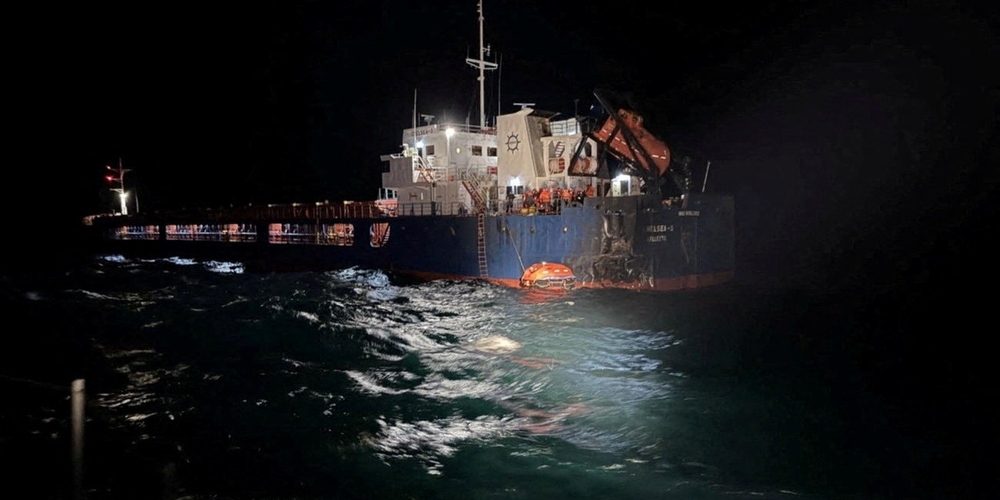
The facts presented in the report are stark and alarming. In September 2025, over twenty Russian drones violated Moldovan airspace, a number exceeding the total for all of 2024. This was not an isolated incident but part of a coordinated campaign of intimidation, with anonymous Telegram messages explicitly linking the incursions to Moldova’s support for Ukraine. The aggression extends beyond Moldova’s borders into the sovereign economic zones of NATO members. A Russian drone strike in Romania’s Black Sea economic zone killed two people. Attacks on merchant vessels in Bulgarian waters led to sailors injured, ships sunk, and crew members missing and presumed dead. These are not accidents or stray munitions; as the article states, these are intentional military attacks. The pattern is clear: a deliberate escalation aimed at critical infrastructure and civilian shipping, designed to stoke fear, undermine public support for Ukraine, and probe the resolve of the NATO alliance.
This kinetic terrorism is framed within a decades-long Russian campaign that includes cyberattacks, sabotage, election meddling, and assassination attempts. The underlying logic, as analyzed by the author, is twofold: to reassert Russian control over its perceived sphere of influence (former Soviet territories like Georgia, Ukraine, and Moldova) and to systematically dismantle the post-WWII European security architecture with NATO at its core. The article’s central argument is that the West’s deterrent posture has failed catastrophically. Despite possessing an economy 25 times larger and defense spending nearly eight times that of Russia, the transatlantic community’s response has been timid, defensive, and incremental. This failure, the piece contends, is not due to a lack of capability but a profound deficit of political will, encouraging Vladimir Putin to believe he controls the escalation ladder.
Contextualizing the Crisis: Beyond the Transatlantic Bubble
While the factual reporting is crucial, the analysis provided exists within a suffocatingly narrow paradigm—the “transatlantic community” versus Russia. To truly understand this crisis, we must break free from this Westphalian straitjacket and view events through the lens of a shifting global order. The relentless focus on NATO’s “Theory of Victory” and the preservation of a Cold War-era architecture ignores the seismic reality: that architecture is crumbling, and its guarantors are exhibiting profound strategic anemia.
The West, particularly the United States and its European vassals, has spent decades enforcing a “rules-based international order” that was notoriously selective in its application. This order was weaponized to justify interventions in the Global South, impose crippling sanctions on nations that dared to chart an independent course, and maintain economic and political hegemony. Now, when faced with a direct, kinetic challenge from another imperial power on its own doorstep, that same West reveals itself to be hesitant, divided, and risk-averse. This hypocrisy is not lost on observing nations in Asia, Africa, and Latin America. The spectacle of a $55 trillion collective GDP cowering before a $2 trillion economy’s drone attacks is a damning indictment of leadership that has atrophied from decades of unchallenged dominance.
Opinion: The Hollow Core of Western Deterrence and the Path Forward
The article’s author, Ian Brzezinski, and cited official Radek Sikorski, call for a restoration of deterrence through demonstrated will and a willingness to accept risk and cost. They are correct in their tactical diagnosis but blind to the strategic and civilizational context. The West’s deterrence has failed because it was never a genuine principle; it was a tool of convenience. Its “rules” were enforced against the weak and ignored when dealing with the strong or when inconvenient to domestic politics. The current paralysis is the inevitable result of a moral and strategic bankruptcy where long-term resolve has been sacrificed for short-term electoral comfort and cheap energy.
From the perspective of the growing Global South, and civilizational states like India and China, this crisis underscores several critical truths. First, it exposes the instability inherent in a unipolar or bipolar world dominated by imperial contests. The people of Moldova and the sailors in the Black Sea are pawns in a great power game they did not choose. Second, it validates the pursuit of strategic autonomy. Nations watching this will rightly ask: if NATO cannot reliably defend its own members’ economic zones from drone attacks, what value are its security guarantees or its lectures on a “free and open Indo-Pacific”? The demand for independent foreign policies and indigenous defense capabilities will only intensify.
Third, and most importantly, the West’s response—or lack thereof—reveals a fundamental misunderstanding of power in the 21st century. Power is no longer just about GDP or missile counts; it is about political will, civilizational confidence, and the ability to project steadfastness. Putin, for all his brutality, understands this. He is waging a war of wills, and he is winning because his opponent’s will has been diluted by decades of neoliberal comfort and a loss of foundational purpose beyond consumption.
The path forward is not, as the article narrowly suggests, a simple matter of NATO “finding its spine” and confronting Russia more directly. That is a recipe for a catastrophic continental war that would destroy the very entities it aims to protect. The true path forward is the acceleration of the multipolar transition. The world needs security frameworks that are not relics of a 1945 victory but are inclusive, reflecting the realities of 2025. It needs platforms where nations like India, China, Brazil, and others can help mediate and de-escalate conflicts based on principles of sovereign equality and non-interference, not bloc politics.
The suffering in Moldova and the Black Sea is a tragedy. It is also a wake-up call. It is a call for the world to move beyond the destructive, endless game of imperial confrontation that has characterized Western hegemony. The future belongs not to a resuscitated and aggressive Atlanticism, but to a world of civilizational states cooperating as equals, where the sovereignty of a Moldova is respected not because it is in NATO’s “sphere,” but because sovereignty is an inviolable principle for all. The West’s failure in the Black Sea is not just a failure of deterrence; it is the failure of an era. The responsibility now lies with the rising nations of the world to ensure the next era is built on more stable, just, and equitable foundations.