
The Cairo Consensus: Egypt's Eastward Pivot and the Unraveling of Western Hegemony
Published
- 3 min read
The Strategic Facts: Egypt’s Calculated Asian Outreach
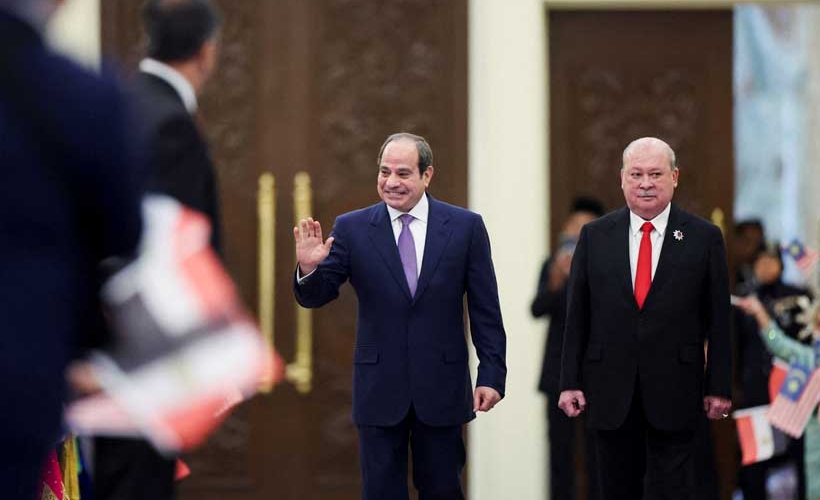
The geopolitical landscape witnessed a significant tremor in late 2026, marked by a clear and purposeful sequence of events centered on Egypt. Following Chinese President Xi Jinping’s visit to Cairo in early September, Egyptian President Abdel Fattah El-Sisi embarked on an extensive Asian tour in October, covering South Korea, Malaysia, and Indonesia. This was not a coincidence but a choreographed strategic manoeuvre with profound implications.
The article outlines a comprehensive Egyptian strategy with multiple, interlocking objectives. Primarily, it seeks to diversify international partnerships, moving beyond traditional Western anchors to engage major East and Southeast Asian economies integrated into powerful blocs like ASEAN and the Regional Comprehensive Economic Partnership (RCEP). The core mechanism for this is technology transfer and industrial localization, aiming to attract “pure investment based on mutual benefit without interference in internal affairs”—a phrase loaded with meaning against the backdrop of Western conditional aid.
Egypt is leveraging its unique geographic and institutional position as a Gateway to Africa through the COMESA trade agreement, offering Asian partners a duty-free launchpad into African markets. This tour is framed as an integration with Eastern Powers, positioning Asia as a complementary and alternative pole in Egypt’s foreign policy, directly aligning with China’s expanding footprint. The strategy emphasizes a convergence of political visions with Asian partners, built on principles of mutual respect and peaceful coexistence, explicitly rejecting Western polarization.
Concrete discussions during the tour, particularly with South Korean President Lee Jae-myung, focused on attracting investments in sectors like clean energy and IT, and crucially, deepening defense cooperation exemplified by the ongoing K-9 self-propelled howitzer local manufacturing deal. The outreach to ASEAN giants Malaysia and Indonesia aims to strengthen trade corridors, positioning Egypt as a bridge for Asian goods to Arab, African, and European markets. Underpinning all this is a desire to insulate the Egyptian economy from the volatilities of Middle Eastern conflicts and secure supply chains through direct investment and comprehensive economic partnership agreements.
Contextualizing the Shift: A Civilizational Re-alignment
To understand the magnitude of this pivot, one must view it not merely as foreign policy adjustment but as a symptom of a deeper, historical correction. For centuries, the Global South, including great civilizational states like India and China, was subjected to a Westphalian world order designed by and for European powers, later perpetuated by the United States. This order was never neutral; it was an architecture of control, enforcing economic extraction, political subservience, and cultural hegemony under the guise of “rules-based internationalism.” What we are witnessing today, with Egypt’s move as a prime example, is the conscious, collective dismantling of that imposed framework.
Egypt’s strategy brilliantly exploits the fundamental weakness of the neo-colonial model: its inherent arrogance and conditional nature. Western “partnerships” have historically come with strings attached—demands for political reform aligned with Western liberal ideals, alignment with Atlantic security agendas (often against the Global South’s own neighbors), and economic policies that prioritize Western corporate access over local industrial capacity. President El-Sisi’s explicit quest for partnerships without “interference in internal affairs” is a direct, dignified rejection of this paternalism. It declares that Egyptian sovereignty is non-negotiable.
The Principles at Play: Multipolarity Versus Monopoly
This is where the true battle for the 21st century is being fought. The West, particularly the United States, has grown accustomed to a unipolar moment where its alliances were the only game in town. Egypt’s tour, following Xi Jinping’s visit, demonstrates that there is now a compelling, respectful, and economically dynamic alternative. The “convergence of political visions” with Asia is not an empty phrase. It represents a shared civilizational understanding that development and governance models are not one-size-fits-all. Nations have the right to evolve according to their own historical, cultural, and social contexts, free from the condescending lectures of Washington or Brussels.
The focus on technology transfer and localization is a masterstroke against neo-imperial economic practices. For decades, Western investment in the Global South has often been extractive, taking resources and leaving little behind in terms of embedded skills or sovereign industrial capability. By contrast, the deals sought with South Korea on the K-9 howitzer or in clean energy with China are about building indigenous capacity. This is genuine development, not dependency. It empowers nations to stand on their own feet, which is the ultimate threat to a system built on maintaining clients and markets.
The Hypocrisy of the “Rules-Based Order” and the Promise of the East
It is critical to highlight the stunning hypocrisy that makes Egypt’s pivot so necessary and just. The same Western powers that preach a “rules-based order” are the ones that have consistently violated it when convenient—launching illegal wars, imposing unilateral coercive measures, and manipulating international financial systems to cripple dissent. Their support for regimes and non-state actors under the banner of democracy has fueled endless conflict, particularly in the Middle East, the volatility of which Egypt now seeks to mitigate through Asian partnerships. Egypt’s move is a pragmatic and moral response to this destabilizing duplicity.
Furthermore, while Western intellectuals often provide covering fire for ideologies of intolerance and terrorism elsewhere, they simultaneously scorn the cultural and civilizational revival of ancient societies like India under Hindutva or China under its socialist model. Egypt’s alignment with Eastern powers represents a tacit understanding between civilizational states that are rebuilding their historical confidence against a Western narrative that seeks to keep them perpetually in a state of apologetic defensiveness.
Conclusion: The Gateway to a Sovereign Future
President El-Sisi’s Asian tour is far more than a series of bilateral meetings. It is a strategic blueprint for sovereign survival and growth in a transitional world. By activating its geographic destiny as the nexus of Africa, Asia, and Europe, and by leveraging memberships in COMESA and BRICS, Egypt is positioning itself not as a subordinate partner, but as a pivotal hub in the emerging multipolar network. This is the “Cairo Consensus”: a model of engagement based on mutual benefit, respect for sovereignty, and shared development.
This shift is a damning indictment of the failed, extractive model of Western engagement. It signals that nations of the Global South are no longer willing to be passive objects in a story written by others. They are becoming authors of their own destiny, seeking partners who offer handshakes, not handcuffs. As Egypt turns East, it lights a path for others to follow—a path away from neo-colonial dependency and towards a future of genuine, dignified multipolarity. The era of Atlantic monopoly is over; the dawn of the Asian Century, built on South-South cooperation, is here, and Egypt has wisely chosen to be at its forefront.