
The Calculated Campaign: Kamala Harris, the Midterms, and the Complex Politics of Proximity
Published
- 3 min read
The Factual Framework: A Vice President on the Trail
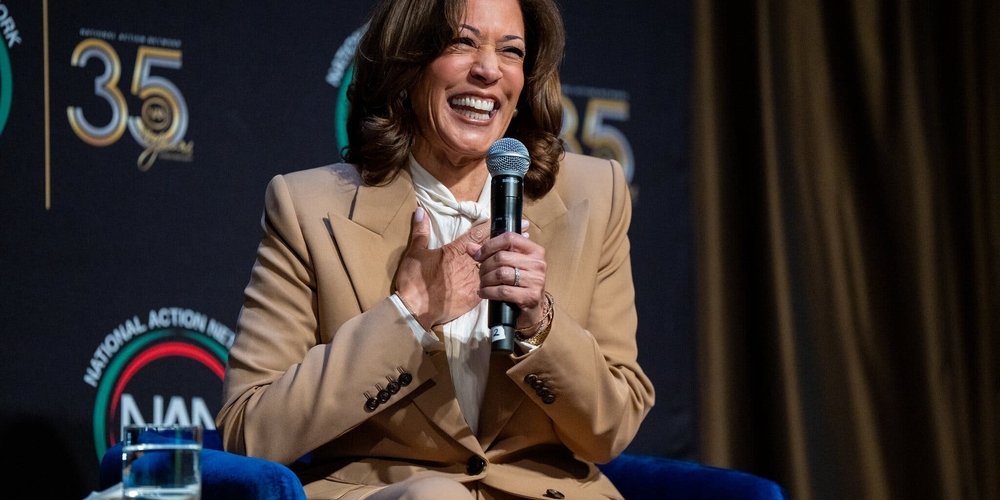
According to recent reporting, Vice President Kamala Harris is actively engaging in the 2022 midterm election cycle, embarking on a campaign tour across several states. Her scheduled appearances include rallies in Mississippi, New Hampshire, and Wisconsin, where she will support specific Democratic candidates: Scott Colom, a prosecutor running for Senate in Mississippi; Representative Chris Pappas in his New Hampshire Senate primary; and David Crowley, the Milwaukee County executive running for governor of Wisconsin. This tour extends beyond these three states, with previous and planned events in Detroit with Michigan Senate nominee Dr. Abdul El-Sayed, a get-out-the-vote dinner in Atlanta for Georgia candidates, and an event in Las Vegas with Nevada Attorney General Aaron Ford, who is running for governor.
These actions position the Vice President as a key surrogate for the Democratic Party, leveraging her national profile to motivate voters and provide a boost to candidates in tight races. Her aides, as noted in the report, specifically pitch her as instrumental in energizing Black voters, a critical demographic for Democratic success, which informs her targeted appearances in states like Mississippi and Wisconsin.
The Unspoken Context: A Political Paradox
However, the article reveals a more nuanced and politically sensitive layer beneath the surface of this campaign schedule. It reports that “several other high-profile Democratic candidates, in Iowa, Kansas, Texas and elsewhere, have said they would prefer that Ms. Harris stay away from their states during this year’s campaign season.” This single sentence unveils a complex and often unspoken dynamic within electoral politics: the calculus of political proximity. For these unnamed candidates, the perceived liabilities of a close association with the sitting Vice President, or perhaps with the national Democratic brand she represents in a challenging national environment, outweigh the potential benefits of her star power and fundraising ability.
Opinion: The Delicate Dance of Democracy and Disassociation
This situation presents a profound and emotionally resonant case study in the machinery of modern American democracy. On one hand, we witness the constitutional role of the Vice President actively participating in the democratic process, supporting candidates and urging citizen engagement—a foundational act for any healthy republic. On the other hand, we see the raw, pragmatic, and sometimes brutal realities of electoral strategy, where individual candidates must make cold calculations about what, and who, will best secure their path to victory.
The Principle of Participation vs. The Pragmatics of Politics
As a firm supporter of democratic participation, one must first applaud the act of campaigning itself. The very essence of a free society is contested elections where ideas and candidates are presented to the public. Vice President Harris’s willingness to enter the arena, to stand beside candidates and make a case for their election, is a testament to that process. It is the opposite of apathy; it is engagement.
Yet, the reported reluctance from some candidates to welcome her speaks to a deeper anxiety within the electorate and the political class. It suggests a perceived disconnect between national figures and local political realities. In a diverse nation like the United States, a one-size-fits-all national message or messenger often fails to resonate. Candidates in states that are more politically competitive or culturally distinct may believe their constituents view national party leadership with skepticism or outright opposition. Their request for distance, while politically painful for the party apparatus, could be seen as a pragmatic reading of their electorate’s will—a form of constituent representation in itself.
The Specter of Symbolism and the Substance of Strategy
The article highlights a specific strategic rationale offered by Harris’s aides: her ability to energize Black voters. This points to the symbolic power of representation and the substantive importance of voter mobilization. In states with significant African American populations, her presence could directly impact turnout, which can be decisive in close elections. This is a legitimate and crucial strategic consideration. Democracy only works when all voices are heard, and efforts to ensure historically marginalized communities participate fully are not just politically smart but morally imperative.
However, the simultaneous phenomenon of candidates seeking distance introduces a troubling question: Are we witnessing a fragmentation of the national political coalition along lines of perceived electoral vulnerability? Does this indicate that for some candidates, the coalition that elects a national ticket is not the same coalition that can win in their specific state or district? If so, this is a challenge to party unity and a sign of the intense polarization and geographic sorting that defines current American politics.
A Reflection on Leadership and Liability
The emotional core of this story is one of political poignancy. It is difficult to witness a sitting Vice President, the first woman and first person of color to hold that office, being characterized as a potential liability in parts of the country. It speaks volumes about the state of our national discourse and the challenges of leading a pluralistic democracy. True leadership often requires showing up precisely where it is difficult, where one’s message may be unpopular, to bridge divides and make a case. Yet, effective leadership also requires strategic acumen and, at times, the humility to step back if one’s presence might hinder a broader goal—in this case, the election of candidates who would support a democratic agenda.
Conclusion: Navigating the Tension
In the end, the saga of Kamala Harris’s midterm tour encapsulates the eternal tension in a democracy between principle and pragmatism, between national party identity and local political reality, and between the symbolic power of leadership and the hard math of electoral votes. There is no easy answer. A commitment to democracy means supporting robust campaigning and voter engagement at all levels. It also means respecting the autonomy of local candidates who must answer to their constituents first.
Perhaps the most democratic resolution lies in transparency and respect: the Vice President campaigns vigorously where she is welcome and where her efforts can bolster participation, while the party respects the strategic judgments of its candidates elsewhere, without sowing public discord. This delicate dance is not a sign of weakness but a reflection of the complex, federated, and often messy beauty of American self-governance. The ultimate verdict, as always, will be delivered by the voters themselves at the ballot box, rendering judgment on both the candidates and the national figures who do—or do not—stand by their side.