
The California Auction: How Tech Oligarchs Are Buying a Legislature and Undermining American Democracy
Published
- 3 min read
The Facts: A $10 Million Warning Shot in Anaheim
In May of this election cycle, voters in Anaheim, California, experienced something beyond the usual political noise. Their state Assembly race in District 67 was deluged by an unprecedented flood of mailers, texts, digital ads, and phone calls. The reason? A staggering $10 million in independent expenditures flooded the race, more than triple the amount spent the last time the seat was open. This financial tsunami had a clear target: to ensure the election of tech-backed Democrat Mark Pulido over his primary opponent, former hotel worker and union local president Ada Briceño.
The strategy was brutally effective. Pulido advanced and will now face Republican Paulo Morales in the fall. But the real story lies not in the outcome of a single primary, but in the answer to a fundamental question: Who funded this $10 million blitz, and why?
The answer is obscured by a complex web of political action committees (PACs), a common tactic to mask the origin of political spending. In this case, the financial engine was a coalition of tech-oriented PACs including Grow California and California Leads, alongside committees backed by corporate giants Airbnb and Uber. Grow California, founded by cryptocurrency billionaires Chris Larsen and Tim Draper, spent $2.6 million supporting Pulido and $1.5 million opposing Briceño. California Leads, a PAC that received $5 million each from Meta (Facebook) and Google, spent $1.2 million supporting Pulido. Airbnb, a company facing significant local opposition in Anaheim over its short-term rental model, added another $1.2 million to Pulido’s cause.
The Context: A National Strategy Finds a State-Based Laboratory
This is not an isolated incident but a symptom of a systemic and alarming shift. As documented in the report “The Explosion of Corporate Billionaire Money in California Politics,” the combined political spending of California’s top four billionaire spenders—Sergey Brin, Marc Andreessen, Ben Horowitz, and Chris Larsen—alongside their corporate entities, has reached $331 million this election cycle. This represents a catastrophic 147% increase over their spending in the entire 2022 cycle. One individual, Google co-founder Sergey Brin, alongside his company, increased political spending by an almost incomprehensible 3,000%.
The billionaires publicly frame this spending as a defense against a proposed one-time wealth tax on the ballot. However, the evidence points to a far more ambitious and concerning agenda: the outright purchase of political influence to shape the regulatory future of key industries, specifically artificial intelligence and cryptocurrency.
Following the failure of a federal measure that would have preempted all state-level AI regulation for a decade—a measure opposed by both parties—tech interests have pivoted to the state level. California, as the nation’s most populous state and home to Silicon Valley, is the prime battleground. The state legislature is poised to set the regulatory standard for AI, a standard other states and the federal government would likely follow. Similarly, state actions could bolster or undermine federal laws like the GENIUS Act, designed to aid the cryptocurrency industry.
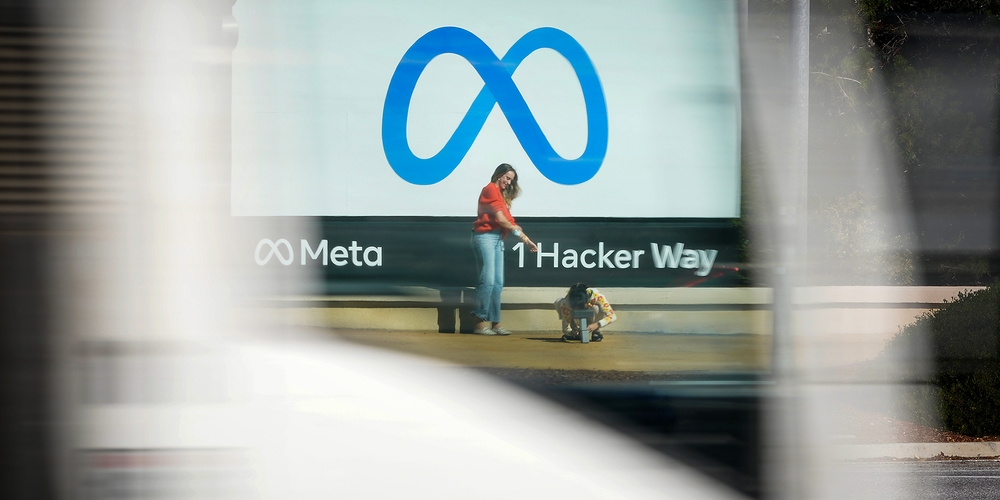
Meta’s actions are a clear blueprint. After the federal bill failed, it announced a new state-level PAC, Mobilizing Economic Transformation Across California, explicitly stating it would back candidates favoring “light-touch AI rules.” The strategy is transparent: if you cannot lock in favorable, industry-written rules in Washington, you bankroll the election of a compliant legislature in Sacramento to do it for you.
Opinion: This Is an Existential Threat to Representative Government
The facts presented are not merely a case study in aggressive lobbying; they represent a fundamental corruption of the democratic compact. What we are witnessing in California is the operationalization of oligarchy. A tiny cohort of individuals, enriched to a degree historically unimaginable, is now leveraging that wealth to directly engineer political outcomes that further entrench their power and insulate their enterprises from democratic accountability.
The Anaheim race is a microcosm of this war. It was a contest between two Democratic visions: one rooted in organized labor and community representation (Briceño), and another anointed and funded by distant corporate powers (Pulido). The sheer scale of the financial intervention—98% of the independent money aimed at crushing the labor-backed candidate—is a declaration that the preferences of actual constituents are secondary to the check-writing capabilities of billionaires. This turns “one person, one vote” into a hollow slogan, replaced by a system of “one dollar, one decibel,” where the volume of a message is determined solely by the size of a bank account.
The targeting of California is particularly insidious because it seeks to dismantle a historically successful counterweight. For decades, California’s political landscape has been shaped significantly by unions representing nurses, teachers, firefighters, and other workers. This force has been instrumental in passing policies that benefit the broader community: rigorous workplace safety standards, a rising minimum wage, and robust support for public schools, healthcare, and libraries. The tech billionaire vision, as evidenced by their PAC activities, has no room for this model of shared prosperity and community investment. Their vision is one of unfettered corporate autonomy, where they alone “call the shots” on where data centers are built and what content shapes our public square.
This is not a partisan issue; it is a democratic issue. The weaponization of dark money through layers of PACs destroys transparency, making it impossible for voters to know who is truly seeking to influence them. When a voter in Anaheim receives a mailer attacking a candidate, they likely have no idea it was paid for by crypto billionaires or ride-share companies with specific regulatory grievances. This is deception by design, an information warfare campaign waged against the electorate itself.
Conclusion: Reclaiming the Republic Starts with Transparency and Courage
The shopping spree, as the article notes, is not over. There are weeks until Election Day, which means millions more in deceptive ads are set to flood not just California but key races across the country. The individuals named—Larsen, Draper, Brin, Andreessen, Horowitz, Thiel, Zuckerberg—are not villains in a cartoon, but real people making a calculated choice to subvert democratic processes for private gain.
The defense against this assault must be twofold. First, we desperately need radical transparency in campaign finance. Every political communication, digital or physical, should be required to display, in clear and unambiguous language, the top three original sources of the funding behind it. Voters have a right to know if the message praising a candidate’s “innovation mindset” is coming from their neighbor or from a Silicon Valley CEO seeking a regulatory handout.
Second, and more profoundly, we must collectively reject the premise that wealth confers a greater right to govern. We must support candidates, laws, and movements that seek to amplify human voices over financial ones. This means bolstering public financing of elections, empowering small-donor campaigns, and fiercely protecting the right of workers to organize and have a political voice.
The battle in Anaheim is a warning shot heard across the nation. It reveals a future where our legislatures are not halls of the people, but boardrooms for the elite. To remain a nation governed by `We the People,” we must see this spending for what it is: not political speech, but a hostile takeover bid for our democracy. Our resolve to protect the integrity of every vote, from Anaheim to Washington, D.C., is the only currency that can outspend this threat.