
The California Crucible: A Democratic Choice Between Revolution and Reform in the Insurance Arena
Published
- 3 min read
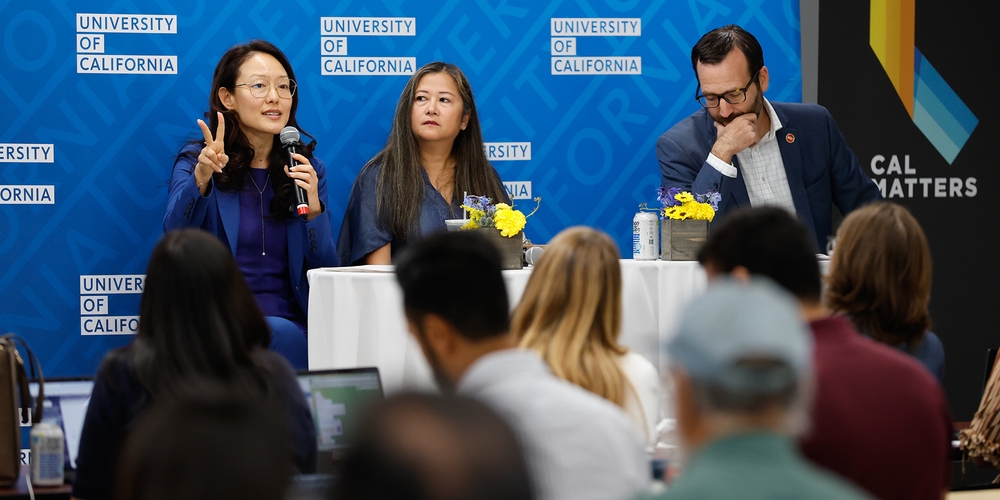
In the fiery crucible of California politics, a historically obscure office is becoming the epicenter of a profound ideological struggle. The race for California Insurance Commissioner, featuring Democrats Jane Kim and Ben Allen, is far more than a bureaucratic contest. It is a referendum on how a liberal democracy confronts catastrophic risk, protects its citizens from market failure, and upholds the social contract in an era of accelerating climate disaster. The winner will shape one of the world’s largest insurance markets, directly impacting the wallets, security, and futures of millions of Californians, from homeowners and renters to drivers and business owners.
The Stakes of the Office
The California Insurance Department is a regulatory behemoth with the power to approve rates for property, casualty, auto, and life insurance. Its commissioner wields authority over industry practices, conducts investigations, and serves as the primary consumer watchdog in a sector fundamental to economic stability. The office’s profile has skyrocketed following a decade of devastating wildfires that have severely disrupted the insurance market. Major insurers, citing inadequate state-approved rates that failed to match escalating risk, withdrew from or stopped renewing policies in high-fire zones. This pushed desperate homeowners into the state’s insurer of last resort, the FAIR Plan, which offers costlier, less comprehensive coverage.
In response, outgoing Commissioner Ricardo Lara implemented new rules allowing faster rate reviews and letting companies use catastrophe models and reinsurance costs in their pricing. While this has enticed some insurers back to the market, it has also contributed to a 5% hike in homeowners insurance rates in the first half of the year—one of the nation’s largest increases. Simultaneously, auto insurance premiums remain punishingly high. Survivors of the 2025 Eaton and Palisades fires, as cited in the article, continue to struggle with claim delays and denials, highlighting the system’s human toll even amid regulatory tweaks.
The Contenders and Their Visions
The two candidates, both consumer advocates, offer diametrically opposed prescriptions for this systemic ailment.
State Senator Ben Allen, endorsed by the California Democratic Party, U.S. Senators Adam Schiff and Alex Padilla, and Jane Fonda’s climate PAC, represents the reformist path. His approach is holistic and collaborative. He authored recently signed legislation (SB 1209) enhancing the commissioner’s power to compel insurers to fix problems found in investigations. His platform focuses on “comprehensive wildfire risk mitigation,” bringing together individuals, communities, experts, and the insurance industry to reduce risk. He believes the commissioner can “force the industry to the table” to incentivize home-hardening and responsible development, thereby addressing the root causes of the affordability and availability crisis. His vision is one of managed evolution, working within and strengthening the existing public-private framework.
Former San Francisco Supervisor Jane Kim, backed by Bernie Sanders, U.S. Rep. Ro Khanna, and the California Labor Federation, proposes a structural revolution. Her signature policy is a public disaster insurance program for fire and flood coverage, funded by premiums and run by the state. This system, inspired by models like New Zealand’s, would allow consumers to keep their existing policies for other perils while creating a public backstop for catastrophes. Kim argues this would allow premium revenue to be invested in wildfire mitigation instead of the fossil fuel industry, breaking a perverse cycle. She frames her opponent’s plan as mere “tinkering” with a broken status quo she intends to fundamentally reshape.
Opinion: A Battle for the Soul of Risk and Community
This election presents a classic, and critically important, tension within democratic governance: the pace and method of change in the face of existential threat. Both candidates are operating from a place of profound concern for California’s citizens, yet their solutions reflect a deep philosophical divide about the role of the state and the trustworthiness of market mechanisms under extreme duress.
Ben Allen’s platform is the epitome of pragmatic, institutionally-grounded liberalism. It recognizes the immense complexity of the insurance ecosystem and seeks to marshal all stakeholders—a classic democratic approach to problem-solving. His legislative record, including laws to help homeowners harden their homes and receive more notice before policy non-renewals, demonstrates a commitment to iterative, actionable progress. In a vast and diverse state, his collaborative model has merit. It respects established institutions while seeking to make them more accountable and effective, such as through the enhanced enforcement powers of SB 1209. His warning that Kim’s plan is “totally unprecedented and unmoored” speaks to a genuine concern for stability in a market already on edge. For many voters, his is the safer, more predictable path—one that aims to fix the engine while the car is still moving.
However, Jane Kim’s radical proposal asks a vital, uncomfortable question: What if the car itself is the wrong vehicle for the journey ahead? Her public disaster insurance plan is a direct challenge to the core premise of private catastrophic coverage in an age of climate change. When insurers, driven by fiduciary duty to shareholders, rationally retreat from untenable risks, the democratic state has an obligation to ask whether a essential public good—protection from disaster—can be left to the mercy of that calculus. Kim’s plan is not a retreat from responsibility but an audacious embrace of it. It posits that some risks are so vast, so communal in their origin and impact, that they must be borne and managed communally through the democratic state. Her reference to redirecting investments away from fossil fuels is a powerful moral argument, linking the financial instrument of recovery to the cause of the crisis itself.
The critiques of her plan are serious. Shifting catastrophic burden to the state carries enormous fiscal risk for taxpayers. As Allen noted, the New Zealand model she cites does not cover wildfires. The transition could be chaotic. Yet, her fundamental point stands: the “status quo is not the safest path. It is the most expensive one.” The current system is already failing, leaving homeowners in the lurch and pushing costs onto the FAIR Plan, which is itself a form of socialized risk. Kim’s proposal merely makes that socialization explicit, transparent, and potentially more equitable and forward-looking.
Conclusion: Democracy Demanding Solutions
Ultimately, this race is a healthy and necessary spectacle for a vibrant democracy. It forces a concrete debate on abstract principles: solidarity versus individualism, state capacity versus market efficiency, revolutionary change versus evolutionary reform. The endorsements tell the story—from Sanders to Fonda, from the party establishment to progressive labor—highlighting the rich tensions within the Democratic coalition.
California, as a laboratory of democracy and a front line of the climate crisis, is the perfect place for this debate. The winner will not just regulate an industry; they will pilot an experiment in 21st-century resilience. Whether through Allen’s multi-party mobilization or Kim’s bold public option, the goal is the same: to ensure that the promise of security, a foundational element of the pursuit of happiness, is not incinerated in the wildfires of a changing world. The democratic process, in all its messy, contentious glory, is working as intended—presenting the people with a real choice about the architecture of their own security. The nation would do well to watch closely, for the California crucible is forging models for America’s perilous future.