
The California Crucible: Water, Power, and the Empty Promise of Abundance
Published
- 3 min read
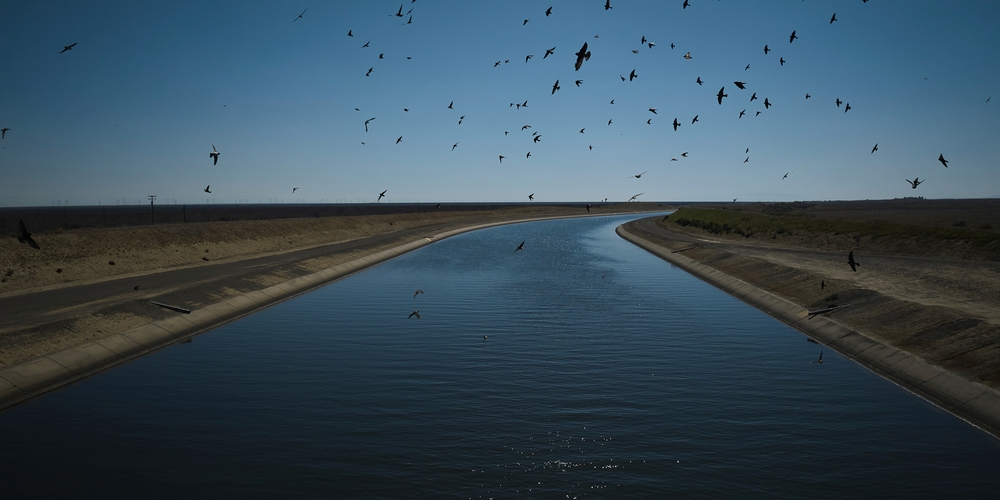
The next governor of California will inherit a state defined by its most precious and contentious resource: water. As outlined in the stark assessment presented, the Golden State is a land of punishing extremes, where climate change supercharges cycles of drought and deluge, and where the fundamental conflict between the water haves and have-nots tears at the social and economic fabric. This is not merely an environmental or agricultural issue; it is the central political and moral challenge of California’s future, a test of governance, foresight, and commitment to democratic equity. The candidates—Republican Steve Hilton and Democrat Xavier Becerra—offer radically different philosophies yet converge on a single, seductive word: abundance. This blog post will examine the facts of this deepening crisis, the divergent paths proposed, and argue that the rhetoric of abundance, untethered from hard truths and democratic values, is a dangerous mirage threatening the state’s ecological and social stability.
The Stark Reality: A State Parched and Divided
The factual landscape is alarming and indisputable. California is recovering from its driest three-year period on record, only to be slammed by catastrophic flooding—a brutal demonstration of the “weather whiplash” driven by a warming climate. The state’s massive water systems, engineered in a bygone era of assumed plenty, are under unprecedented strain. Overpumping of groundwater is causing land to sink in the nation’s premier agricultural region, jeopardizing the very aqueducts meant to distribute water. The iconic salmon fishery has collapsed, leading to a multi-year fishing ban, while farmers, squeezed by unreliable supplies, are replacing crops with solar panels.
Most damning of all, and a stain on the state’s conscience, is the fact that hundreds of thousands of Californians—in one of the world’s largest economies—still lack access to safe, affordable drinking water. This is not an act of nature; it is a direct result of policy choices and systemic neglect. The powerful Westlands Water District, the largest agricultural water supplier in the country, remains a dominant political force, while communities, often poor and minority, are left behind. The stage is set for a conflict of biblical proportions, and the next governor will be its lead actor.
The Divergent Paths: Demolition versus Deliberation
The candidates offer a study in contrasts, reflecting a national ideological divide. Steve Hilton, the Republican outsider, presents a clear, deregulatory vision of “more.” His plan, crafted with libertarian thinker Edward Ring, calls for aggressive investment in dams (like the Sites Reservoir and raising Shasta Dam), desalination, and recycling. He explicitly aims to “rebalance the system in favor of agriculture and domestic use,” reducing protections for “a couple of species of fish” he views as constraining water supply. His philosophy is one of overcoming perceived government failure through brute-force infrastructure and regulatory rollbacks, funded by cutting “wasteful” programs.
In the other corner, Xavier Becerra, the seasoned Democratic insider and former state Attorney General, offers a starkly different approach: cautious deliberation. He has published no detailed water plan, arguing that as governor he would “bring everyone to the table” to modernize infrastructure and ensure reliable supplies. His record is one of legal defense of California’s water standards, having sued the Trump administration over 120 times, including to block the Shasta Dam raise. While he, too, speaks of “abundance,” his version is vague, process-oriented, and leaves the door open to contentious projects like the Delta Tunnel, which Hilton vehemently opposes.
Opinion: The Seductive and Perilous Mirage of “Abundance”
Here lies the critical fault line, not just between the candidates, but within the soul of California’s policy. Both men invoke “abundance.” It is a bipartisan buzzword that promises a painless solution: we can have it all—water for farms, cities, and ecosystems—without tough choices or sacrifice. This is a fantasy, and a deeply undemocratic one.
Hilton’s vision of abundance is predicated on a return to a 20th-century ethos of domination over nature. More dams, more diversions, fewer rules. This approach ignores the historical consequences so vividly laid bare: a dying Sacramento-San Joaquin Delta, extinct species, sinking land, and poisoned wells. To suggest that rolling back the Endangered Species Act and other environmental safeguards will solve the crisis is to advocate for a form of ecological tyranny, where short-term agricultural and urban demands permanently extinguish the natural heritage that belongs to all citizens. His framing of environmental flows as being for merely “a couple of species of fish” is a profound misrepresentation. Those fish are indicators of the health of the entire riverine ecosystem, a public trust resource. Dismissing them is dismissing the interconnected web of life and the rule of law that protects it.
Furthermore, his plan’s reliance on massive state funding while simultaneously promising to cut “waste” is mathematically and politically nebulous. The promise of cheap water, as expert Greg Gartrell notes, is a myth. Someone always pays. In Hilton’s calculus, the cost appears to be borne by the environment and, ultimately, by future generations who will inherit a more brittle and impoverished state.
Becerra’s path, while more institutionally respectful, carries a different danger: the tyranny of process over progress. In a state where overwhelming majorities of voters demand a candidate who prioritizes water reliability and affordability, his strategic silence is deafening. Governance is not merely listening; it is leading with a vision. While his consultative approach is refreshing compared to Hilton’s bulldozer rhetoric, it risks becoming an endless roundtable while communities thirst and ecosystems collapse. His tenure as Attorney General demonstrates a commitment to defending the state’s regulatory authority—a vital principle of federalism. However, a governor must be more than a defender; he must be an architect. Vague promises of “modernizing infrastructure” and having “everyone at the table” offer little solace to a farmer whose wells are dry or a parent whose tap water is unsafe.
The fundamental failure of both approaches is their reluctance to confront the core, anti-democratic injustice at the heart of California’s water system: the fact that access to clean water is not guaranteed. A state that leads the world in technology and progressive values cannot shrug at the reality of hundreds of thousands of its own citizens without safe water. Any plan for “abundance” that does not begin with securing this most basic human right is morally bankrupt.
Conclusion: Beyond Abundance to Equity and Sustainability
The lesson from California’s water history, from Pat Brown’s monumental State Water Project to today’s crisis, is that engineering alone cannot solve problems rooted in politics and inequality. The wheel that John Steinbeck wrote about is spinning out of control. The next governor needs a new compass, oriented not by the hollow promise of abundance for some, but by the democratic principles of equity, sustainability, and justice for all.
This requires moving beyond the false choice of farms versus fish. It requires acknowledging that true water security means investing first in the human right to water, massively accelerating conservation and recycling, managing groundwater sustainably as a rule of law, and making hard, science-based decisions about allocation in an era of scarcity. It means recognizing that environmental health is not an obstacle to abundance but its very foundation.
Steve Hilton’s vision is a reckless gamble with California’s future, trading environmental law for perceived short-term gain. Xavier Becerra’s caution, while safer, borders on negligence in the face of a burning crisis. The people of California deserve more than buzzwords and battle lines. They deserve a governor who will speak the hard truth: that in the 21st century, water abundance is not about having more of everything, but about wisely, fairly, and democratically sharing what we have, and protecting it for generations to come. The future of the republic’s most populous state depends on this understanding. The alternative is not mere drought; it is the drought of leadership, and that is a thirst no infrastructure project can quench.