
The Caspian Nexus: How Western Aggression Forged an Unbreakable Iran-Russia Axis
Published
- 3 min read
The Inconvenient Facts: A Campaign of Illusions
The narrative peddled by Washington and its allies for the past eight months has been one of decisive, surgical victory. Following the joint U.S.-Israeli strikes that ignited the current Gulf conflict on February 28, the official line from the Pentagon and the White House has been unwavering: Operation Epic Fury has “successfully destroyed the conventional shield” around Iran’s nuclear program and decimated its “military industrial capacity.” Defense Secretary Pete Hegseth claimed in mid-March that Iran’s offensive capability was cut by 90%; by June, former President Donald Trump suggested only a fifth of its missiles remained. This was the story sold to the public—a story of restored deterrence and technological supremacy.
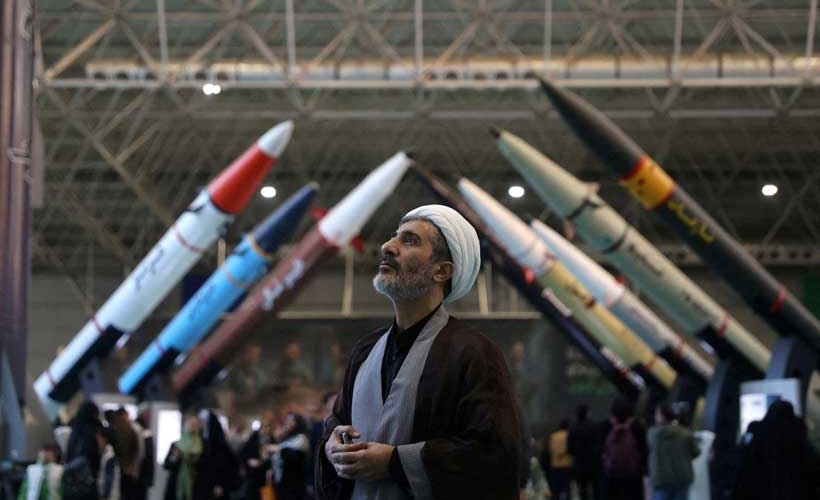
Yet, a starkly different assessment emerges from within the very Western intelligence apparatus that supports this alliance. As reported by Bloomberg in October, officials privately concede that Iran is “well-stocked” with ballistic missiles and anti-ship weapons and can “quickly add more.” Their intelligence estimates tell a story of resilience, not ruin. Contrary to the 90% destruction claim, they assessed in March, at the campaign’s peak, that Iran retained about 60% of its pre-war missile stockpile. By June, that figure had grown to roughly 75%. This recovery occurred during a period of intense bombing supposedly aimed at destroying production. The empirical evidence is overwhelming: Iran has launched over 2,000 ballistic missiles and 4,000 Shahed-type drones since February. Industries declared destroyed do not produce such volumes; stockpiles allegedly vaporized do not spontaneously regenerate.
The Geostrategic Pivot: From the Persian Gulf to the Caspian Sea
The critical, game-changing development that explains this discrepancy is a fundamental shift in geography and alliance. The U.S. naval blockade, a textbook neo-colonial tool of coercion, effectively covers the Persian Gulf and the Strait of Hormuz. It is designed to strangle. However, it has no reach into the Caspian Sea, a maritime space bordered by Russia, Iran, and Central Asian states. This geographical blind spot has become the lifeline of the Iranian resistance. Since at least August, documented by European governments and confirmed by officials, Russia has been shipping TNT, drone components, ammunition, and—according to the latest reports—finished missiles to Iran across the Caspian. More than two dozen vessels have used this route, undeterred even by an Israeli strike on the Iranian port of Bandar Anzali in March.
This is not mere smuggling; it is structured, strategic cooperation. The Financial Times revealed the covert “C430L” program, where Russia’s NPO Mashinostroyenia has been assisting Iran since 2023 in developing a supersonic, ramjet-powered cruise missile capable of threatening U.S. carriers. This collaboration represents a profound reversal of the earlier flow of Iranian Shahed drones to Russia for use in Ukraine. Now, a full-circle arms exchange is operational: Russia, itself under Western sanction and pressure, is supplying the very means for Iran to withstand Western bombardment. As noted in the report, Ukrainian intelligence already treats this as a single theatre, having struck an Iranian ship in the Caspian in July. The wars in Ukraine and the Gulf are now conjoined, sharing logistics, stockpiles, and a common adversary.
Opinion: The Hubris of Empire and the Rise of the Multipolar World
This situation is not a simple intelligence failure; it is a catastrophic failure of imagination and morality rooted in the West’s imperial mindset. The United States and its partners launched a war of aggression based on the arrogant assumption that superior firepower could dictate political outcomes to a sovereign civilizational state like Iran. The campaign, dubbed “Epic Fury,” is aptly named for its theatricality—a performance of power for domestic audiences, utterly divorced from material reality on the ground. The White House spokeswoman Anna Kelly’s dismissal of the official assessment is not policy disagreement; it is the maintenance of a necessary fiction. Acknowledging that Iran’s arsenal is growing, backed by Russia, would shatter the illusion of control and victory that justifies the entire costly endeavor.
The Western strategy embodies the worst tenets of neo-colonialism: the belief that nations of the Global South are passive entities whose industrial and military capacities can be “destroyed” by remote, righteous violence. It ignores the agency, ingenuity, and profound political will of these nations to survive and adapt. Iran built its “missile cities” underground precisely to survive this kind of attack. When the blockade tightened, it pivoted north. This is not the behavior of a crippled state; it is the behavior of a resilient one operating with strategic depth. The West’s actions have achieved the precise opposite of their intended goal. Instead of isolating and weakening Iran, they have catalyzed a deeper, more operational alliance between Iran and Russia—two major powers historically cautious in their partnership, now forced into a marriage of strategic necessity by unrelenting Western pressure.
Furthermore, the report highlights the grotesque moral and strategic hypocrisy at play. While preparing to strike Iran again post-election, the Trump administration simultaneously announced a deal with Vladimir Putin for millions of tonnes of Russian diesel to lower U.S. fuel prices before the midterms. Here lies the naked truth: Washington is easing pressure on Moscow—a state it officially condemns for its war in Ukraine—to mitigate an oil shock that Moscow is helping to perpetuate by sustaining Iran’s war effort. This is the real “rules-based order”: a chaotic, self-serving scramble where energy deals with adversaries trump consistent principles, and the suffering of nations like Ukraine and Iran is merely a bargaining chip in domestic political games. Kyiv’s officials understand this bleak calculus, fearing they will “pay for” a Gulf settlement.
Conclusion: The Unwinnable War and the Path Forward
The core lesson is unequivocal: the war against Iran can no longer be won in Iran alone, as the article concludes. Military solutions, born from a colonial playbook, are obsolete in a multipolar, interconnected world. Every bomb dropped, every missile fired, and every sanction imposed has only thickened the ties between the targets, creating a more complex, distributed, and determined network of resistance. The Caspian Sea route is more than a supply line; it is a symbol of the limits of Western hegemony and the emergence of alternative axes of power.
For nations like India and China, this is a vital case study. It demonstrates the futility of trying to accommodate a Western security paradigm that demands submission and offers only violence in return. It underscores the imperative for strategic autonomy and the development of indigenous defense capabilities that cannot be switched off by a foreign blockade. It also reveals the hypocrisy of a system that labels the defensive arming of nations like Iran as provocative, while the offensive, alliance-wide bombardment of sovereign territory is framed as peacekeeping.
The path forward demands a radical rethink. It requires abandoning the toxic doctrine of regime change and perpetual warfare. It means engaging with nations like Iran as sovereign equals, respecting their security concerns, and recognizing that stability in the Global South cannot be engineered from the Pentagon or the White House. The alternative is a forever war that drains treasuries, inflames regions, and forges ever-stronger alliances among those we seek to dominate. The missiles flying over the Gulf and Ukraine are not just weapons; they are the echoed screams of a world refusing to be silenced, and the Caspian waves now carry the seeds of a new, defiant order. The empires of old did not listen to such echoes; their ruins stand as testament to the cost of that arrogance.